TheJakartaPost
Please Update your browser
Your browser is out of date, and may not be compatible with our website. A list of the most popular web browsers can be found below.
Just click on the icons to get to the download page.


Popular Reads
Top Results
No results found. Please check your search term and try again
Can't find what you're looking for?
View all search results
Popular Reads
Top Results
No results found. Please check your search term and try again
Can't find what you're looking for?
View all search resultsNot about food: The brutal truth about malnutrition
Distributing food isn't always the solution to stunting in Indonesia; it is also about investing in community health workers so as to formalize and elevate an existing system that forms the backbone of maternal and child care in the remotest regions.
Change text size
Gift Premium Articles
to Anyone
Share the best of The Jakarta Post with friends, family, or colleagues. As a subscriber, you can gift 3 to 5 articles each month that anyone can read—no subscription needed!
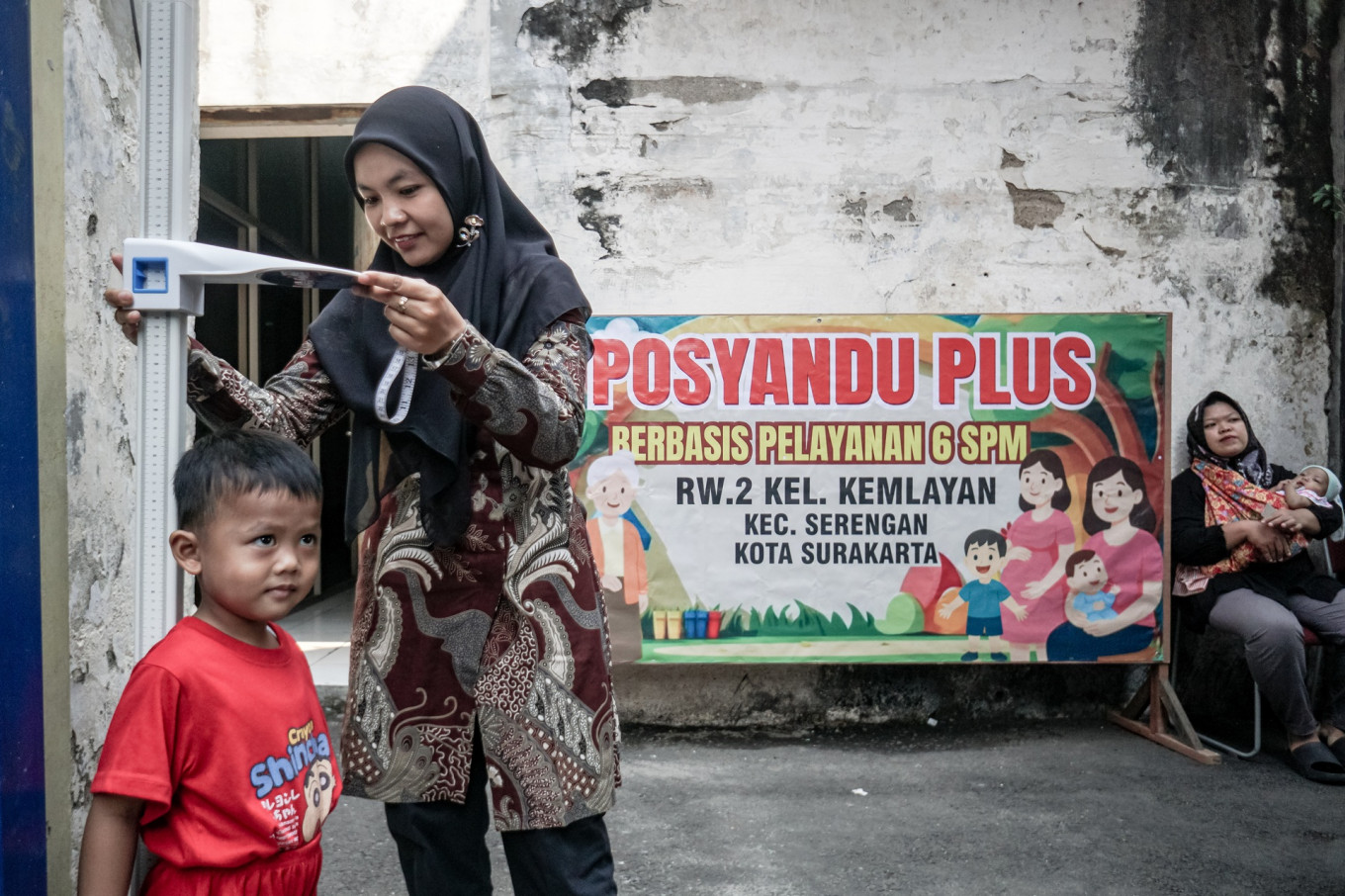 A health worker measures a boy's height on Aug. 11, 2025, during a launch event for a Posyandu (integrated health services post) in Surakarta, Central Java. (Antara/Mohammad Ayudha)
O
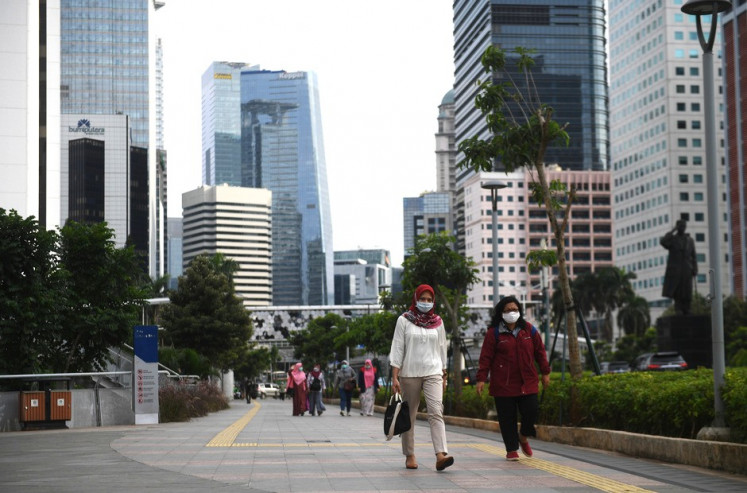
n most days, Jakarta feels like a different country from the rest of Indonesia. The glass towers along Sudirman catch the light, the coffee shops hum, and the city moves as if the rest of the archipelago is a distant rumor.
Inside those buildings are smart, well-meaning people making big decisions about the nation’s future. But if you ask them what a kader (volunteer) is or when they last visited a Posyandu (integrated health services post), you’ll mostly get the same response: a polite smile, a flicker of confusion, and then a quick change of subject.
And yet, 68 million mothers in Indonesia rely on more than 1 million untrained, unskilled and unsupervised community health workers, mainly women, to navigate pregnancy, birth and the fragile first 1,000 days of a child’s life. The very backbone of maternal and child health in this country is invisible to the people in those tall buildings. It’s like trying to fix traffic in Jakarta while ignoring the entire road network.
We tell ourselves that stunting is a food issue: if only we could distribute more free meals, more seeds, more supplements, more rice. It’s a comforting story because it sounds simple and solvable: Just add more stuff.
But stunting isn’t a logistics problem; it’s a relationship problem. It’s about whether a young mother in a remote village has someone she trusts to answer the hard questions: Why won’t my baby breastfeed? Why is this fever not going away? Is it normal that my child is this small? Right now, too many of those questions go unanswered.
The real story is this. The solution to stunting in Indonesia isn’t always giving away food; it’s investing in a willing and waiting workforce that already exists in every village: kader and community health workers who have been asked to carry an impossible load with almost no training, no pay and very little respect. They are the first responders of maternal and child health, but we’ve treated them like a side project.

Now imagine something different. Imagine that instead of being volunteers on the margins, community health workers were treated as professionals. Imagine they had proper training, real supervision, a modest but reliable salary, a clear scope of work and the tools they need to do their job well.