TheJakartaPost
Please Update your browser
Your browser is out of date, and may not be compatible with our website. A list of the most popular web browsers can be found below.
Just click on the icons to get to the download page.


Popular Reads
Top Results
No results found. Please check your search term and try again
Can't find what you're looking for?
View all search results
Popular Reads
Top Results
No results found. Please check your search term and try again
Can't find what you're looking for?
View all search resultsThe great correction: Seismic changes in Indonesian stock market
After a geopolitical shock and a transparency crisis, the Indonesian stock market is undergoing a painful but necessary evolution toward global standards.
Change text size
Gift Premium Articles
to Anyone
Share the best of The Jakarta Post with friends, family, or colleagues. As a subscriber, you can gift 3 to 5 articles each month that anyone can read—no subscription needed!
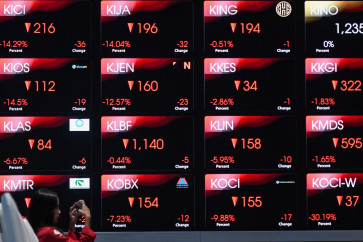
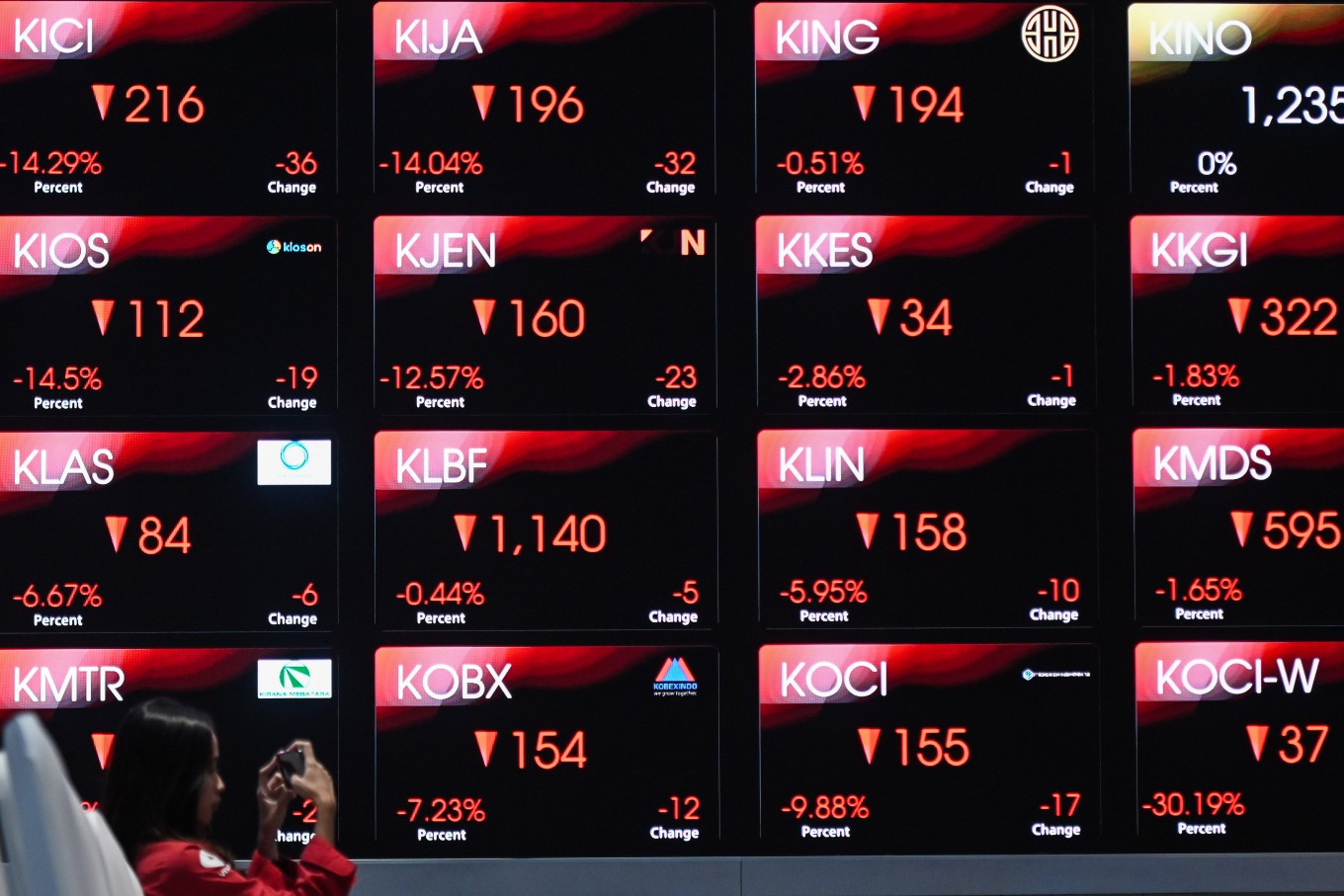 A woman takes a photo of an electronic display at the Indonesia Stock Exchange (IDX) in South Jakarta on Feb. 2, 2026, showing negative movements across the bourse’s benchmark index. (Antara/Sulthony Hasanuddin)
L
enin is often credited with saying: “There are decades where nothing happens, and there are weeks where decades happen.” Whatever its true origin, the line fits recent events in the Indonesian stock market remarkably well.
The Jakarta Composite Index (JCI) reached an all-time high of just above 9,100 on Jan. 20. It then began to slide, falling to a little over 7,100 by March 27, exactly a month after the United States and Israel launched joint attacks on Iran. The decline continued, with the index touching 6,971 on April 7.
To understand this volatility, the sell-off should be divided into two distinct phases: the decline following MSCI’s late-January warning and the subsequent drop as conflicts in the Middle East escalated.
In late January, MSCI warned of structural weaknesses in the Indonesian market, particularly around transparency and trading practices. The warning was clear: Unless these issues were addressed, Indonesia risked being downgraded from "emerging market" to "frontier market" status.
None of these concerns was entirely new. They included weak ownership transparency, opaque free-float calculations and suspicions of coordinated trading that may have distorted prices.
Two features of the market stood out. First, while the domestic market index continued to rise for a time, the MSCI Indonesia index had begun to diverge. Second, foreign investors found it difficult to gain meaningful exposure to several large cap stocks whose prices had risen sharply. Both trends were at odds with the standards expected in major global exchanges.

Following the MSCI’s warning, several stocks that had surged from the second half of 2025 to early 2026 began to correct sharply. The broader index fell around 8.3 percent during this phase. Selling pressure on blue-chip banks such as BCA and Bank Mandiri remained relatively limited and foreign outflows were not yet especially large. Even so, market capitalization fell by roughly Rp 1.5 quadrillion (US$88 billion).