TheJakartaPost
Please Update your browser
Your browser is out of date, and may not be compatible with our website. A list of the most popular web browsers can be found below.
Just click on the icons to get to the download page.


Popular Reads
Top Results
No results found. Please check your search term and try again
Can't find what you're looking for?
View all search results
Popular Reads
Top Results
No results found. Please check your search term and try again
Can't find what you're looking for?
View all search resultsThe real barriers to net zero aren’t renewables. They’re everything else
Renewables haven't failed; they are surging. But unprecedented demand growth, including for powering data centers and AI, along with infrastructure lags, mineral risks and mounting waste, keep moving the goalposts of the energy transition.
Change text size
Gift Premium Articles
to Anyone
Share the best of The Jakarta Post with friends, family, or colleagues. As a subscriber, you can gift 3 to 5 articles each month that anyone can read—no subscription needed!
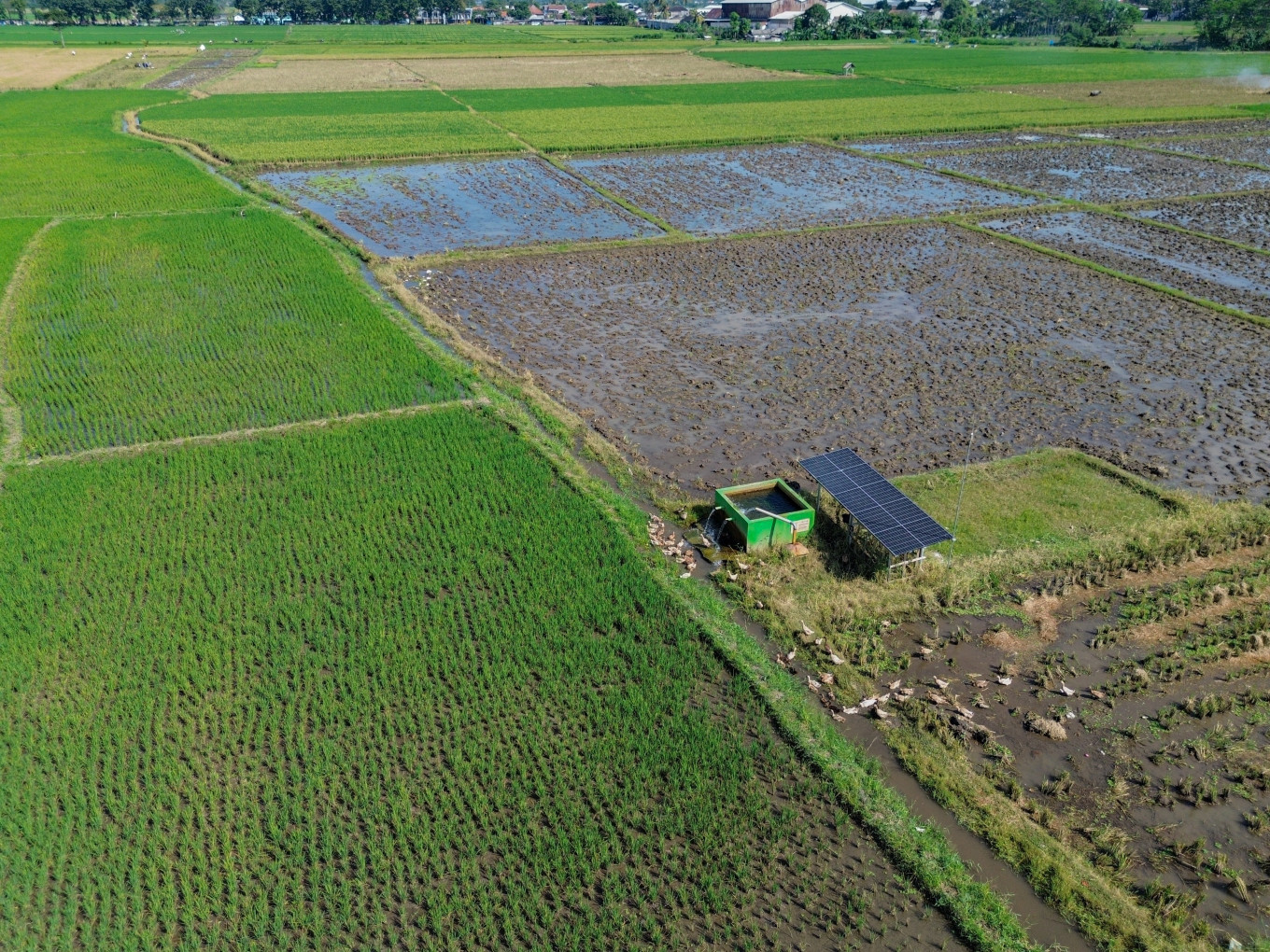 A solar-powered water pump irrigates a rice farm on April 6, 2026, in Lumajang, East Java. (Antara/Irfan Sumanjaya)
R
enewables are surging, yet demand growth, grid bottlenecks, mineral risks and mounting waste could stall the transition without parallel investment in transmission, storage and circular systems.
The world added around 2,600 gigawatts (GW) of renewable energy capacity between 2015 and 2024, including a record 582 GW in 2024 alone.
Momentum, driven primarily by solar, remains strong. By 2030, renewables are expected to supply around half of global electricity. The world is building clean power at record speed, and is still burning more fossil fuels than ever.
In 2015, coal generation stood at around 9,300 terawatt-hours (TWh). By 2024, it had risen by roughly 1,300 TWh. Gas generation increased from around 5,500 TWh to nearly 6,800 TWh over the same period. Combined, coal and gas generation grew from around 14,800 TWh to more than 17,000 TWh. In short, the world is generating more electricity from fossil fuels today than it did a decade ago.
This is not because renewables have failed. It is because electricity demand has grown even faster, driven by urbanization, cooling needs, digitalization, industrial electrification, the rise of electric vehicles and more recently, data centers and artificial intelligence.
For the first time, global electricity demand surpassed 30,000 TWh in 2024. That increase of more than 1,100 TWh, or 4.3 percent, was almost double the annual average over the previous decade. Surging demand meant renewable additions expanded supply rather than substituted coal and gas.

With global electricity demand set to surpass 33,000 TWh this year, even rapid renewable growth will struggle to displace fossil fuel energy in any significant way.