The Jakarta Post
Please Update your browser
Your browser is out of date, and may not be compatible with our website. A list of the most popular web browsers can be found below.
Just click on the icons to get to the download page.


Popular Reads
Top Results
No results found. Please check your search term and try again
Can't find what you're looking for?
View all search results
Popular Reads
Top Results
No results found. Please check your search term and try again
Can't find what you're looking for?
View all search resultsA canal could rethink Indonesia’s supply chains
The Cikarang Bekasi Laut was built to carry water. But it has always had the potential to carry something more.
Change text size
Gift Premium Articles
to Anyone
Share the best of The Jakarta Post with friends, family, or colleagues. As a subscriber, you can gift 3 to 5 articles each month that anyone can read—no subscription needed!
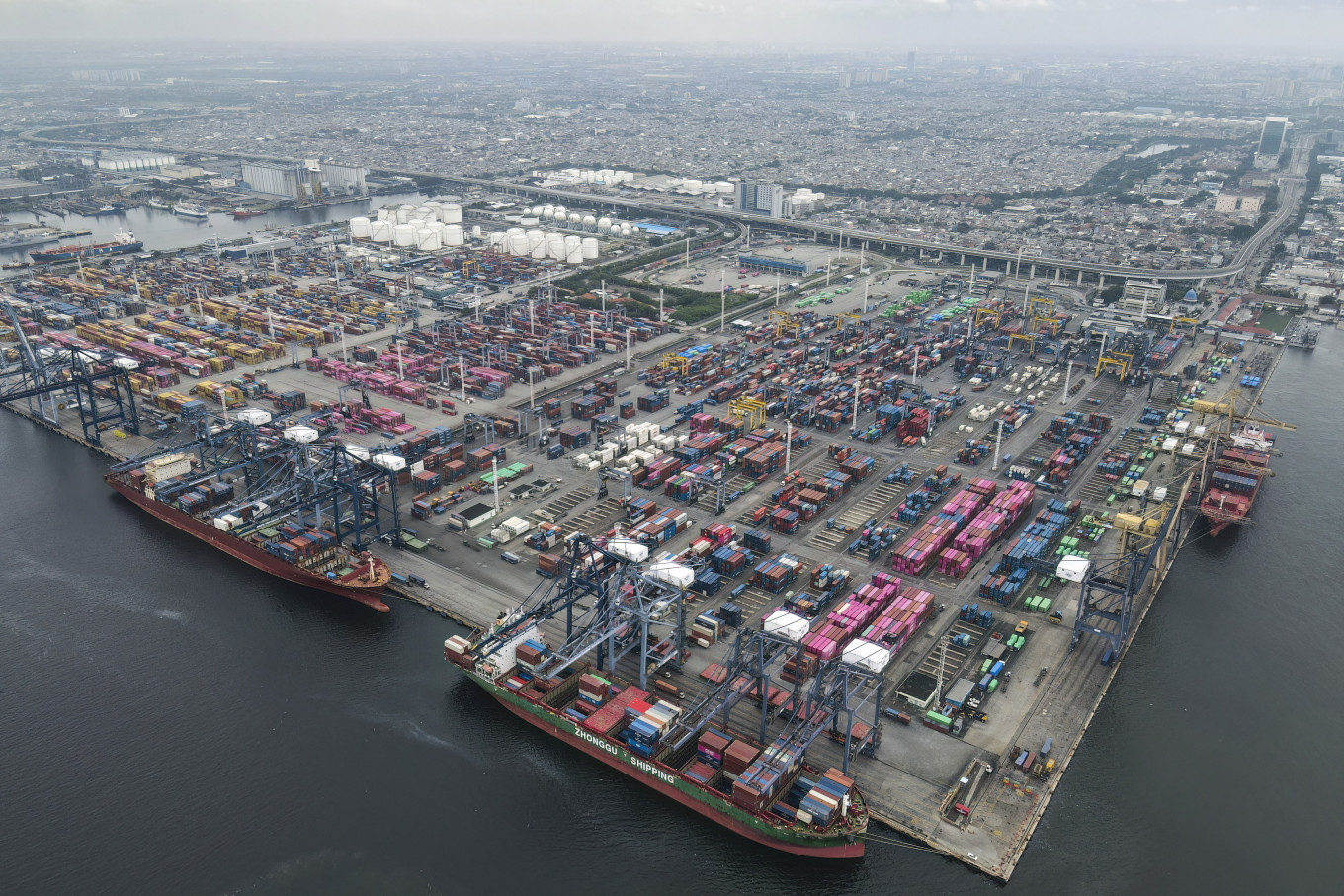 Containers are loaded and unloaded at Tanjung Priok Port in Jakarta on Feb. 4, 2026. (AFP/Bay Ismoyo)
There are moments in a nation’s journey when solutions do not need to be invented, only rediscovered.
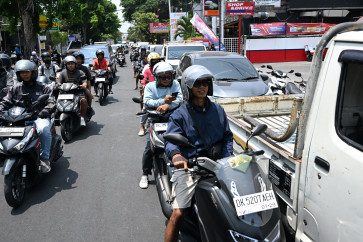
For decades, Indonesia has tried to solve its logistics problem in the same way: by adding more roads, more trucks and more capacity onto a system that was never designed to carry the weight placed upon it. The result is familiar, congestion that does not ease, costs that do not fall and uncertainty that quietly defines how the economy moves.
Perhaps because the issue has never been distance. It has always been design.
On paper, trucking from Cikarang to Tanjung Priok appears efficient, with market rates ranging between US$110 and $140 per Twenty-foot Equivalent Unit (TEU). But logistics is not measured by motion alone. It is measured by time, and more importantly, by the reliability of that time.
A journey expected to take two hours routinely stretches to five or six. When hidden costs are accounted for, the real economic cost rises to $140 to $180 per TEU.
The system is not cheap. It is simply mispriced.

Along the northern edge of Java, a canal runs quietly toward the sea, the Cikarang Bekasi Laut. It was built to carry water. But it has always had the potential to carry something more: certainty.