TheJakartaPost
Please Update your browser
Your browser is out of date, and may not be compatible with our website. A list of the most popular web browsers can be found below.
Just click on the icons to get to the download page.


Popular Reads
Top Results
No results found. Please check your search term and try again
Can't find what you're looking for?
View all search results
Popular Reads
Top Results
No results found. Please check your search term and try again
Can't find what you're looking for?
View all search resultsThe geopolitics of infrastructure
Ports, power grids, rail corridors, data centers and critical-mineral supply chains are no longer just “projects.” They are the operating system of sovereignty.
Change text size
Gift Premium Articles
to Anyone
Share the best of The Jakarta Post with friends, family, or colleagues. As a subscriber, you can gift 3 to 5 articles each month that anyone can read—no subscription needed!
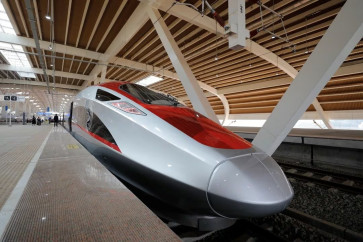
 A China-backed high-speed railway train connecting Jakarta and Bandung called “Whoosh“ is parked on Oct. 2, 2023, at Halim station in East Jakarta (Reuters/Willy Kurniawan)
F
or most of the postwar era, global power has been defined by alliances, aircraft carriers and reserve currencies. But we are now entering an era defined by critical infrastructure and those who finance, build and operate it.
Ports, power grids, rail corridors, data centers and critical-mineral supply chains are no longer just “projects.” They are the operating system of sovereignty. Infrastructure, networks that move energy, goods and data, is the industry of industries. Whoever shapes it through contracts, standards, currency denomination and long-term maintenance, much of which is increasingly guided by data and artificial intelligence-driven systems, will achieve enduring global influence.
Debates about “de-dollarization” often focus on reserve currencies. In the International Monetary Fund’s Currency Composition of Official Foreign Exchange Reserves data, the United States dollar accounted for roughly 57 percent of global reserves in 2025, with the euro a distant second. But official reserves are a lagging indicator. The more relevant shift concerns infrastructure.
China recognized this early. Between 2000 and 2023, it extended approximately US$2.2 trillion in official loans and grants as part of its Belt and Road Initiative, much of which was invested in transportation and energy infrastructure. This model was never just about capital. By bundling finance, contractors, equipment and digital systems, China was exporting state capacity and embedding long-term dependence.
Projects like the Chancay mega-port in Peru, which is majority-owned by a Chinese operator and backed by billions in investment, illustrate how infrastructure can reconfigure trade routes and other dependencies. Likewise, the Addis Ababa–Djibouti Railway, financed largely by Chinese lending, dramatically reduced freight times between Ethiopia and the Red Sea.
The geopolitical implications of infrastructure investment are increasingly top of mind for policymakers. The prospect of Chinese involvement in airport construction in Greenland raised security concerns in both Denmark and the US. The new contest is not simply between currencies but between competing infrastructure blocs.

For decades, US influence rested on military power, the dollar, and multilateral institutions. But while this architecture still matters, it is rapidly being supplemented, and in some cases challenged, by infrastructure strategies.