The Jakarta Post
Please Update your browser
Your browser is out of date, and may not be compatible with our website. A list of the most popular web browsers can be found below.
Just click on the icons to get to the download page.


Popular Reads
Top Results
No results found. Please check your search term and try again
Can't find what you're looking for?
View all search results
Popular Reads
Top Results
No results found. Please check your search term and try again
Can't find what you're looking for?
View all search resultsThe 5 percent growth trap: Indonesia’s narrow path to 2026
If policymakers continue to prioritize stability without addressing the root causes of capital inefficiency, Indonesia will not escape from the 5 percent growth trap.
Change text size
Gift Premium Articles
to Anyone
Share the best of The Jakarta Post with friends, family, or colleagues. As a subscriber, you can gift 3 to 5 articles each month that anyone can read—no subscription needed!
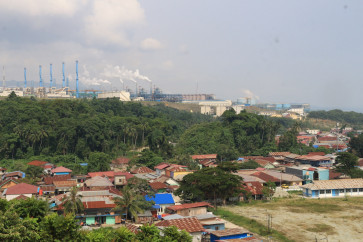
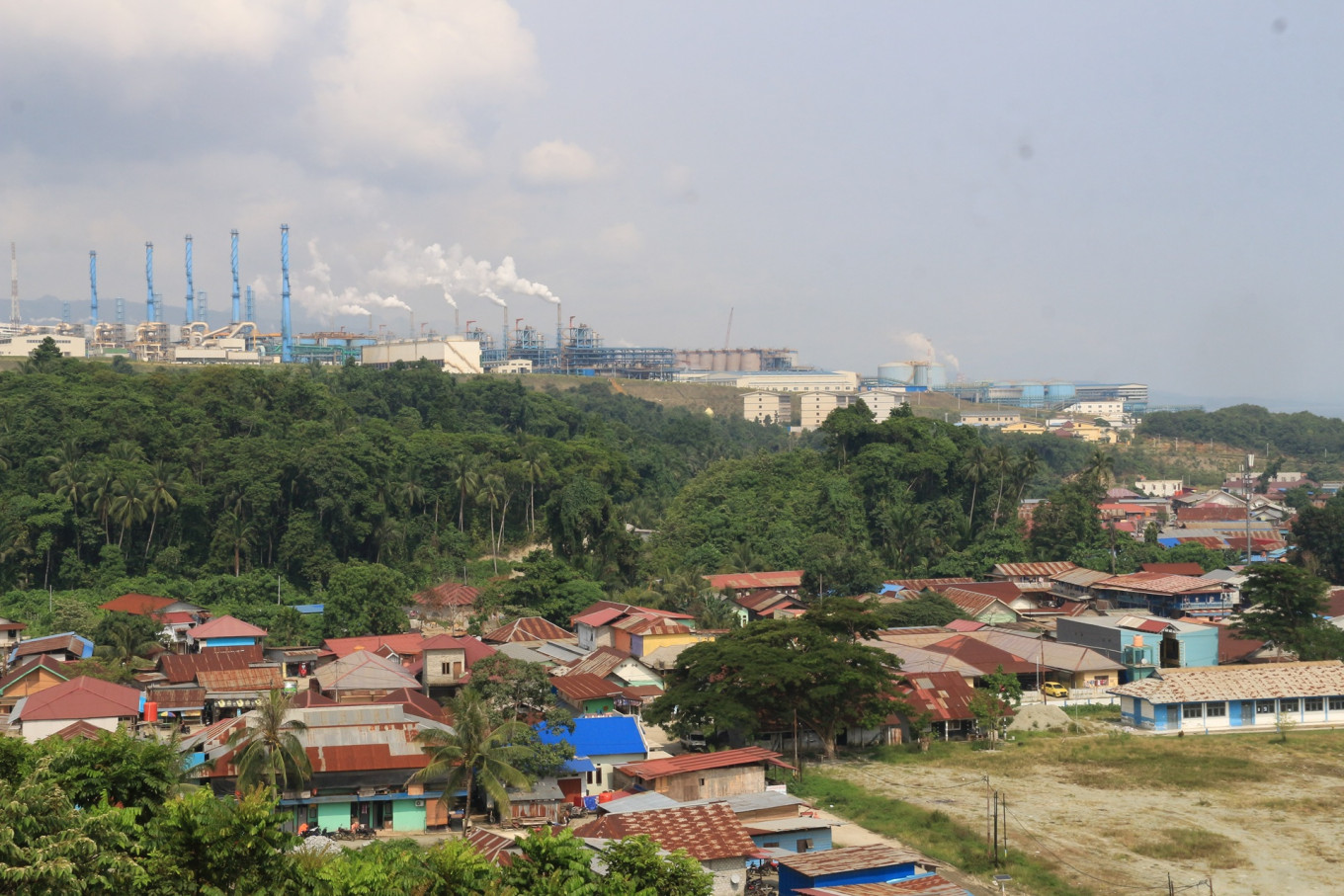 A nickel smelting and processing site operated by PT Indonesia Weda Bay Industrial Park (IWIP) is seen in the background of Lelilef Sawai village in Central Weda district, Central Halmahera regency, North Maluku on Feb. 20, 2025. (Courtesy of Supriyadi Sudirman/-)
M
acroeconomic stability, long touted as Indonesia’s defensive shield, is no longer sufficient to guarantee a meaningful growth acceleration. Amid the turbulence of what can be described as a “Great Tension”, driven by escalating geopolitical frictions in the Middle East and a shifting global trade architecture, Indonesia faces a stark paradox. Its political ambition to break free from the "5 percent growth trap" is colliding with entrenched domestic rigidities and external shocks that are increasingly systemic in nature.
The divergence in projections among multilateral institutions underscores just how clouded the global economic outlook has become. The World Bank has taken the most conservative stance, trimming Indonesia’s growth forecast to 4.7 percent. The rationale is clear: the transmission of risks from Middle Eastern conflicts is expected to exert dual pressure.
Surging global crude oil prices will inflate energy subsidies and widen the fiscal deficit, while heightened risk aversion in global financial markets could trigger capital outflows, already evident when the rupiah briefly weakened past the psychological threshold of 17,100 per US dollar.
In contrast, the Asian Development Bank (ADB) offers a more optimistic projection of 5.2 percent. Its confidence rests on the cyclical resilience of domestic demand, particularly the consumption surge associated with Ramadan and Idul Fitri in March. As long as inflation remains contained within the 2.5 percent target range, the ADB expects growth momentum to be sustained through investment in downstream industries and national strategic projects.
Meanwhile, the International Monetary Fund strikes a middle ground with a 5 percent forecast. While acknowledging Indonesia as a relative bright spot, the IMF cautions against the growing risks of global trade fragmentation. Its general equilibrium models highlight rising input costs, driven by higher fuel prices, which could keep interest rates elevated for longer.
These differing projections are not merely statistical variations; they reflect fundamentally different assumptions about how deeply global uncertainty will erode the strength of Indonesia’s domestic economic engine.

Beyond these external forecasts, the internal health of the economy reveals that Indonesia’s growth is structurally constrained by endemic inefficiencies. One critical yet often overlooked parameter is the Incremental Capital Output Ratio (ICOR), which measures how much investment is required to generate additional output. Indonesia’s ICOR remains elevated at around 5.8 to 6.5, significantly higher than those of regional peers such as Vietnam and India.