TheJakartaPost
Please Update your browser
Your browser is out of date, and may not be compatible with our website. A list of the most popular web browsers can be found below.
Just click on the icons to get to the download page.


Popular Reads
Top Results
No results found. Please check your search term and try again
Can't find what you're looking for?
View all search results
Popular Reads
Top Results
No results found. Please check your search term and try again
Can't find what you're looking for?
View all search resultsFrom commitments to delivery: Why systems, not slogans, will define sustainability
The sustainability challenge is no longer about defining goals. It is about building systems capable of delivering them.
Change text size
Gift Premium Articles
to Anyone
Share the best of The Jakarta Post with friends, family, or colleagues. As a subscriber, you can gift 3 to 5 articles each month that anyone can read—no subscription needed!
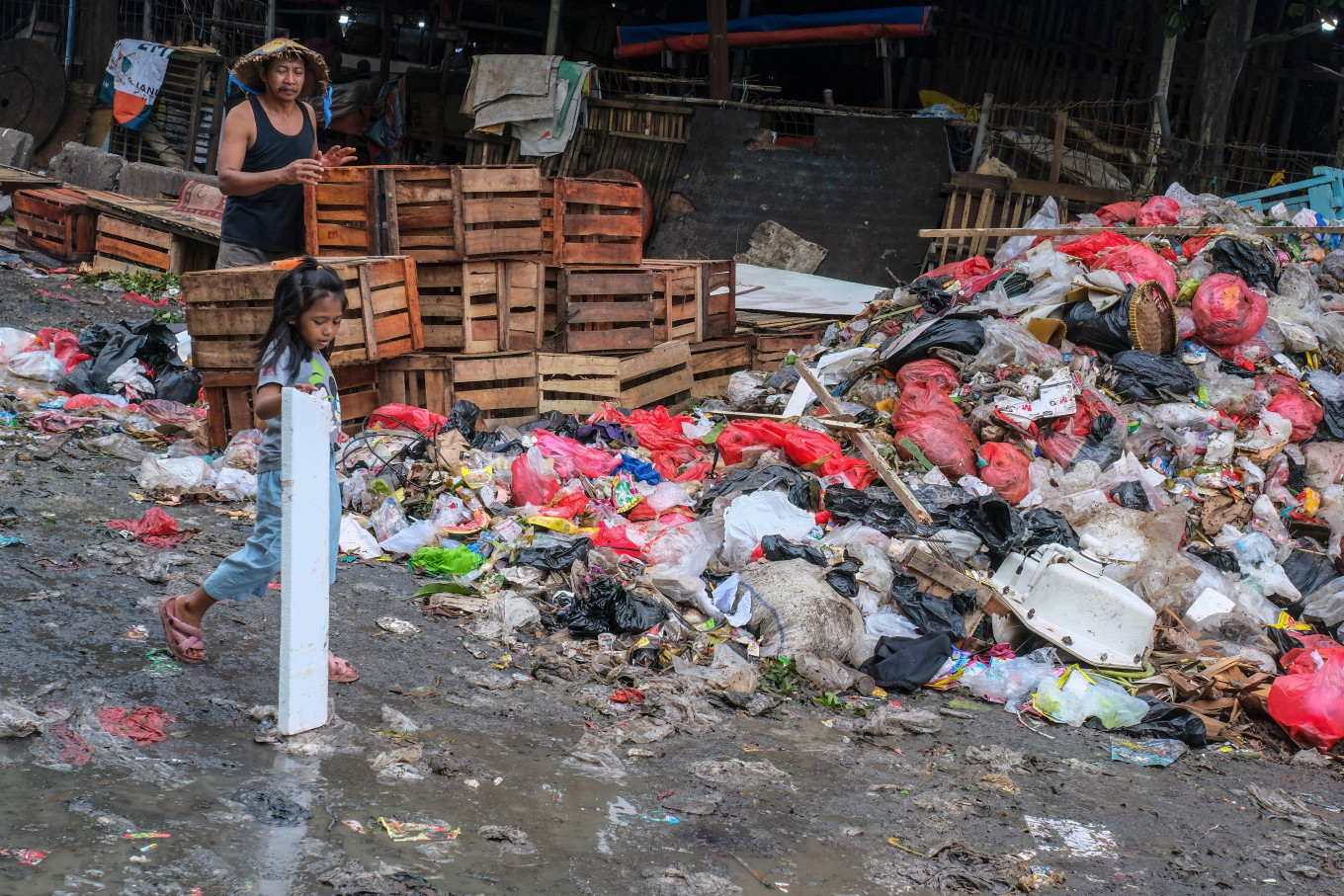 A child carries an item scavenged from a pile of trash on Jan. 20 on a public road in Pasar Minggu, Jakarta. Garbage-choked streets, overloaded landfills and fear of trash avalanches haunt greater Jakarta, as the world's most populous metropolis grapples with a waste crisis. (AFP/Bay Ismoyo)
The world today does not suffer from a lack of ambition. It suffers from a lack of delivery.
Over the past decade, governments, institutions and corporations have produced an unprecedented number of sustainability commitments. Climate pledges have multiplied, Economy, Social and Governance (ESG) frameworks have expanded and global agreements have been negotiated with increasing urgency. Yet, despite this progress, the gap between what has been promised and what has been achieved continues to widen.
According to the United Nations, only around 17 percent of global targets are currently on track, while the majority are progressing too slowly or, in some cases, moving in reverse. This is not simply a development gap. It is a systemic failure of implementation.
The scale of the challenge becomes even clearer when viewed through an economic lens. The World Bank estimates that developing countries face an annual financing gap exceeding US$4 trillion to meet sustainable development goals. At the same time, the International Energy Agency reports that global energy investment has reached approximately $2.8 trillion per year, yet still falls short of what is required to meet net-zero emission pathways. Meanwhile, the International Monetary Fund warns that artificial intelligence could affect up to 40 percent of global employment, underscoring the scale of economic transformation already underway.
Taken together, these trends point to a deeper issue. The sustainability challenge is no longer about defining goals. It is about building systems capable of delivering them.
What we are facing today is not a single crisis, but a convergence of gaps. There is a financing gap, an implementation gap and a technology access gap. But perhaps the most critical is a coordination gap: an inability to connect policies, institutions and resources into coherent systems of action.

This is where a fundamental shift is needed.