The Jakarta Post
Please Update your browser
Your browser is out of date, and may not be compatible with our website. A list of the most popular web browsers can be found below.
Just click on the icons to get to the download page.


Popular Reads
Top Results
No results found. Please check your search term and try again
Can't find what you're looking for?
View all search results
Popular Reads
Top Results
No results found. Please check your search term and try again
Can't find what you're looking for?
View all search resultsInflation won’t stop at pump
While government estimates suggest fuel hikes are a minor technicality, the real danger lies in a "squeezed middle class" whose forced spending cuts could trigger a much broader economic slowdown.
Change text size
Gift Premium Articles
to Anyone
Share the best of The Jakarta Post with friends, family, or colleagues. As a subscriber, you can gift 3 to 5 articles each month that anyone can read—no subscription needed!
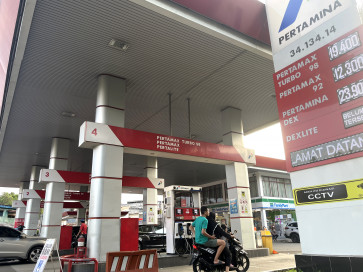
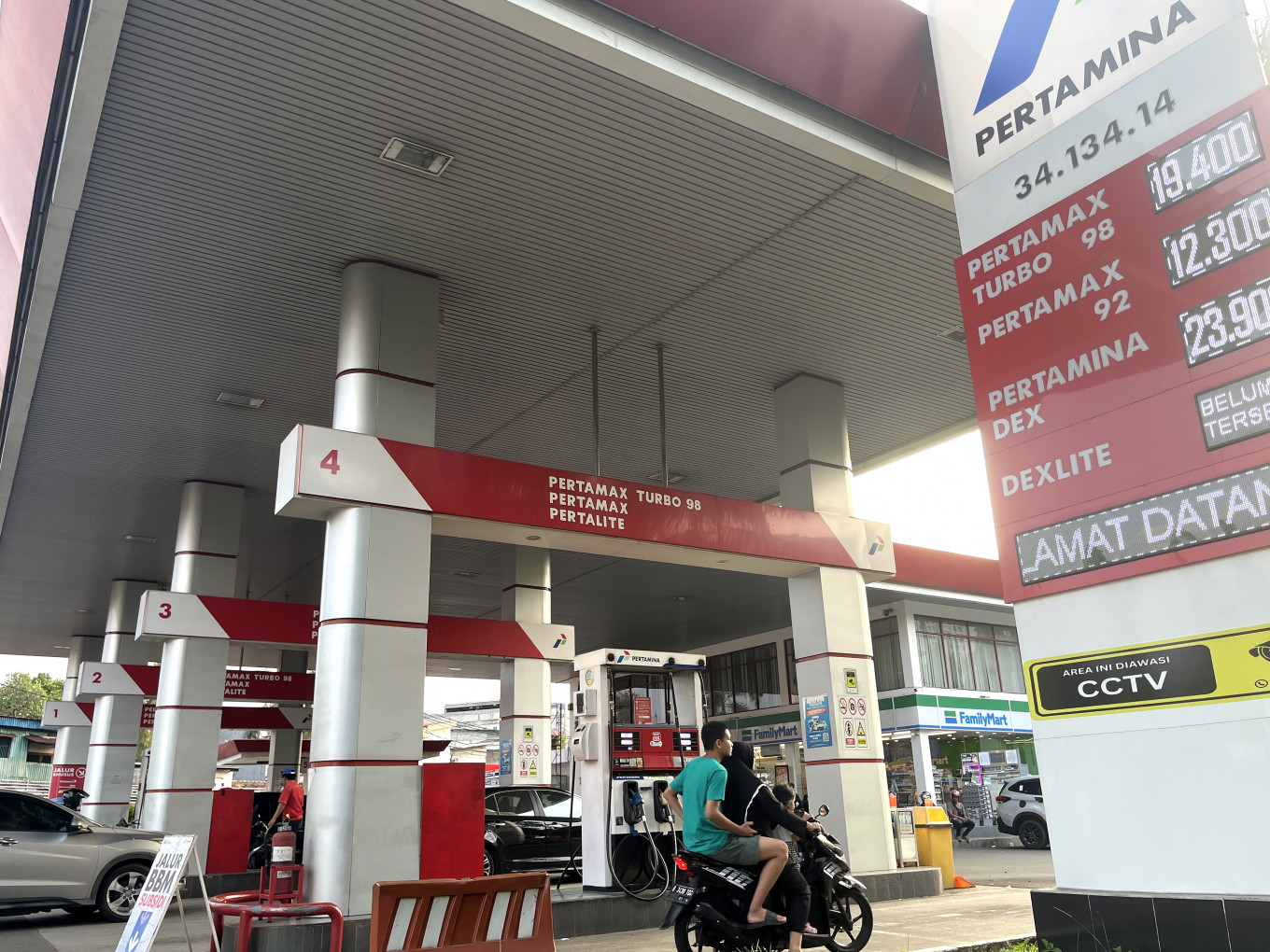 A fuel price board is displayed on Sunday at a gas station on Jl. Jenderal Basuki Rachmat in East Jakarta. In Jakarta, prices for nonsubsidized fuels have risen sharply, with Pertamax Turbo (RON 98) increasing to Rp 19,400 (US$1.13) per liter from Rp 13,100, Dexlite to Rp 23,600 per liter from Rp 14,200 and Pertamina Dex to Rp 23,900 per liter from Rp 14,500. No significant lines were seen at the time the photo was taken, a day after the price increase. (JP/Iqro Rinaldi)
T
he government has repeatedly downplayed the inflationary impact of the recent hike in unsubsidized fuel prices, arguing it will be minimal given the relatively small number of users. Bank Indonesia has corroborated this stance, estimating the increase will add just 0.04 percent to overall Consumer Price Index (CPI) growth.
That estimate may be correct in a narrow, technical sense regarding the direct impact of the Pertamax Turbo, Dexlite and Pertamina Dex price hikes. However, it does not fully capture the second-round effects that often follow fuel price adjustments, particularly the higher transportation and logistics costs that eventually feed into the prices of everyday goods and services.
Indonesian consumers have been battered by one shock after another in recent years. This began with the COVID-19 pandemic, followed by the Russia-Ukraine war in 2022, which triggered hikes in both subsidized and unsubsidized fuel, and now continues with the ongoing conflict in the Middle East. Through each crisis, households have been forced to recalibrate their spending, either by cutting consumption or switching to cheaper alternatives.
While the poorest groups have been partly shielded by government social assistance programs, the story is different for the middle class. Often excluded from most subsidies and incentives, this demographic remains the backbone of consumer spending.
According to a Bank Mandiri study, the average fuel spending by mid-middle-class households fell 2.7 percent year-on-year in 2025, while the lower-middle class saw a 2.2 percent decline. This suggests that many consumers are either reducing fuel consumption or shifting to cheaper subsidized products, a trend that could further strain the state budget by expanding the subsidy burden. Furthermore, when households can no longer cut mobility spending, they are forced to reallocate their budgets, often at the expense of other purchases.
Research from 2022 reveals that every 1 percent decline in fuel consumption was accompanied by a 1.3 percent drop in durable goods spending among vulnerable households, including for electronics, home appliances and motorcycles. For the middle class, a similar reduction in fuel use was followed by up to a 1 percent decline in leisure-related spending, such as entertainment and hotel stays.

These consumption adjustments may seem manageable in the short term, but they carry long-term risks. Durable goods spending supports manufacturing jobs, while leisure spending sustains tourism and services. A prolonged squeeze on the middle class could, therefore, weaken domestic demand and slow overall economic growth.