The Jakarta Post
Please Update your browser
Your browser is out of date, and may not be compatible with our website. A list of the most popular web browsers can be found below.
Just click on the icons to get to the download page.


Popular Reads
Top Results
No results found. Please check your search term and try again
Can't find what you're looking for?
View all search results
Popular Reads
Top Results
No results found. Please check your search term and try again
Can't find what you're looking for?
View all search resultsThe boundary of dissent: Between treason and expression
When the state begins to mistake verbal dissent for a physical attack, the line between national security and authoritarianism effectively vanishes.
Change text size
Gift Premium Articles
to Anyone
Share the best of The Jakarta Post with friends, family, or colleagues. As a subscriber, you can gift 3 to 5 articles each month that anyone can read—no subscription needed!
 Set as preferred source
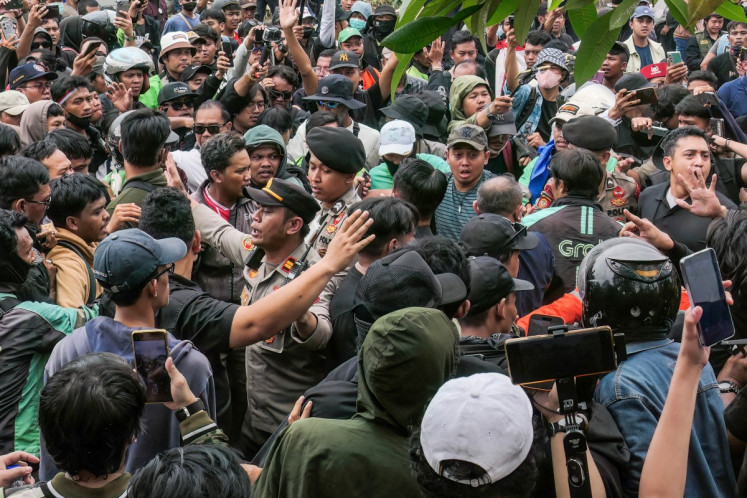
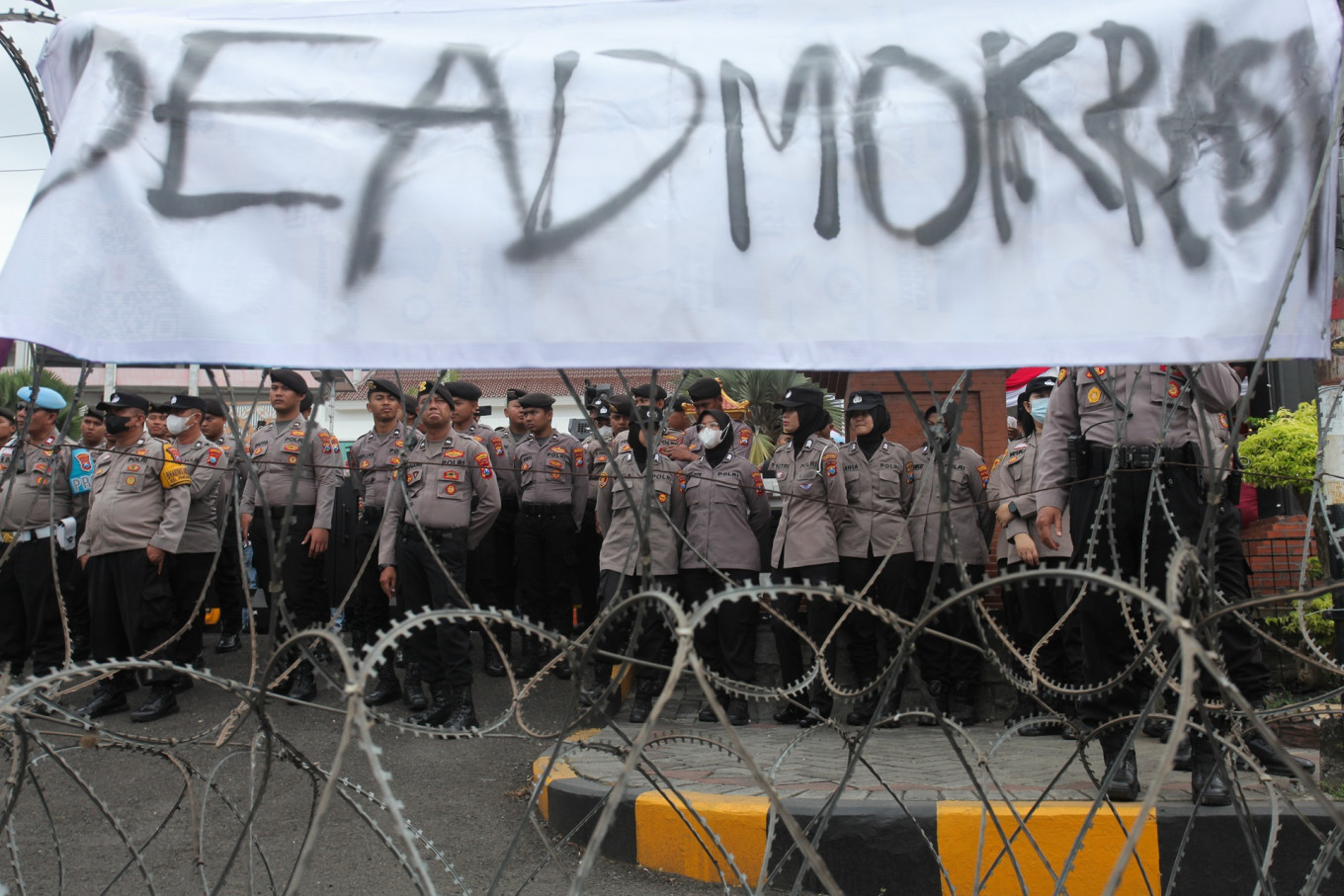 Police officers stand guard on Aug. 19, 2025, during a rally organized by university students in front of the East Java Regional Council (DPRD) in Surabaya, East Java. The Surabaya Police deployed nearly 700 personnel to safeguard the rally, during which protesters called for the government to scrap its controversial national history book project and push for protection for freedom of expression. (Antara/Didik Suhartono)
C
ritics of government policy are increasingly being accused of treason, at a time when democracy in the country continues to suffer setbacks. But can every critical political expression be regarded as a crime, or an attempt to overthrow authority?
Law enforcement agencies, particularly the police, must always be cautious and precise, and never arbitrary, in responding to criminal reports that intersect with the rights to opinion and expression.
On March 13, President Prabowo Subianto delivered a statement while chairing a plenary cabinet meeting at the State Palace in Jakarta, saying that he would “discipline” observers who are critical of his administration's performance. This statement has the potential to endanger the right to opinion and free expression, as well as academic freedom.
It is a stark departure from the historic events of 28 years ago, when the collective exercise of freedom of opinion succeeded in bringing down president Soeharto, Prabowo’s father-in-law, after 32 years of power.
The consequences of this rhetoric are already visible. For example, a statement by political observer Saiful Mujani calling for consolidation to “bring down the President” in a public forum on March 31, sparked immediate controversy.
Certain parties condemned the statement as constituting treason as regulated under the Criminal Code (KUHP). This accusation has reignited a longstanding debate about the boundary between legitimate expression and the crime of sedition.

International standards provide a clear framework for this debate. The International Covenant on Civil and Political Rights (ICCPR), Article 19, paragraphs (1) and (2), guarantee that everyone has the right to hold opinions without interference. This includes the freedom to seek, receive and impart information of all kinds, regardless of frontiers.