TheJakartaPost
Please Update your browser
Your browser is out of date, and may not be compatible with our website. A list of the most popular web browsers can be found below.
Just click on the icons to get to the download page.


Popular Reads
Top Results
No results found. Please check your search term and try again
Can't find what you're looking for?
View all search results
Popular Reads
Top Results
No results found. Please check your search term and try again
Can't find what you're looking for?
View all search resultsC188 on paper, C188 at sea: Translating ratification into reality
Ratifying the ILO’s fishing convention is a diplomatic milestone for Indonesia, but translating paper promises into real protections for fishers requires dismantling deep-seated legal and bureaucratic barriers.
Change text size
Gift Premium Articles
to Anyone
Share the best of The Jakarta Post with friends, family, or colleagues. As a subscriber, you can gift 3 to 5 articles each month that anyone can read—no subscription needed!
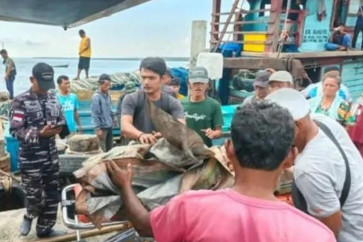
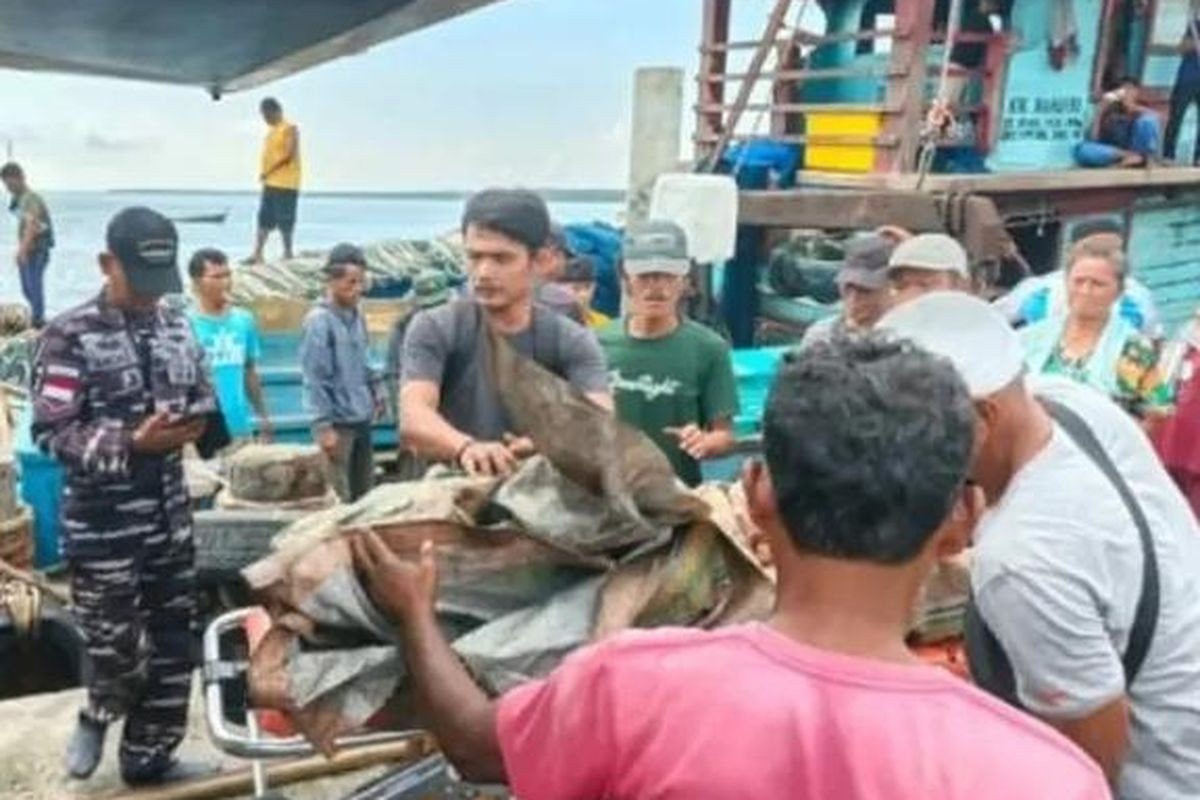 Victims of a fishing boat that caught fire are evacuated on April 7 to Belawan Port in Medan, North Sumatra. The fire killed three fishermen and five others went missing while 13 fishermen were rescued by a nearby fishing vessel. (Courtesy of Kodaeral I/-)
O
n May Day, President Prabowo Subianto announced Indonesia’s signing of the International Labor Organization’s Convention No. 188 (C188), the Work in Fishing Convention. Enacted through Presidential Regulation No. 25/2026 and issued on the initiative of the Manpower Ministry, the move honors a commitment signaled a year ago to the country’s fishers and the labor movement that has long pushed for it.
For a sector central to coastal livelihoods and global seafood supply chains, the formal recognition that decent work belongs at sea is no small matter. Being a signatory to the convention places this commitment in international law; however, the task of translating it into tangible protection for fishers on Indonesia’s own fishing fleet begins now.
The principle behind C188 is straightforward: Fishers are workers, and work at sea must meet the same standard of human dignity expected in any other workplace. Yet, as scholar Antje Wiener has argued, norms remain contested through implementation; ratification marks the start of a longer political contest rather than its conclusion. Implementation is where most norm projects falter.
The legal vehicle of ratification is itself an early site of this contestation. A decade ago, Indonesia ratified the Maritime Labor Convention 2006—the ILO’s flagship instrument for merchant seafarers—through Law No. 15/2016. At that time, the government reasoned that under Article 10 of Law No. 24/2000 on International Treaties, a maritime labor convention concerning workers’ protection had to be ratified by a law (Undang-Undang) rather than a lower instrument. The standard the state set for itself in 2016 was that decent work at sea is a human-rights matter requiring legislative-level recognition.
By that standard, C188 should also have been ratified through a law. It is the parallel ILO instrument for the same workers at sea, covering the same ground of written employment agreements, hours of rest, occupational health, accommodation, and social protection. Ratifying it instead through a presidential regulation, which sits below a law in the hierarchy of Law No. 12/2011, is a normative downgrade. It settles, in advance of implementation, that the protection of fishers does not carry the same legal weight as the protection of seafarers.
Below the question of the legal vehicle, operational work has been moving. Earlier this year, the Marine Affairs and Fisheries Ministry issued Regulation No. 04/2026 on the governance of fishing-vessel crewing, training and certification. While this regulation absorbed the bulk of C188’s operational content for fishers on Indonesian-flagged vessels, labor at sea is still being treated as a single-domain technicality of fisheries administration.

Four fundamentals will determine whether this changes lives on a longliner anchored at Benoa in Bali or a purse seiner out of Bitung in North Sulawesi.