The Jakarta Post
Please Update your browser
Your browser is out of date, and may not be compatible with our website. A list of the most popular web browsers can be found below.
Just click on the icons to get to the download page.


Popular Reads
Top Results
No results found. Please check your search term and try again
Can't find what you're looking for?
View all search results
Popular Reads
Top Results
No results found. Please check your search term and try again
Can't find what you're looking for?
View all search resultsWant to jump into the 'China is back' rally? Tread carefully
"China is back" is a common refrain among investors. However, stock-picking in China remains as hard as ever.
Change text size
Gift Premium Articles
to Anyone
Share the best of The Jakarta Post with friends, family, or colleagues. As a subscriber, you can gift 3 to 5 articles each month that anyone can read—no subscription needed!
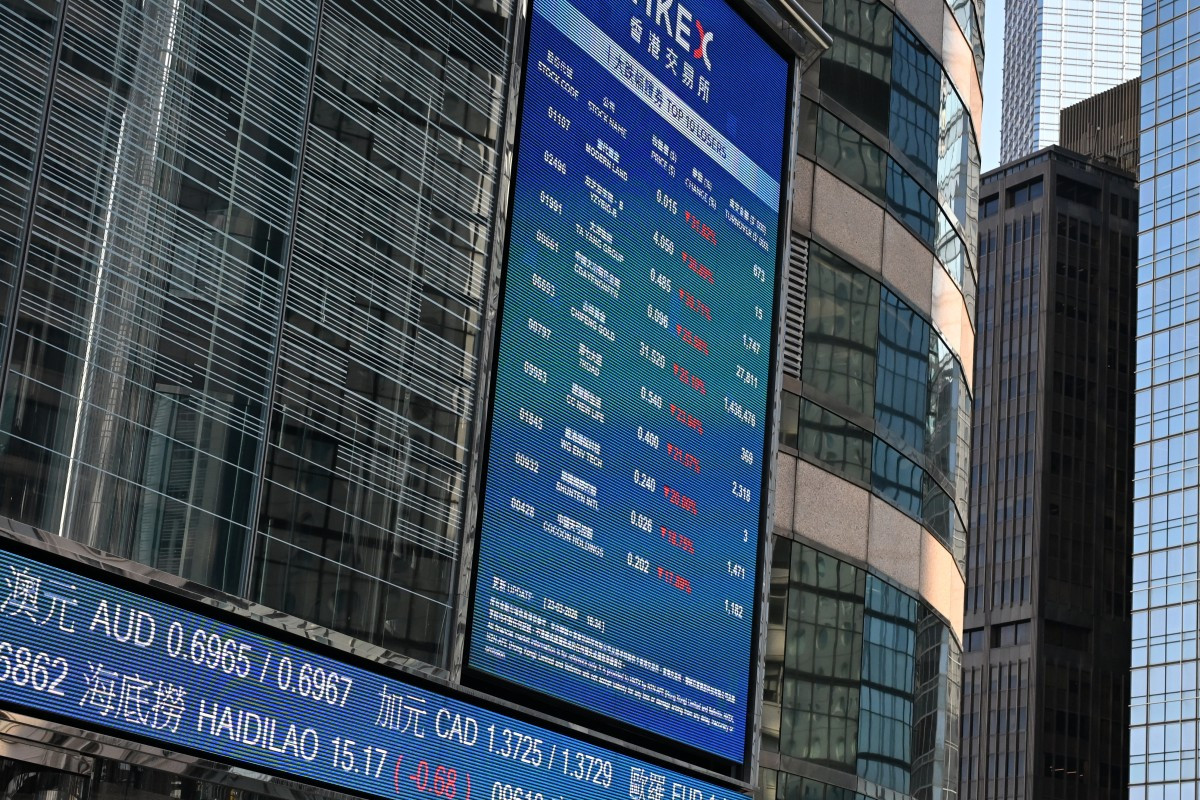 An electronic signboard shows the closing prices of stocks at the end of the day's trade outside the Hong Kong Exchanges and Clearing (HKEX) building in Hong Kong on March 23, 2026. (AFP/Peter Parks)
"China is back" is a common refrain among investors, who point to the success of the country’s foundational artificial intelligence companies and the ongoing rebound of its economy from a three-year deflationary funk. However, stock-picking in China remains as hard as ever.
China certainly does appear to be breaking out of its slump. First-quarter gross domestic product grew 5 percent year-on-year, up from a three-year low of 4.5 percent in the fourth quarter, on the back of strong manufacturing and exports. Consumer spending remains patchy and property continues to slide, though high-tech manufacturing is helping offset the drag.
Beijing's efforts to upgrade the country’s economy over the past decade through investment in advanced technology, green energy and high-end manufacturing have clearly paid off.
These efforts are also showing up in China’s stock market.
Three of the eight Hong Kong-listed sectors that have outperformed the market through mid-May, industrials, technology and process industries, all sit at the intersection of Beijing's policy priorities.
Within the sector, performance diverges sharply. China's two largest electric-vehicle makers BYD and Geely were up 2 percent and 19 percent, respectively, in the year through mid-May, buoyed by premium products and strong exports. Smaller rivals Xiaomi and XPeng fell more than 20 percent in that time, weighed down by margin fears as the price war in the industry intensified.

AI is obviously one of Beijing’s key priorities, and a major driver of equity market performance. But, here again, caution is warranted, as "AI losers" are emerging in China, too.
Following the launch of Anthropic's Claude AI platform in early 2026, shares of some Chinese platforms serving tourism and online music, Trip.com and Tencent Music among them, nosedived and have not recovered.
Meanwhile, several policy-targeted sectors have underperformed. Technology services, home to AI giants Tencent, MiniMax and Baidu, dropped 17 percent in the year through May 15, reflecting investor anxiety over high development costs, intense competition and doubts over near-term profitability.
Putting one’s money on market leaders has also not always worked. China's largest chipmaker SMIC was down over 5 percent in the year through mid-May on concerns about heavy capital expenditures, while smaller rival Huahong Semiconductor was up a striking 56 percent.
Another key Beijing priority over the past year has been stamping out “involution", overcapacity and deflation arising from soft domestic demand and disorderly, excessive competition. The results have been mixed, however, creating both opportunities and pitfalls for investors.
Nowhere is involution more starkly apparent than in EVs.
Almost a year after Chinese authorities warned EV makers to end their fierce price war, discounts keep coming. Throughout 2026, top manufacturers have offered 10 to 15 percent price cuts in the face of massive overcapacity and declining auto sales.
Investors may therefore consider trying to avoid “involution losers”, those firms apt to continue bearing the brunt of this fierce competition. But that is easier said than done.
One option would be to focus on companies that are neutralizing the pressure on their domestic margins by expanding high-value exports.
Geely and BYD both appear to be in this camp, having each expanded aggressively abroad in recent years. BYD posted a 56 percent year-on-year rise in exports in the first quarter of 2026, with Geely boasting a 126 percent jump.
Of course, for companies to pursue this strategy successfully, they will need to navigate geopolitical fault lines in a world of mounting trade barriers.
Companies that successfully locate production facilities abroad, and focus on the international market more broadly, may be better positioned, as this strategy could enable them to both sidestep trade friction and capture global margins rather than risk getting pulled into a “race to the bottom” in the domestic Chinese market where demand remains muted.
BYD's plants in Hungary, Brazil, Turkey and Thailand may serve this purpose. So could Geely's factories in Europe and its intended acquisitions in Mexico. Battery leader CATL is following the same path with its gigafactory in Hungary.
Some of Beijing’s other efforts to boost efficiency and innovation are also bearing fruit.
For example, in the solar energy industry, government-encouraged consolidation has pushed more than 40 smaller firms into bankruptcy or acquisition, rationalizing a bloated sector.
Shares of large, vertically integrated solar firms have benefited from the consolidation, with sector leader Jinko Solar up more than 20 percent over the past 12 months.
Meanwhile, in biotech, the National Medical Products Administration (NMPA) has implemented faster approval timelines and aligned its standards with international bodies such as the International Council for Harmonization in July 2024.
The resulting acceleration in clinical trials and rise in deals where global pharmaceutical companies license rights to commercialize Chinese-developed products elsewhere have driven Chinese biotech ETFs sharply higher this year.
China’s large market clearly features myriad positive drivers, many of which could prove durable.
That being said, the risks should not be overlooked. Rising geopolitical tensions with the United States could potentially lead to higher tariffs and export restrictions. Disorderly competition could also rear its ugly head, even in sectors seeing nascent benefits of the "anti-involution" drive.
China may be back, but policy- and news-driven volatility has not disappeared. Investors thus need to proceed with caution, and not skimp on the due diligence.
---
The writer is founder and CEO of Emmer Capital Partners Ltd. The views expressed are personal.