The Jakarta Post
Please Update your browser
Your browser is out of date, and may not be compatible with our website. A list of the most popular web browsers can be found below.
Just click on the icons to get to the download page.


Popular Reads
Top Results
No results found. Please check your search term and try again
Can't find what you're looking for?
View all search results
Popular Reads
Top Results
No results found. Please check your search term and try again
Can't find what you're looking for?
View all search resultsAnalysis: 'Pesta Babi' and Prabowo’s uneasy relationship with criticism
Change text size
Gift Premium Articles
to Anyone
Share the best of The Jakarta Post with friends, family, or colleagues. As a subscriber, you can gift 3 to 5 articles each month that anyone can read—no subscription needed!
 Set as preferred source
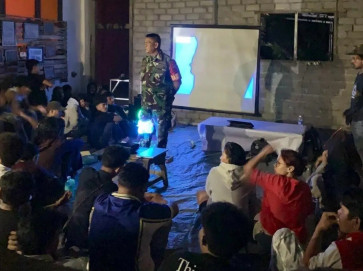
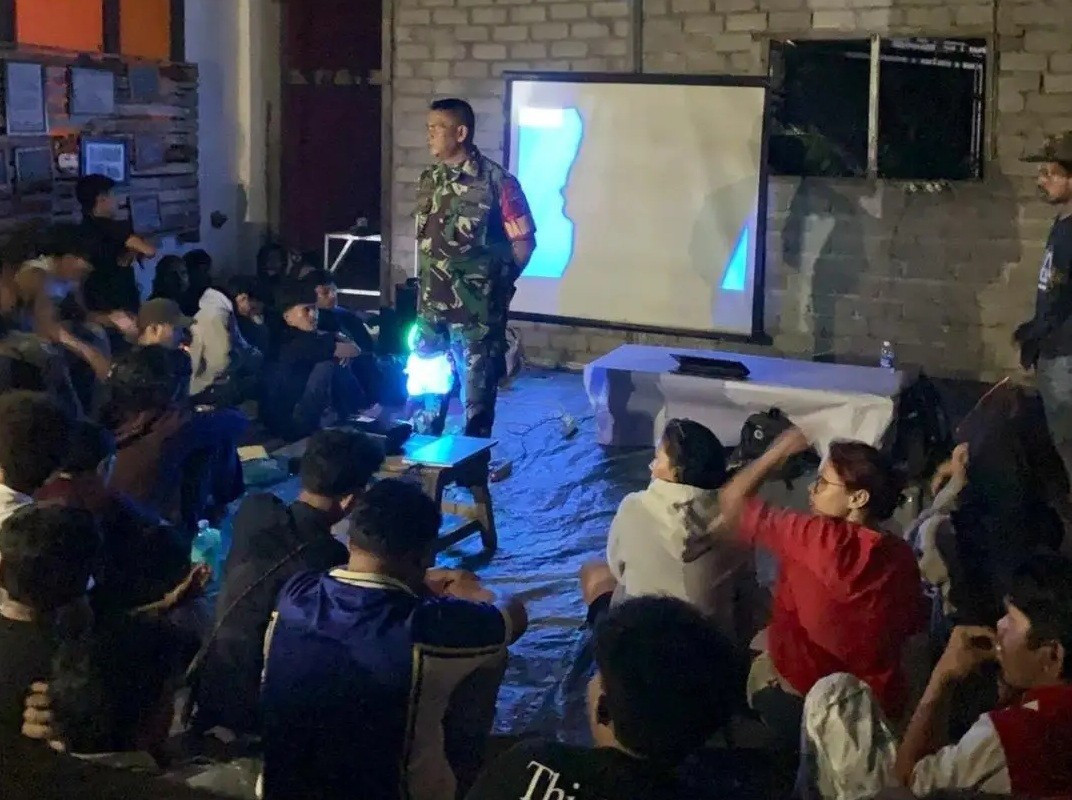 A military officer blocks a projector to shut down a public screening of the documentary Pesta Babi at Khairun University in Ternate, North Maluku, on May 12, 2026. Authorities halted the event under the pretext that it lacked an official permit. (x.com/@Dandhy_Laksono)
T
he documentary film Pesta Babi (Pig Feast) is compelling not only for what it portrays, but also for the reaction it has provoked. It lays bare Indonesia’s contemporary agrarian conflicts while, once again, exposing the state’s enduring discomfort with criticism.
Pesta Babi: Kolonialisme di Jaman Kita (Pig Feast: Colonialism in Our Time) tells the story of indigenous communities in South Papua fighting to protect their ancestral lands from the expansion of palm oil plantations, sugarcane estates and large-scale food projects. More than a local land dispute, the documentary presents these struggles as part of a broader political and ecological crisis unfolding in Papua.
At the center of the documentary are Indonesia’s National Strategic Projects (PSN) for food and energy production, which have transformed roughly 2.5 million hectares of Papua’s forests into industrial plantations, a development environmental groups describe as among the largest episodes of deforestation in modern history. Directed by Dandhy Dwi Laksono and coproduced with Cypri Dale, Pesta Babi emerged from a collaboration among environmental and human rights organizations, including Greenpeace Indonesia, Watchdoc, Yayasan Bentala Pusaka, Media Jubi and LBH Papua Merauke.
Its distribution model is as political as its content. Rather than relying on commercial cinemas or subscription platforms, the documentary is circulated free of charge. Any community able to gather at least 10 people can organize a screening and receive the film directly from its producers. Since its release in March, screenings have spread rapidly across the country. On May 14 alone, organizers recorded around 130 simultaneous viewing locations.
Yet almost as quickly as the screenings multiplied, so did reports of disruption. The first reported shutdown took place on April 27 at Pendidikan Mandalika University in Mataram, West Nusa Tenggara, quickly followed by similar campus-led cancellations at Mataram University, Mataram State Islamic University, the Bali Indonesia Art Institute and Khairun University in Ternate, North Maluku. In each case, university authorities reportedly took the initiative to halt the events.
Elsewhere, intervention came directly from security institutions. A screening at SMA 1 Sungayang state senior high school in Tanah Datar, West Sumatra, was canceled after the State Intelligence Agency (BIN) reportedly contacted the school principal regarding the event. The most widely circulated incident occurred in Ternate on May 8, where a video showed Ternate Military District Commander Lt. Col. Jani Setiadi shutting down a screening organized by the Alliance of Independent Journalists (AJI) at Benteng Oranje.

Pressure has also taken subtler, more intimidating forms. In Pangkalan Bun, Central Kalimantan, an environmental journalist reportedly received threats after posting an invitation to a public screening. Via text message, the journalist was warned he could meet the same fate as human rights activist Andrie Yunus, who was recently attacked with acid.