The Jakarta Post
Please Update your browser
Your browser is out of date, and may not be compatible with our website. A list of the most popular web browsers can be found below.
Just click on the icons to get to the download page.


Popular Reads
Top Results
No results found. Please check your search term and try again
Can't find what you're looking for?
View all search results
Popular Reads
Top Results
No results found. Please check your search term and try again
Can't find what you're looking for?
View all search resultsDeforestation drops globally but still alarming: Report
Change text size
Gift Premium Articles
to Anyone
Share the best of The Jakarta Post with friends, family, or colleagues. As a subscriber, you can gift 3 to 5 articles each month that anyone can read—no subscription needed!

S
hrinking forest cover over the last 30 years presents a clear and present danger to biodiversity, a recent review of the state of the world’s forests has found, even though the rate of deforestation has slowed in the past five years.
The State of the World’s Forests (SOFO) 2020, published jointly by the United Nations’ Food and Agriculture Organization (FAO) and the UN Environment Program (UNEP), also called for global cooperation to turn the tide of deforestation.
According to the report, it is estimated that around 420 million hectares of forest have been lost since 1990 through land-use conversion, although the rate has decreased recently.
In the decade beginning in 2010, the world lost 22 million ha of forest to deforestation, up from the 15 million ha lost in the decade prior. Between 1990 and 2000, some 16 million ha of forest was lost to deforestation.
While up to 93 percent of the world’s forests can naturally regenerate, they were not able to keep up with the rate of deforestation, with annual agricultural expansion rising from 8 million ha between 1990 and 2000 to 10 million ha (2000-2010) and 12 million ha (2010-2020) per year.
“This is clearly not a sustainable track we are on. Forests regulate global weather and provide livelihoods to millions of people – we just cannot afford to continue down this road,” UNEP executive director Inger Andersen said at the recent virtual launch of the report.
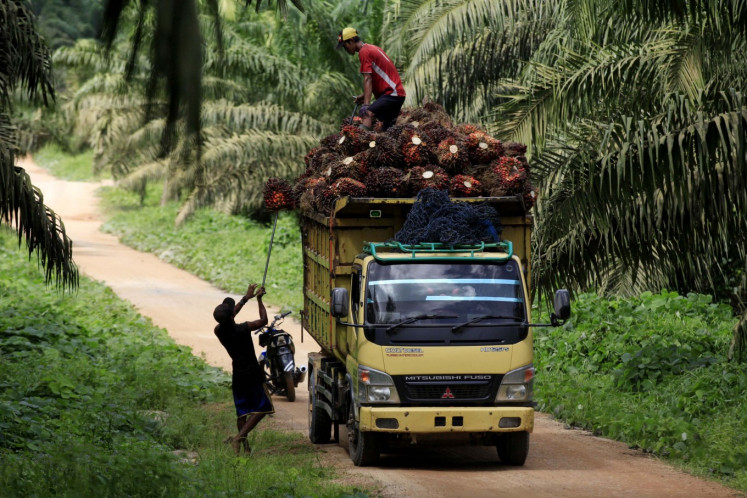
Agricultural expansion was found to be the main driver of deforestation, especially in tropical and subtropical regions, as large-scale commercial agriculture linked to cattle ranching and soybean and palm oil plantations accounted for 40 percent of tropical deforestation between 2000 and 2010, followed by local subsistence agriculture (33 percent), urban expansion (10 percent), infrastructure (10 percent) and mining (7 percent).