TheJakartaPost
Please Update your browser
Your browser is out of date, and may not be compatible with our website. A list of the most popular web browsers can be found below.
Just click on the icons to get to the download page.


Popular Reads
Top Results
No results found. Please check your search term and try again
Can't find what you're looking for?
View all search results
Popular Reads
Top Results
No results found. Please check your search term and try again
Can't find what you're looking for?
View all search resultsNurhadi’s ‘light’ sentence in corruption case raises eyebrows
Ruling more lenient than KPK prosecutors’ demand of 12 years of imprisonment
Change text size
Gift Premium Articles
to Anyone
Share the best of The Jakarta Post with friends, family, or colleagues. As a subscriber, you can gift 3 to 5 articles each month that anyone can read—no subscription needed!
A
“light” prison sentence handed down to former Supreme Court secretary Nurhadi for his role in a bribery case has raised concerns that the state court is lenient toward perpetrators of corruption in the country.
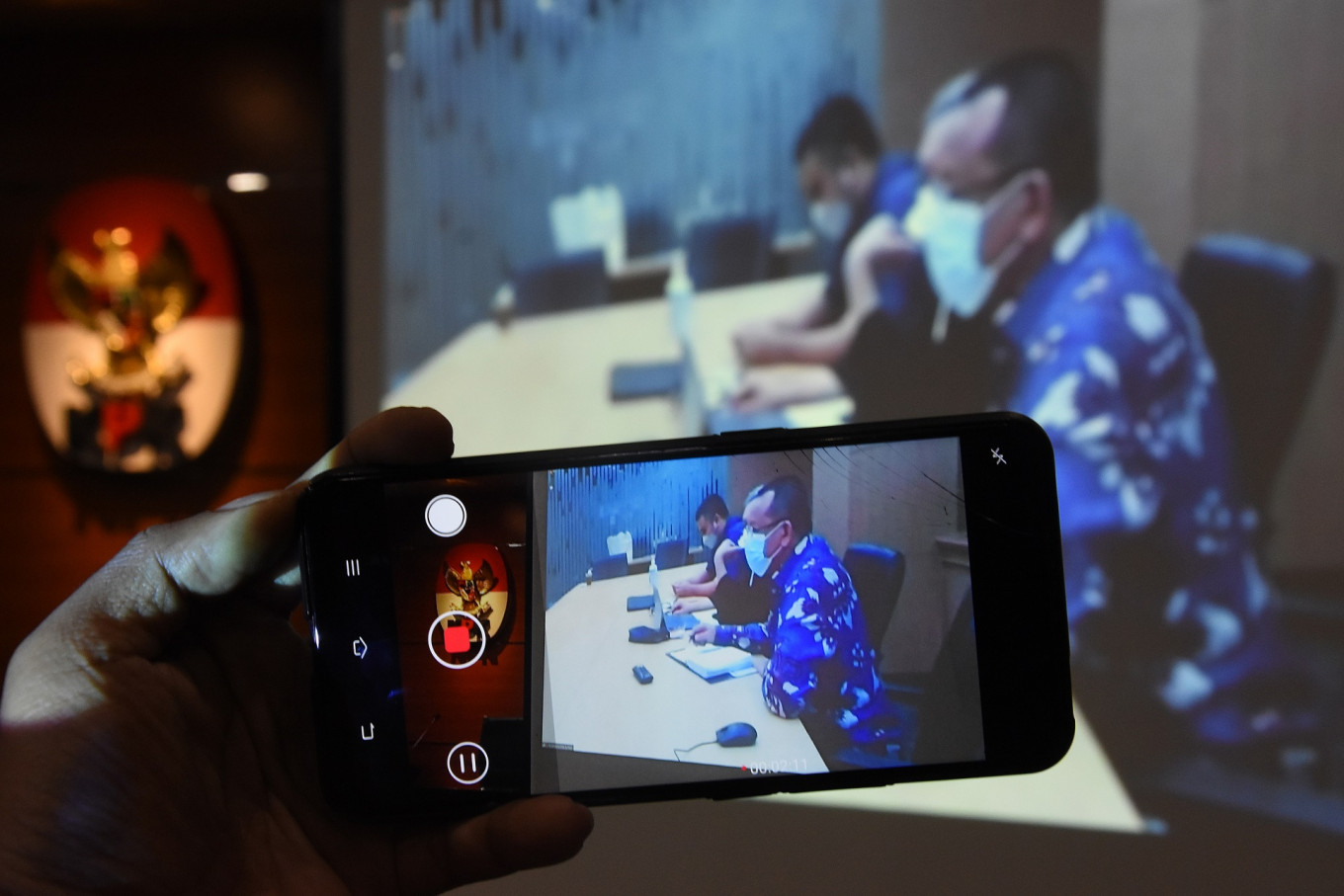
A panel of judges at the Jakarta Corruption Court sentenced on March 10 Nurhadi and his son-in-law Rezky Herbiyono to six years in prison and a Rp 500 million (US$34,662) fine for accepting bribes pertaining to three cases in the court between 2011 and 2016.
The verdict was lower than Corruption Eradication Commission (KPK) prosecutors’ demand of 12 years of imprisonment and a Rp 1 billion fine for both defendants.
The bench also rejected the prosecutors’ demand that Nurhadi and Rezki pay an Rp 83 billion restitution fee. Prosecutors suspected that both defendants had obtained a wealth of such amount from bribes and gratuities.
“We consider the defendants’ wrongdoings didn’t result in state loss since the illicit money was paid using the briber’s personal money,” judge Sukartono said during a hearing on March 10, as quoted by Kompas.
Presiding judge Saifuddin Zuhri said the bench also considered Nurhadi’s “role in supporting the Supreme Court’s development in the past” as a mitigating factor that could lessen the sentence against the defendant.
Read also: Anger as graft suspects, lawmakers' families get vaccinated
The judges did not include the fact that Nurhadi and Rezky ran away from KPK investigators for roughly four months as an incriminating factor in their verdict against the defendants.
The antigraft body put them on the most wanted list in February last year after they failed to answer the commission’s summons for questioning twice. Investigators arrested them on a private property in South Jakarta in June 2020.
KPK acting spokesperson Ali Fikri said as quoted by Kompas the prosecutors had planned to file an appeal against the verdict.
Critics slammed the judges’ verdict against Nurhadi and Rezky, calling it too light for crimes committed by the former Supreme Court high-ranking official responsible for its administrative matters.
Transparency International Indonesia researcher Wawan Suyatmiko said Nurhadi’s verdict was “a setback from the law enforcement institution in its commitment to eradicate corruption.”
He said Nurhadi’s wrongdoing of accepting Rp 83 billion in bribes and unlawful gifts should be considered a major crime that is serious enough to be punished with up to 16 years of imprisonment.
“It is wrong for the judges to mention no state loss was inflicted in the bribery case and, thus, not order the convicts to pay the restitution fee. Corruption perpetrators should be made to pay the fee to serve as an effective deterrent,” Wawan said.
Read also: Indonesians believe corruption more rampant this year, survey finds
While assuming that Nurhadi’s past position as Supreme Court secretary might play a role in the light sentence, Trisakti University criminal law expert Abdul Fickar Hadjar said the defendant should receive a harsher punishment for misusing his authority as a high-ranking official of the state’s highest court.
“He might not be embezzling the state’s money, but he surely did material harm to the state,” Abdul said.
Indonesia Corruption Watch (ICW) argued that the judges should order the defendant to pay the restitution fee regardless of the state loss inflicted as a result of the crime, as the law did not stipulate a requirement of such loss upon the sentencing of the additional punishments.
Article 18 of the 2001 Corruption Law stipulates that judges can hand down additional punishments to graft defendants, such as a restitution fee equal to the money accepted from the corruption.
ICW researcher Kurnia Ramadhana urged the KPK to start an investigation into the allegations of money laundering and obstruction of justice pertaining to Nurhadi in order to bring the graft convict to justice.
KPK deputy chairman Nawawi Pomolango said in June last year that the antigraft body was tracking Nurhadi’s wealth and assets to look for possibilities to open a money laundering case against him. But the antigraft body has yet to report any updates on the investigation.
According to the wealth report Nurhadi filed in 2021, he possessed Rp 33.4 billion in assets that ranged from land to luxury cars, raising suspicions among antigraft activists that his unusually large wealth might come from illicit sources.
Read also: KPK tracks wealth, possible money laundering in Nurhadi graft investigation
Nurhadi also allegedly hit a detention center official in January, according to the KPK. While he denied the allegation, the antigraft body had reported the incident to the police, who are currently investigating the case.
Nurhadi’s light sentence has also raised concern among graft watchdogs over sentencing disparity among judges handling corruption cases across the country.
In contrast with Nurhadi’s case, judges of the Jakarta Corruption Court sentenced suspended Attorney General’s Office prosecutor Pinangki Sirna Malasari to 10 years in prison and a Rp 600 million fine in February. She was convicted for her role in helping graft convict Djoko Soegiarto Tjandra while on the run. The verdict was heavier than the prosecutors’ demand of four years of imprisonment.
“The Supreme Court should issue a guideline on sentencing certain corruption cases to ease public anxieties about such disparities that could lead to injustice for defendants,” Kurnia said.