TheJakartaPost
Please Update your browser
Your browser is out of date, and may not be compatible with our website. A list of the most popular web browsers can be found below.
Just click on the icons to get to the download page.


Popular Reads
Top Results
No results found. Please check your search term and try again
Can't find what you're looking for?
View all search results
Popular Reads
Top Results
No results found. Please check your search term and try again
Can't find what you're looking for?
View all search resultsPandemic fatigue fuels defiance of COVID-19 rules
Indonesia has seen people defying health protocols in recent weeks as they are getting weary of the COVID-19 restrictions over a year into the pandemic, which still shows no end in sight.
Change text size
Gift Premium Articles
to Anyone
Share the best of The Jakarta Post with friends, family, or colleagues. As a subscriber, you can gift 3 to 5 articles each month that anyone can read—no subscription needed!
I
ndonesia has seen rampant laxness toward the health protocols in recent weeks, with people growing increasingly weary of the restrictions more than a year into the COVID-19 pandemic, which still shows no signs of ending.
In the early days of Jakarta’s COVID-19 outbreak in March 2020, Dimas Tri, 31, was among the residents who were strict about complying with the health protocols to protect themselves from the disease. He never missed a chance at bathing or washing his hands with soap after coming home from work, nor did he neglect carrying a bottle of hand sanitizer with him whenever he went outside.
But it is a different story now, as Dimas has started skipping handwashing or packing hand sanitizer. He also ignores his younger sister, a health worker, whenever she reminds him to abide by the health protocols.
“At the start, I was afraid of contracting the virus since I have [underlying health conditions]. But as the pandemic drags on, it is becoming increasingly frustrating and tiring to follow all those health rules,” Dimas told The Jakarta Post on Friday.
He added that since getting vaccinated in April, he was feeling more confident and safe about eating out, going to the cinemas or visiting relatives during Idul Fitri earlier this month.
“I have stopped following COVID-19 developments in the news and [on] social media. Sometimes, I feel the pandemic is already over, although I know it isn’t,” Dimas said.
Read also: Indonesian Muslims celebrate second Idul Fitri under pandemic shadow
His experience is not an isolated one, as the national COVID-19 task force has reported a general drop in public compliance with the health protocols since the second week of Ramadan, which began on April 12.
Tourist spots, restaurants and shopping centers across the archipelago during the Ramadan-Idul Fitri holiday season were jam-packed with visitors who showed indications that they had lowered their guard against the virus.
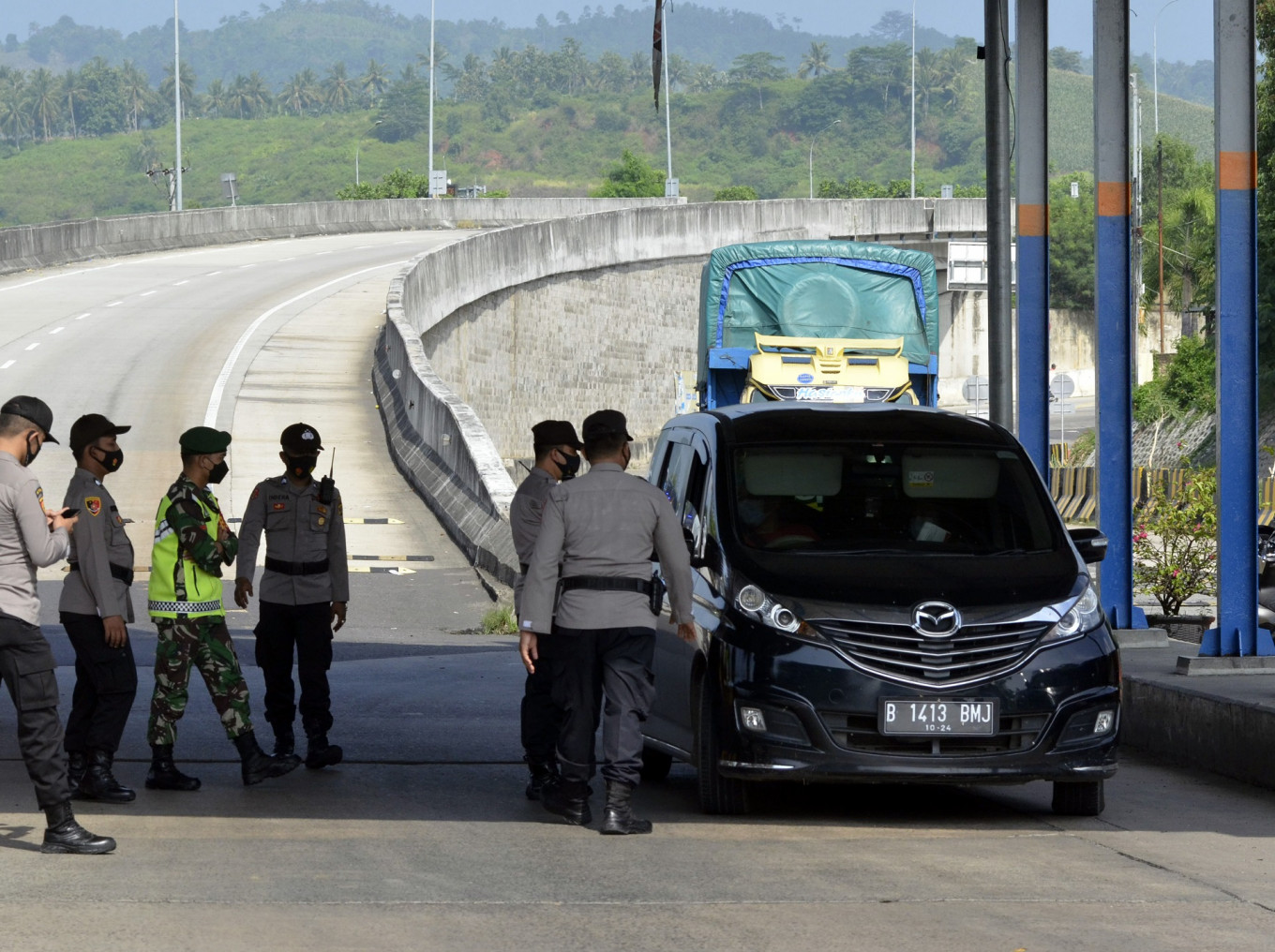
At least 1.5 million people traveled on mudik (exodus) to their hometowns over Idul Fitri, despite the government ban and the increased security presence at 381 checkpoints across the three most populous islands of Sumatra, Java and Bali.
Video clips showing people cursing and harassing police officers at checkpoints made the rounds on social media earlier this month, highlighting the growing public defiance toward the COVID-19 rules.
Masdalina Pane of the Indonesian Epidemiology Association (PAEI) said the phenomenon could be attributed to growing pandemic fatigue, as “people are getting increasingly tired and frustrated after a year living under [COVID-19] restrictions”.
“They’re feeling burned out and hopeless, as they don’t know when this pandemic will end,” Masdalina told the Post on Monday.
Pandemic fatigue is defined by the World Health Organization as ”demotivation to follow recommended protective behaviours, emerging gradually over time and affected by a number of emotions, experiences and perceptions”, which it says is “an expected and natural response to a prolonged public health crisis”.
Masdalina suspected public dissatisfaction with the policy inconsistencies in the government’s pandemic response, as well as the continuous blame it heaped on the people for its own failure to control the virus, had also exacerbated the general apathy toward safety measures.
Read also: Here is why you might be feeling tired while on lockdown
Psychologist A. Kasandra Putranto said pandemic fatigue usually occurred because people were under constant pressure to follow the health protocols over a prolonged period of time.
“At the same time, they're also missing out on the things that they used to do, such as going to school, visiting places of worship, meeting family and friends, and going on holidays,” Kasandra said.
Pandemic fatigue has been linked to COVID-19 surges in countries like India, Malaysia and the United States, as well as several African countries.
India has been hitting record single-day spikes in infections and fatalities in recent weeks, following religious festivals and political gatherings attended by hundreds of thousands of largely unmasked people and the emergence of a more contagious virus variant. The South Asian nation surpassed 300,000 COVID-19 deaths on Monday, with a cumulative figure of above 26.7 million.
Malaysia recorded its highest-ever daily spike with 6,075 cases last week, and its highest toll of 61 deaths on Monday.
Coordinating Economic Minister Airlangga Hartarto, who heads the National Economic Recovery and COVID-19 Response Team, has warned of a potential surge four to five weeks after Idul Fitri as a result of high mobility and poor compliance with the health rules.
Airlangga said cases had already started to rise, with the daily tally increasing from around 3,800 cases last week to 5,000 this week.
In the weeks following Idul Fitri 2020, when thousands also violated the mudik ban, nationwide cases skyrocketed by 68-93 percent while fatalities climbed 28-66 percent.
Read also: Jakarta braces for post-Idul Fitri virus surge
Some officials and experts also believe that the emergence of pandemic fatigue could be attributed in part to the false sense of security that followed the vaccine rollout in January.
Masdalina said the government should step up its containment efforts “instead of relying only on the vaccine rollout to control the pandemic”. It especially needed to ramp up its testing and tracing rate, which remained poor more than a year into the pandemic and amid the threat of new variants.
Psychologists are advising the public to maintain communication with friends and family, eat healthy, rest well, exercise and maintain a positive mindset as strategies to overcome pandemic fatigue while following the health rules.