TheJakartaPost

Please Update your browser

Your browser is out of date, and may not be compatible with our website. A list of the most popular web browsers can be found below.
Just click on the icons to get to the download page.


Jakarta Post

The five-prong approach to exiting the pandemic

Unless we can morally afford to stray from our common purpose against a common enemy, collaboration and partnerships are necessary.

J. Satrijo Tanudjojo and Tikki Pangestu (The Jakarta Post)
Jakarta/Singapore
Mon, July 19, 2021 Published on Jul. 16, 2021 Published on 2021-07-16T20:39:53+07:00

Change text size

Gift Premium Articles
to Anyone

Share the best of The Jakarta Post with friends, family, or colleagues. As a subscriber, you can gift 3 to 5 articles each month that anyone can read—no subscription needed!

I

ndonesia is grappling with surging and record high COVID-19 cases amid a strained healthcare system and an oxygen shortage. Will it get better?

Despite having rolled out a nationwide vaccination campaign, we currently hold the unenviable designation of being one of the five countries – the others being Brazil, Argentina, India and Colombia – with the highest daily new cases and death toll, as well as being the epicenter of the pandemic in Southeast Asia. We have to learn quickly and act decisively.

Singapore’s COVID-19 multi-ministry task force has outlined what we believe are non-negotiable areas for a nation to confidently exit the pandemic: vaccines, testing, treatment and social responsibility. We believe adding a fifth in the form of collaboration and partnerships will be helpful in accelerating Indonesia’s recovery.

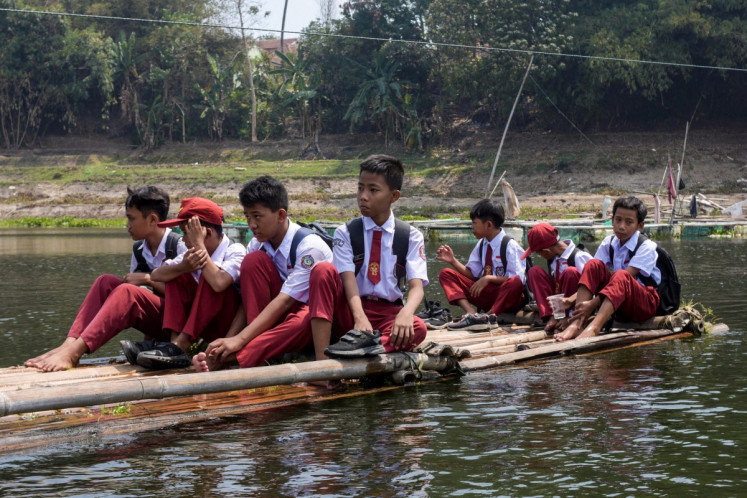
If this multi-prong approach is not already challenging enough for a country of 17,508 islands with an East-West span of 5,100 kilometers and which also happens to be the world’s fourth-most-populous nation, we also have to simultaneously address the immediate challenges while laying new foundations to strengthen our systemic resilience.

These five areas are interdependent and interconnected, as a deficiency in one can affect the others.

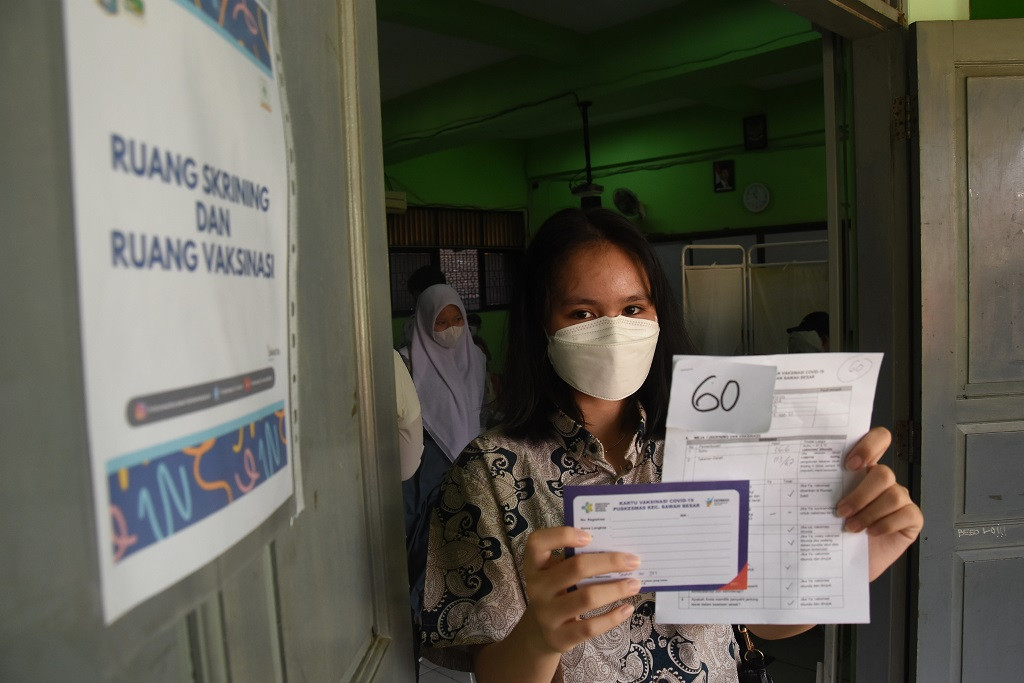
First, vaccines play a life-saving role. We have seen for ourselves how countries with higher vaccination rates have lower hospitalization and mortality rates. With vaccines, the mortal threat of the virus will be significantly blunted.

In addition to having sufficient supply and overcoming logistical barriers, the success of the national vaccination drive depends largely on broader public-private collaboration and an increased awareness and scientific literacy among the population.
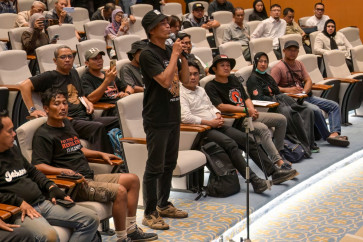
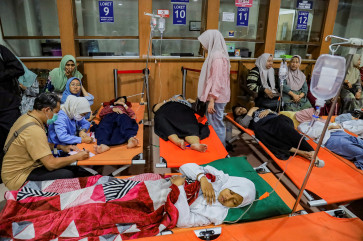
In this war on COVID-19, vaccine hesitancy and resistance are unfortunate and unhelpful non-considerations in the urgent process of saving lives and alleviating the strain on our embattled healthcare system. As of early July, only 5.1 percent of Indonesia’s population has been fully vaccinated. Considering the surge of new cases in recent weeks, it is now more urgent than ever for Indonesia to bolster its vaccination drive.

Second, to curb the spread of infection, testing is vital and has to be made readily available and accessible to all. A Jakarta administration serology survey of 5,000 samples suggests that almost half of Jakarta (around 4.7 million residents) has already been infected. A disproportionately inadequate testing capacity will not only slow down diagnosis and treatment but will also unnecessarily prolong our battle with COVID-19. Early detection, especially in high-risk segments of the population, will allow for early intervention and containment.

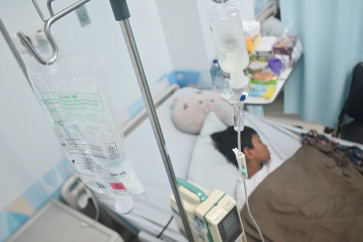
Third is management and treatment. Thanks to the international community and local companies and organizations, Indonesia is bringing in oxygen supplies and oxygen concentrators to support the management of severe cases. Previously, companies and organizations brought in testing equipment, medical supplies and personal protective equipment to bolster the country’s fight against COVID-19.

Fourth, social responsibility is crucial to ensuring our journey out of this pandemic remains steady. We have to recognize that everyone plays an equally important role in the safety and well-being of the wider community. It is therefore socially responsible to get vaccinated if you are not, to get tested if you are unwell and to seek appropriate treatment to facilitate your recovery.

To a significant extent, scientific literacy underpins social responsibility. We need to be able to discern and better appreciate evidence-based facts and safeguard ourselves against misinformation and fake news. Building up our understanding of the wider benefits of vaccines and testing can help us make better informed decisions for ourselves, our loved ones and the community.

Fifth is collaboration and partnership at both international and national levels. At this point, this unprecedented public health emergency has surely reminded us that our respective differing agendas and pursuits of a healthy life, a productive workforce, a potential-realizing outcome, social mobility, among others, all remain entwined with and contingent on our combined efforts and resolve in effectively containing the virus.

The cost of not doing so is lives. Unless we can morally afford to stray from our common purpose against a common enemy, collaboration and partnerships are necessary.

We’ve observed how the international community, private philanthropic organizations and nongovernmental organizations have worked closely with the government to broaden and accelerate the vaccination campaign, in addition to strengthening testing and treatment capacities.

These are urgent near-term fixes and boosters that also provide a glimpse into how our longer term strategy can systemically normalize and accommodate partnerships to achieve impact at scale.

Thanks to the growing number of public-private partnerships, we are witnessing the acceleration of the national vaccination campaign. Beyond Indonesia, global collaboration and partnerships must primarily address inequities in vaccine distribution, especially in developing countries, and should be based on the key values of solidarity, equity, social justice and human rights.

In an information and content saturated age, influencers, celebrities and community and religious leaders have been engaged in sharing government advisories and evidence-based advice with the broader public. Private organizations too have joined in public health messaging and vaccine advocacy, and in terms of supporting the nation’s rally to get people vaccinated, the mainstream media has and will continue to play an important role.

Having the right information and message alone is ineffective. We need to ensure that it is far-reaching, calibrated, timely and sustained. With more on board, united under the common purpose of saving lives and keeping our communities safe, we can eventually overcome misinformation and vaccine hesitancy.

We deal with our complex contexts by sharing a common purpose, fostering our mutual understanding and support for one another, and developing clarity as we build up and sustain our scientific literacy. There is a lot to learn from the international community, and we will also need to have the resolve, commitment and leadership to realize the hopes we have of the brighter days ahead of us.

Indonesia will prevail and emerge stronger.

 ***

J. Satrijo Tanudjojo is global CEO of the Tanoto Foundation. Tikki Pangestu is a visiting professor at the Yong Loo Lin School of Medicine, National University of Singapore.

Your Opinion Matters

Share your experiences, suggestions, and any issues you've encountered on The Jakarta Post. We're here to listen.

Enter at least 30 characters
0 / 30

Thank You

Thank you for sharing your thoughts. We appreciate your feedback.

Share options

Quickly share this news with your network—keep everyone informed with just a single click!

Change text size options

Customize your reading experience by adjusting the text size to small, medium, or large—find what’s most comfortable for you.

Gift Premium Articles
to Anyone

Share the best of The Jakarta Post with friends, family, or colleagues. As a subscriber, you can gift 3 to 5 articles each month that anyone can read—no subscription needed!

Continue in the app

Get the best experience—faster access, exclusive features, and a seamless way to stay updated.