TheJakartaPost
Please Update your browser
Your browser is out of date, and may not be compatible with our website. A list of the most popular web browsers can be found below.
Just click on the icons to get to the download page.


Popular Reads
Top Results
No results found. Please check your search term and try again
Can't find what you're looking for?
View all search results
Popular Reads
Top Results
No results found. Please check your search term and try again
Can't find what you're looking for?
View all search resultsPotential and challenges of telemedicine in Indonesia
The COVID-19 pandemic in the current digital era has encouraged the use of digitalized health services in Indonesia, including telemedicine
Change text size
Gift Premium Articles
to Anyone
Share the best of The Jakarta Post with friends, family, or colleagues. As a subscriber, you can gift 3 to 5 articles each month that anyone can read—no subscription needed!
T
he COVID-19 pandemic in the current digital era has encouraged the use of digitalized health services in Indonesia, including telemedicine.
The increasing use of telemedicine in health services has further raised concerns regarding service standards and quality, especially for patients as users, considering that currently more telemedicine services are developed by digital platforms than hospitals. Regulations that technically control the standards and quality of telemedicine services, especially those provided by digital health platforms are still unclear.
Currently, there are two regulations governing telemedicine in Indonesia. First, Health Ministerial Regulation No. 20/2019 regarding the implementation of telemedicine services between service facilities, not between health facilities and patients directly. Second, Indonesian Medical Council Regulation No. 74/2020 on clinical authority and medical practice through telemedicine during the COVID-19 pandemic in Indonesia.
Article 3 of the 2020 Indonesian Medical Council regulation defines telemedicine as a teleconsultation service that is carried out in the form of online modes of writing, voice and/or live video to obtain information needed to establish a diagnosis, as well as management and treatment of patients in accordance with the provisions of the legislation.
Furthermore, doctors who practice telemedicine must have a registration certificate and practice license at health facilities. In addition, doctors who practice telemedicine are required to make a medical record for each patient and keep it in the health facilities, while teleconsultation between medical personnel and patients directly without going through health facilities is prohibited.
In general, currently there are two types of telemedicine service provider in Indonesia, namely health facilities (private hospitals) and digital health platforms (start-ups). Telemedicine organized by hospitals or clinics is generally considered more reliable than that developed by digital platforms because it is connected to a strong health service ecosystem, especially in terms of facilities, doctor expertise, as well as security guarantees. Thus, the standard and quality of service can be said to be more guaranteed according to hospital policy and applicable laws and regulations.
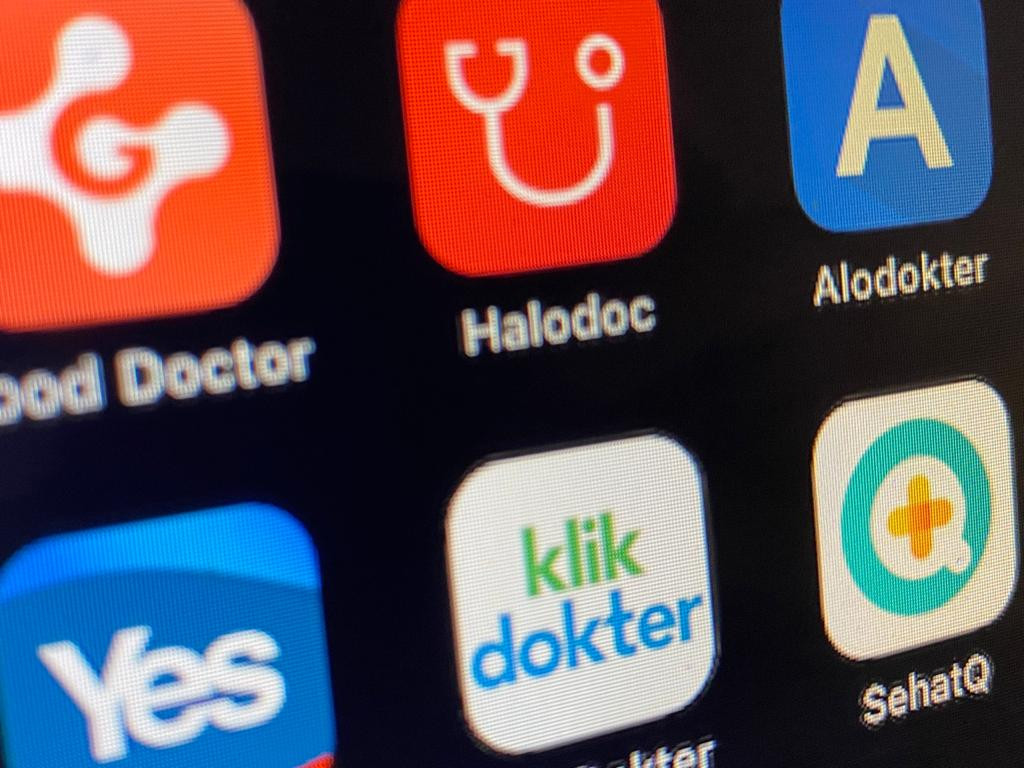
However, telemedicine services of digital platforms are currently much more numerous and more developed than those of hospitals. Some big players, such as Alodokter, Halodoc, SehatQ, YesDok and Good Doctor have more than 20 million monthly active users each. As an illustration, Alodokter users have increased 200 percent since the beginning of the pandemic. Teleconsultation is the most frequently used service in digital health applications so far.
Many doctors have joined the telemedicine platforms. The Indonesian Doctors Association (IDI) noted that 21,500 general practitioners and 4,500 specialist doctors were members of the Alodokter telemedicine application. For this reason, it is increasingly important to have technical regulation to control the service standards and quality of telemedicine services conducted by digital platforms. The regulation then should be able to coordinate many doctors from various health facilities and policies in one standard and quality of service through one digital application.
To formulate appropriate standards and quality of telemedicine services and provide win-win solutions for all relevant parties, communication and coordination between stakeholders is needed, involving the Health Ministry as a representative of regulators, health facilities, doctor associations, digital health platforms and the public as users.
We support the digitalization of the health sector while maintaining service standards and quality. We appreciate the government's efforts to accelerate the digitalization of the healthcare sector. As an example, since July 2021 the Health Ministry has collaborated with 11 digital health platforms to provide consultation, treatment and supervision for COVID-19 patients for free.
We see that telemedicine has the potential to develop going forward due to several factors. First, internet user penetration in Indonesia is getting higher (more than 70 percent). Second, the COVID-19 pandemic will not end in the short term, with many new variants appearing and people still afraid to visit hospitals. Third, telemedicine is more flexible, as it can be used anywhere, anytime, and can save time compared to going to a hospital. Fourth, the number of health facilities and medical personnel are not evenly distributed in Indonesia. Therefore, through telemedicine, patients can conduct teleconsultation with doctors outside their area.
However, we see there are still many challenges in digitalizing the healthcare sector in Indonesia. First, internet penetration is still concentrated in the Java region (more than 55 percent). Second, the quality of telemedicine services also requires the support of a good telecommunications infrastructure network to get an accurate patient's condition. Third, utilization of telemedicine services has not been optimal as the cost of the service is still borne personally by the patient. This is because there are not yet many telemedicine services that collaborate with private insurance companies.
In our view, better service standards and quality service will lead to broader usage of telemedicine in the future. It is not impossible, in the long term, telemedicine can be covered by the Health Care and Social Security Agency (BPJS Kesehatan) so that more people can take advantage of it.
In this case, telemedicine can be used as a screening step in the referral system before patients visit the first-level health facility, especially in certain conditions such as when there is a spike in COVID-19 cases that causes access to health facilities to be limited. Although it is realized that this certainly requires more effort, both in terms of the BPJS Kesehatan financing scheme and health facility resources.
In sum, we all hope that digital transformation in the healthcare sector will run well and be able to provide added value and increase the competitiveness of the Indonesian healthcare sector.
***
Senior industry analyst at Bank Mandiri