TheJakartaPost
Please Update your browser
Your browser is out of date, and may not be compatible with our website. A list of the most popular web browsers can be found below.
Just click on the icons to get to the download page.


Popular Reads
Top Results
No results found. Please check your search term and try again
Can't find what you're looking for?
View all search results
Popular Reads
Top Results
No results found. Please check your search term and try again
Can't find what you're looking for?
View all search resultsData sharing, common health standards key to ASEAN pandemic response: Ministers
Travel corridor framework to be discussed at ASEAN Summit this month
Change text size
Gift Premium Articles
to Anyone
Share the best of The Jakarta Post with friends, family, or colleagues. As a subscriber, you can gift 3 to 5 articles each month that anyone can read—no subscription needed!
D
ata sharing and universal health standards are key to building regional resilience against the threat of another pandemic, ASEAN health ministers said, as fears over a third wave of COVID-19 infections loom over the region.
Health Minister Budi Gunadi Sadikin said ASEAN should implement standardized health and travel protocols across the region to ensure uniformity in quarantine protocols, as well as vaccine and testing requirements.
“We need to copy the innovation of passports for immigration [and use it for] passports for health,” he said at a public forum organized by EVYD Knowledge Hub, the Brunei government and Temasek Foundation on Wednesday.
He added that at least ASEAN should have a standard platform, further suggesting that with such an integrated tool, Singapore’s TraceTogether app could be linked to Indonesia’s PeduliLindungi app. Both are tracing apps used for COVID-19 surveillance efforts. Other ASEAN countries also have their own tracing apps, such as Malaysia’s MySejahtera and Brunei’s BruHealth.
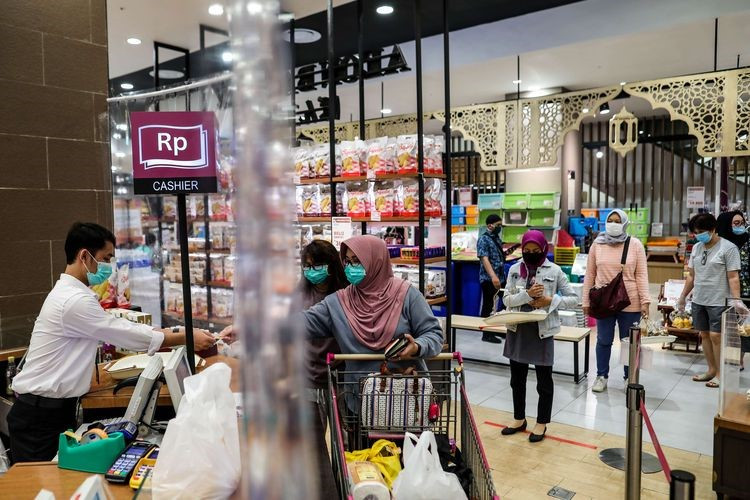
“If [a Singaporean visitor] wants to enter an Indonesian mall, they can use TraceTogether, and I would be able to enter a Singapore hotel with PeduliLindungi. Technology can be used to standardize health protocols, like [how] we standardized passports for immigration,” Budi said.
Read also: Indonesia is now relying on a COVID-19 app, but does it actually work
Indonesia proposed the idea of an ASEAN-wide travel corridor for essential travel as early as last year, but countries are still working on a common approach to verifying vaccine certificates with other member states. Indonesia is leading this effort at the working group level.
Foreign Minister Retno LP Marsudi previously said all elements were negotiating toward the implementation of the ASEAN Travel Corridor Arrangement Framework, which was complete and was set to be discussed at the ASEAN Summit later this month.
“Responding to various discussions on vaccine passports around the world, I emphasized the importance to have mutual recognition of COVID-19 vaccine certificates to ensure there is no vaccine discrimination in ASEAN,” she said in a statement on Monday. “All vaccines that have obtained the World Health Organization's emergency use listing should be treated equally.”
Read also: Ministry aims to double foreign tourist arrivals, but experts remain wary
Despite being armed with various emergency mechanisms that were installed as a result of past experiences, including the 2003 SARS outbreak, ASEAN still faces more challenges in making a collective and coordinated response to the COVID-19 pandemic, which began spreading in the region in early 2020.
Countries have been working on their own to secure medical supplies to fight the coronavirus, from personal protection equipment (PPE) at the beginning of the pandemic to vaccines for their own people.
ASEAN ministers said in Wednesday's forum that it was crucial to have an initiative that would support any country faced with challenges accessing not only PPEs or vaccines but also ventilators, medicine and new therapeutics.
Read also: Outlook 2021: ASEAN vaccine solidarity in focus as virus looks likely to stay
Brunei Health Minister Mohd Isham Jaafar suggested that member states work together in securing supplies of PPE and vaccines to ensure that no country would struggle alone in its fight against the pandemic.
“We should not let any country, irrespective of its economic status or population, be in dire [straits]. The moment we know a country in the region is facing something, we should — quickly as ASEAN — help that country and consolidate as soon as possible,” he said.
At the ASEAN ministerial meeting earlier this week, it was reported that ASEAN senior officials on health development had agreed to a proposal to procure COVID-19 vaccines from UNICEF, which will also distribute the vaccines to ASEAN member states.
Isham went on to say that learning from worldwide COVID-19 responses over the past year and a half, information-sharing was crucial in ensuring countries in the region were on the same page and could mitigate risks together.