TheJakartaPost
Please Update your browser
Your browser is out of date, and may not be compatible with our website. A list of the most popular web browsers can be found below.
Just click on the icons to get to the download page.


Popular Reads
Top Results
No results found. Please check your search term and try again
Can't find what you're looking for?
View all search results
Popular Reads
Top Results
No results found. Please check your search term and try again
Can't find what you're looking for?
View all search resultsHow can Indonesia develop its digital diplomacy?
While Indonesia’s efforts to implement digital diplomacy continue slowly, Indonesia must begin to pursue consistent engagement more aggressively with foreign nations through digital channels.
Change text size
Gift Premium Articles
to Anyone
Share the best of The Jakarta Post with friends, family, or colleagues. As a subscriber, you can gift 3 to 5 articles each month that anyone can read—no subscription needed!
D
igital diplomacy continues to be the subject of definitional debates. In the public discourse, it has a couple of different names, from e-diplomacy and 21st-century statecraft to digitalization of diplomacy and many others. However, digital diplomacy should primarily be understood as the use of digital information, communication and technologies to achieve diplomatic objectives. In this case, we mainly focus on the usage of digital diplomacy to help pursue foreign policy goals.
According to the Global Diplomacy Index 2019 by Lowy Institute, Indonesia ranks 21st globally and 5th among fellow Asian countries. The index measures Indonesia’s influence based on its diplomatic presence and machines.
Surprisingly, the country is below Mexico, Greece and the Netherlands. With its aspiration to be a regional leader and global problem solver, the statistics are a matter of concern. Can digitalization of Indonesia’s diplomacy be the right solution?
Indonesia is consistently developing its status as a population and technology hub with 300 million people by 2030 including its large percentage of tech-savvy youngsters. Among a variety of other factors, the country has become an increasingly important player in international geopolitics, particularly in the Southeast Asia region.
However, Indonesia’s continued political growth on the global stage must also be accompanied by a corresponding increase in its digital diplomacy efforts, allowing Indonesia to transcend more traditional diplomatic outreach with principles leveraging Web 3.0 resources. By utilizing the internet and other emerging technologies, Indonesia can increase its political footprint effectively within Southeast Asia and the world at large.
Against that backdrop, digitalization of diplomacy could help leverage Indonesia’s position in gaining more influence globally. Effective digital technologies may aid Indonesia’s efforts in strengthening its soft power, raising positive international public perception, and eventually could help advance economic benefits for the country alongside its integration with Jokowi’s massive trade and investment diplomacy.
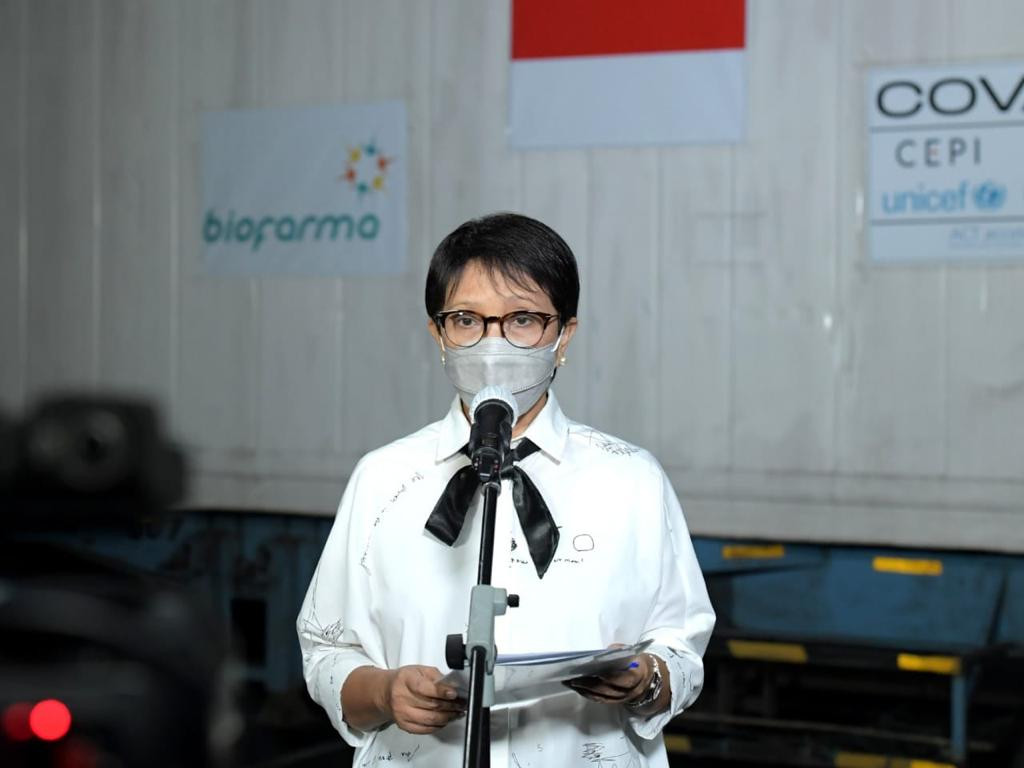
Hence, Indonesia’s diplomacy this year is arguably less focused on the digital sphere. The pandemic indeed has shifted the nation’s foreign policy priorities to health and economic diplomacy. This year’s annual foreign ministerial statement did not specifically highlight any digital diplomacy strategies. However, Foreign Minister Retno LP Marsudi did allude to the fact that diplomacy must work to strengthen Indonesia’s digital economy and the integration of digital applications to protect the Indonesian diaspora living worldwide.
Indonesia has taken some proactive efforts in advancing the cooperation of digital diplomacy in the region. In 2019, the Foreign Ministry hosted the Regional Conference on Digital Diplomacy (RCDD), which resulted in the “Jakarta Message” that reflects the demand of having stronger regional partnership in the digital sphere. As a continuation but framed with a crisis theme, Indonesia again welcomed countries to join the International Conference on Digital Diplomacy (ICDD) in Bali in November 2021.
During the RCDD, Indonesia encouraged other participating nations to lobby tech giants including Facebook, Google, Instagram and Twitter to help nations solve international security issues such as terrorism and extremism. Since the ICDD was convened during the pandemic, digital diplomacy is seen beyond just the synergy between diplomacy and the digital world.
The “Bali Message” as the outcome of these results, comprises the acknowledgment of using digital platforms to mitigate crises such as natural disasters and pandemics. Therefore, the participating nations agreed to work together in addressing the technological constraints, inadequate digital infrastructure and knowledge, and widespread dis/misinformation.
Through its efforts, Indonesia is pledging to use digitalization as a solution bridge and therefore continuously voicing it out. Yet, this must be worked with the improvement of digital infrastructure and knowledge domestically.
Indonesia’s status as a developing nation necessitates its increased footprint on the global stage and leveraging digital diplomacy as a tool to do so is in the best interest of the Indonesian government. This is especially true given the use of Indonesia’s relatively limited fiscal resources to help its population, with 85 percent of Indonesian households receiving at least one form of government social assistance.
With this in mind, digital diplomacy offers a fiscally effective way for the Indonesian government to increase its interactions with other nations, helping to improve Indonesia’s political power as a whole.
Indonesia must capitalize on the increased interest in emerging technologies to include as central bank digital currencies (CBDCs), blockchain technology and 5G as part of its digital diplomacy efforts. A true digital diplomacy policy can be achieved beyond digital communication means, with other emerging technologies being an integral part of a holistic digital policy strategy.
For example, a digital Indonesian rupiah as a CBDC would enable more efficient government-backed cross-border transactions, a move particularly critical to Indonesia’s large migrant worker population, with Indonesia being among the world’s largest groups of foreign workers.
This type of digital diplomatic effort would help grow cooperation with other governments by addressing regulatory concerns, tax liabilities and much more. With this type of newfound cooperation, Indonesian workers abroad could more effectively participate in local and Indonesian economies, stimulating growth for all involved.
Efforts to educate others about Indonesia’s potential within the metaverse and beyond can also help incentivize foreign investment and economic growth within Indonesia. Indonesia’s development as a mobile-first population enables a litany of digital services for a population that possess the ability to adapt to different technologies easily, enabling further growth for governments and the populace alike.
Digital diplomacy expectedly answers Indonesia’s geoeconomics pragmatism. Jokowi’s preeminent focus on gaining more investments and trade deals must be synergized with digital-friendly policies. One example can be seen in the expansion of market access of Indonesian SMEs to include global partners, a factor that would be more probable if given the ability to conduct digital diplomacy efforts.
Despite its enormous potential, Indonesia is increasingly challenged by the geopolitical competition on digital partnerships. China keeps extensively promoting its ICT companies and infrastructure in Indonesia, competing with well-established United States digital businesses on areas to include 5G networks, e-payment and cloud computing.
Beijing’s Digital Silk Road (DSR) has become an important part of China’s economic expansion in the region, in which Indonesia is highly interested to take part. As such, Jakarta is arguably an anchor for China’s digital internationalization. In the end, this effort sparks some critical questions as to how adaptive Indonesia’s foreign policy is compared to the world’s rapid digitalization, further begging the question of how Indonesia can leverage geopolitical competition for its own national interests.
While Indonesia’s efforts to implement digital diplomacy continue slowly, Indonesia must begin to pursue consistent engagement more aggressively with foreign nations through digital channels. Some recent examples of digitally focused engagements include efforts between Korea and Indonesia to focus on digital transformation in January 2022, Indonesian participation in China’s Digital Night of the World Digital Economy Forum 2021 in August 2021, and Indonesia’s heading of the Cyber Intelligence Forum with ASEAN partners in August 2021.
Indonesia’s ability to continue to pursue its digital diplomacy efforts by focusing on economic and technology-based partnerships can help Indonesia improve its diplomatic efforts as a whole for 2022 and beyond.
***
Noto Suoneto is a foreign policy analyst and Y20 Indonesia researcher. Hugh Harsono is an MBA candidate at UC Berkeley’s Haas School of Business.