TheJakartaPost
Please Update your browser
Your browser is out of date, and may not be compatible with our website. A list of the most popular web browsers can be found below.
Just click on the icons to get to the download page.


Popular Reads
Top Results
No results found. Please check your search term and try again
Can't find what you're looking for?
View all search results
Popular Reads
Top Results
No results found. Please check your search term and try again
Can't find what you're looking for?
View all search resultsGovernment seeks local alternative for imported electronics
The government wants to boost the manufacture of local substitutes for mostly imported goods like air conditioners, washing machines, personal computers, printers, LED lamps, fiber-optic cables and digital cameras.
Change text size
Gift Premium Articles
to Anyone
Share the best of The Jakarta Post with friends, family, or colleagues. As a subscriber, you can gift 3 to 5 articles each month that anyone can read—no subscription needed!
T
he government is encouraging businesses to replace imported electric and electronic products with local substitutes, especially as the COVID-19 pandemic has increased demand for such goods.
In 2021, US$22.33 billion worth of electronics accounted for 11.38 percent of total imports, Statistics Indonesia (BPS) data show. The figure marked a 17 percent increase from a year earlier.
Kasan Muhri, who heads the research and development department at the Trade Ministry, said an import substitution policy followed a global trend in which electronics became “the most sought after” type of products these days.
“The import substitution policy, especially for electronics and telematics, is in line with the national priority program, namely [increasing the share of manufactured products in overall exports],” Kasan said in a virtual discussion on Wednesday.
The government has long pushed for import substitution in regard to various products, including by encouraging companies to carry out research and development through generous tax deductions.
Read also: Government encourages innovation to reduce raw material imports
Manufactured products, in fact, already account for the overwhelming majority of exported goods, followed by mining products, oil and gas, and agriculture, according to BPS.
Consumer goods accounted for just 8.66 percent of the total imports in January, BPS data show. Raw materials made up the majority of imports, followed by capital goods.
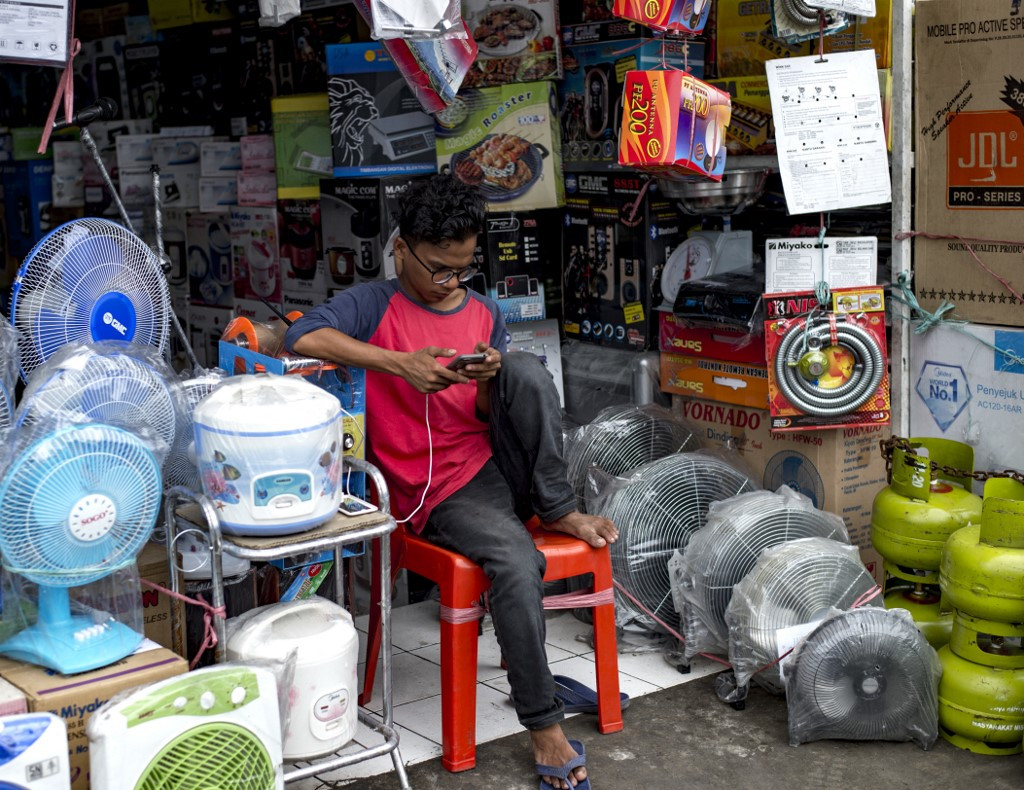
Kasan said his office had identified products to be replaced with local alternatives, namely air conditioners, fans, washing machines, laptops, personal computers, printers, light-emitting-diode (LED) lamps, fiber-optic cables and digital cameras.
Daniel Suhardiman, the secretary-general of the Electronics Companies Association (Gabel), said the government’s move to require import permits for air conditioners in 2020 had seen the share of domestically supplied air conditioners expand from 20 to 30 percent.
Daniel added that nontariff barriers, such as compliance with national standards (SNI), local content requirements and import permits, were necessary to support domestic industries.
“This will make it difficult for imported products to enter Indonesia,” said Daniel.