TheJakartaPost
Please Update your browser
Your browser is out of date, and may not be compatible with our website. A list of the most popular web browsers can be found below.
Just click on the icons to get to the download page.


Popular Reads
Top Results
No results found. Please check your search term and try again
Can't find what you're looking for?
View all search results
Popular Reads
Top Results
No results found. Please check your search term and try again
Can't find what you're looking for?
View all search resultsKadin voices concerns over elections imbroglio
Businesses have urged the government to maintain stability to achieve economic growth as political leaders spar over delaying the 2024 elections.
Change text size
Gift Premium Articles
to Anyone
Share the best of The Jakarta Post with friends, family, or colleagues. As a subscriber, you can gift 3 to 5 articles each month that anyone can read—no subscription needed!
T
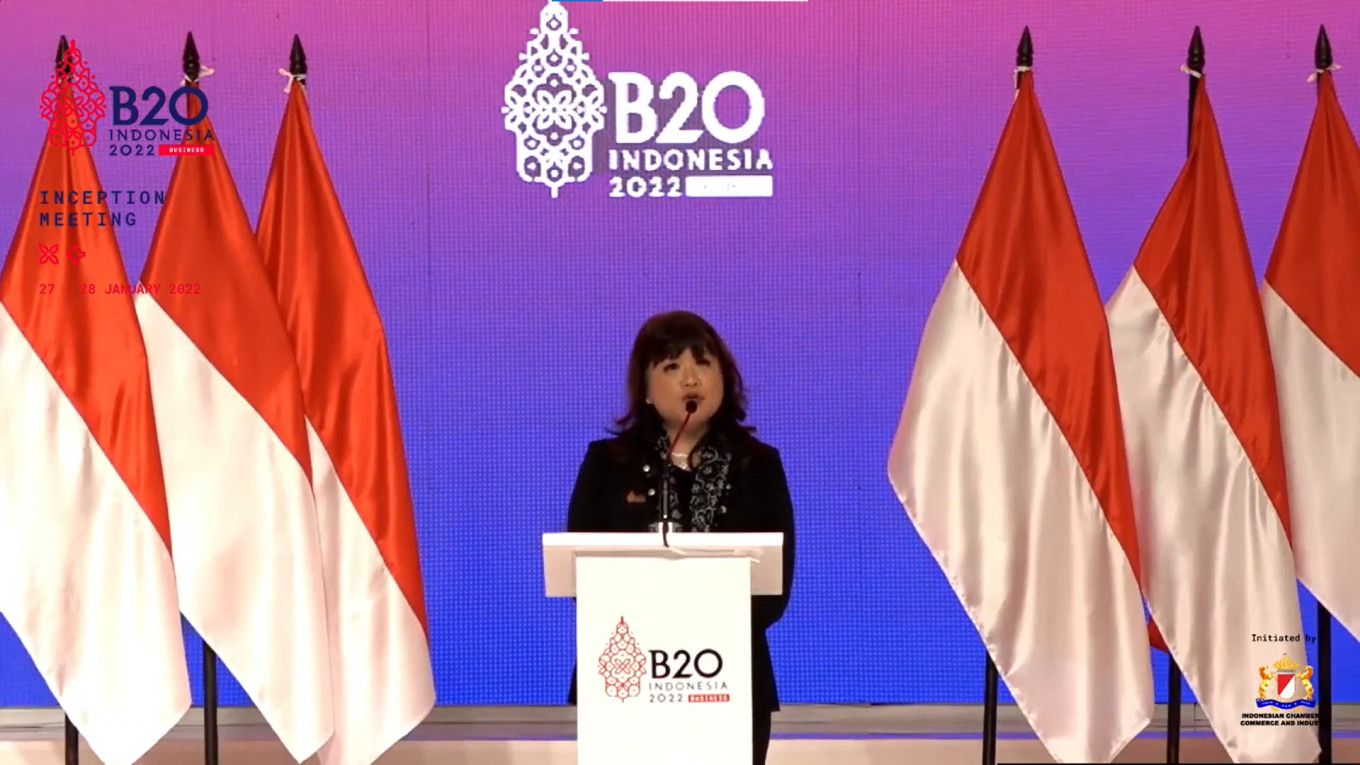
he Indonesian Chamber of Commerce and Industry (Kadin) voiced its concerns on Monday over the increasing confusion surrounding the 2024 elections, fearing it may lead to political instability.
Shinta Kamdani, Kadin's deputy chairwoman and coordinator for investment and maritime affairs, said stability was essential for Indonesia to keep up with other countries in terms of competitiveness, especially in the post-pandemic economy.
“We have a big asset, which is Indonesia's political stability. It is a key that needs to be held dear. Having ‘ripples’ are okay, as long they do not create instability,” Shinta said during a discussion held by Singapore-based DBS Bank.
Read also: PDI-P puts brakes on plan to amend Constitution
Her comments suggest that the Indonesian business community is already scrutinizing the 2024 elections, which have turned murky by recent developments.
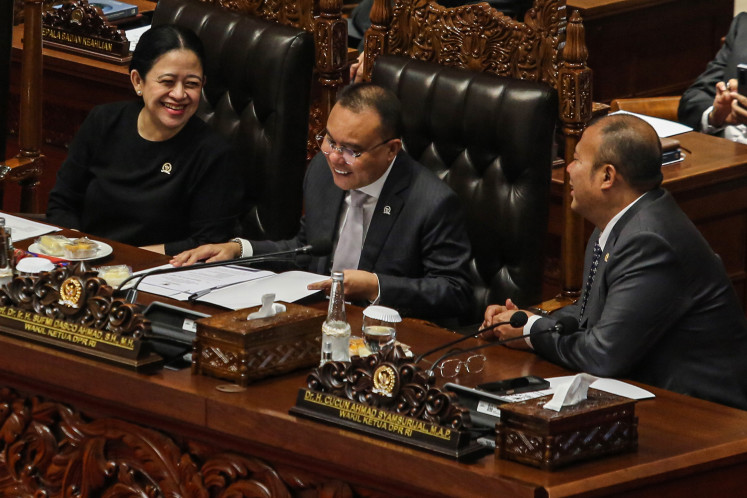
The presidential election is scheduled for Feb. 14, 2024, yet the government and House of Representatives failed last month to pass the election budget because of disagreements over costs.
The delay in the budget's approval came shortly after three political parties from President Joko “Jokowi” Widodo's ruling coalition proposed postponing the 2024 general elections by one or two years, and after Coordinating Maritime and Investment Affairs Minister Luhut Pandjaitan claimed that Indonesian netizens favored extending Jokowi's term.
Shinta said Jokowi had the interest to maintain political stability in preserving the country's image in front of the Group of 20, whose current chair is Indonesia.
DBS bank chief economist Taimur Baig said Indonesia was known as a country with a relatively stable democracy. The country has not seen a seismic change in regulatory regimes and economic policies following past elections.
“They will not change radically just because an election is coming or just because a new person is in office,” Baig told audiences at the same event.
Read also: Many want to extend Jokowi's term. It’s a slippery slope and the consequences could be dire
DBS Group head of research Maynard Arif said that if there were any fluctuations in the Indonesia economy, they would mostly come from external factors, namingly rising geopolitical tensions due to the Russia-Ukraine war, surging commodity prices and monetary tightening, particularly from the United States Federal Reserve.
The economic effects of changes in government would be limited to portfolio investments such as government bonds and stocks instead of foreign direct investment.
“These [portofolio] investors would be the ones likely to react if there were significant changes in Indonesian politics. But once conditions are stable, they would reenter the market,” Arif said.