TheJakartaPost
Please Update your browser
Your browser is out of date, and may not be compatible with our website. A list of the most popular web browsers can be found below.
Just click on the icons to get to the download page.


Popular Reads
Top Results
No results found. Please check your search term and try again
Can't find what you're looking for?
View all search results
Popular Reads
Top Results
No results found. Please check your search term and try again
Can't find what you're looking for?
View all search resultsCryptocurrencies: The anonymity of future money
Bitcoin is way more valuable today than it was, but on bad days, the value plunges irrationally.
Change text size
Gift Premium Articles
to Anyone
Share the best of The Jakarta Post with friends, family, or colleagues. As a subscriber, you can gift 3 to 5 articles each month that anyone can read—no subscription needed!
C
ryptocurrencies have become a revolutionary phenomenon in this digital era. The idea has been around since 1983 when David Chaum looked for a means of preserving privacy that turned to cryptography and predicted ahead of his time that cryptocurrencies could function as anonymously as paper money but as conveniently as a credit card.
Chaum’s idea seems to have inspired the Chyperpunks movement in the 1990s, a libertarian anti-government group with its manifesto that privacy matters and to have the power to selectively reveal oneself to the world. Chyperpunks’ main idea was to apply cryptography to personal computers and the internet via public-key encryption. Then, the infamous white paper “Bitcoin: A Peer-to-Peer Electronic Cash System” written by a mysterious person called Satoshi Nakamoto, pushed cryptocurrencies into our world.
The underlying political idea of cryptocurrencies can be seen as extreme right-wing and libertarian, the proponents of which are tempted by the utopia of “democratizing” money. That political orientation is manifested by cryptocurrencies’ underlying technology of the blockchain.
Blockchain utilizes the distributed ledger concept, whereby all nodes can access the information of the transaction blocks that are publicly available on the blockchain. Hence, it is tamper-proof and a solution for the “double-spend problem.”
Blockchain technology has equipped cryptocurrencies with efficient competitiveness, digital-savvy culture and promising pseudonyms. For cyberlibertarians privacy matters the most. But in the social arrangement of a nation, that idealism is worrisome. Cryptocurrencies are privately issued and still lack regulation. Thus, crypto transactions are exposed to felonious activities, including illicit trafficking, money laundering and terrorist financing.
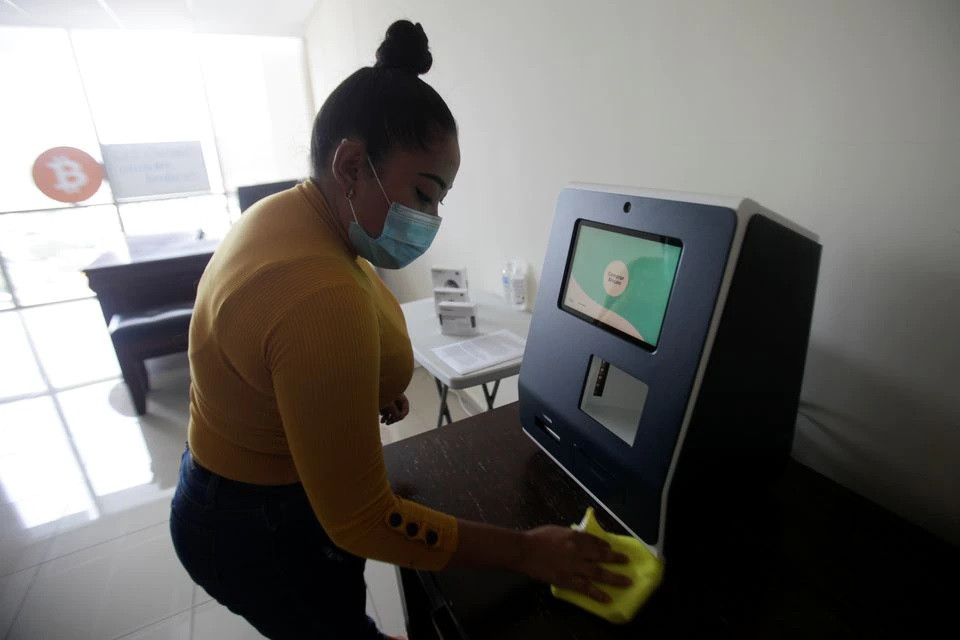
While it is technologically possible, insufficient political acknowledgment from sovereign nations prevents cryptocurrencies becoming an alternative to physical cash. Labeling it as a “currency” is superfluous nowadays. Only El Salvador preposterously grants Bitcoin legal tender status in its territory, we can find few similar situations elsewhere. In Indonesia, the sole currency is the rupiah.
We have seen roller-coaster episodes of Bitcoin. Bitcoin is way more valuable today than it was, but on bad days, the value plunges irrationally. Crypto trading is purely Keynesian “beautiful baby” speculative trading. It is simply trading with a view to what others are doing. Cryptocurrencies rarely behave, well, like money.
They are simply not reliable to serve as a store of value because of their incredible volatility. There is no real economic manifestation of value.
If anything, the tossing around of self-congratulatory claims about “democratization” was akin to the early days of the subprime mortgage boom of 2008. Along with that caveat, cryptocurrencies lack the quality of moneyness. That also prevails for the stablecoin kind that faces convertibility challenges and is hindered by the measurable ceiling of private capital. Crypto-libertarians soberly throw the full faith guarantee of the state out the window to attain the “privacy matters” premise.
But the appearance of cryptocurrencies forces authorities around the globe to rethink money.
The hyping of crypto trading is increasingly lucrative, especially for young professionals and social influencers. This challenges sovereign authority to provide a readily available futuristic digital form of fiat money against such popular demand. Moreover, the accelerating of the digital economy in the pandemic-induced touchless society forces paper cash out.
Nearly 100 countries are exploring the possibility of issuing a Central Bank Digital Currency (CBDC), including Indonesia. Some are jumpstarting the onboarding project of the CBDC, like the digital yuan in China. The idea is to bring the super-competitor, the sovereign market contrarian which can legitimately be labeled a “digital legal tender” back into the equation and consequently safeguard stability.
Societal movements are naturally ahead of governmental initiatives. This is justifiable because conservative pluralism is necessary for good social order. Some deliberation of digital cash involves providing more secure and efficient payments, stable and reliable value, inclusive availability for all, and as anonymously as paper cash.
Cryptocurrencies offer anonymity but they never truly do so. Blockchain-based cryptocurrency transactions still leave permanent digital footprints via the network connection. The obvious distinction is that rather than delegating the bookkeeping task to financial intermediaries within the reach of financial authorities, the transaction blocks are approved by the whole self-governing network.
When an illegal act occurs through the blockchain, all nodes, as well as law enforcement as network outsider, can “follow the money” through the IP address behind it. In this sense, cryptocurrencies lack the anonymity that physical cash has, another point that could nullify the cyberlibertarians’ dream.
The recent developments on anonymity were highlighted by United States Congressional Representative Stephen Lynch. Lynch has proposed the electronic currency and secure hardware (ECASH) bill, mainly to form a digital dollar that leaves no trail, hardware-stored balances and off the blockchain. This lawmaking dynamic in the US reveals a progressive parley over whether our future digital cash can provide the convenience of “no trail” paper cash.
The prolonged anonymity of cash is a virtue of civil liberty. Other than the technicalities of attaining an efficient, secure and stable potential replacement for paper, the anonymity equivalence of paper cash is worthwhile. But one must also consider countermeasures, such as thresholds for cash and tracking suspicious transactions through anti-money laundering procedures.
The double-spend problem that could have economic effects similar to counterfeit paper cash, must be anticipated. Where it is technologically feasible, the balancing of the objectives of markets, morals and methods for cryptocurrencies should be examined by policymakers.
***
The writer is a legal adviser at Bank Indonesia. The views expressed are his own.