TheJakartaPost
Please Update your browser
Your browser is out of date, and may not be compatible with our website. A list of the most popular web browsers can be found below.
Just click on the icons to get to the download page.


Popular Reads
Top Results
No results found. Please check your search term and try again
Can't find what you're looking for?
View all search results
Popular Reads
Top Results
No results found. Please check your search term and try again
Can't find what you're looking for?
View all search resultsThe promising prospect of a nuclear-weapons prohibition treaty
The treaty warrants strong hope for finally providing a legal framework to completely delegitimize nuclear weapons.
Change text size
Gift Premium Articles
to Anyone
Share the best of The Jakarta Post with friends, family, or colleagues. As a subscriber, you can gift 3 to 5 articles each month that anyone can read—no subscription needed!
R
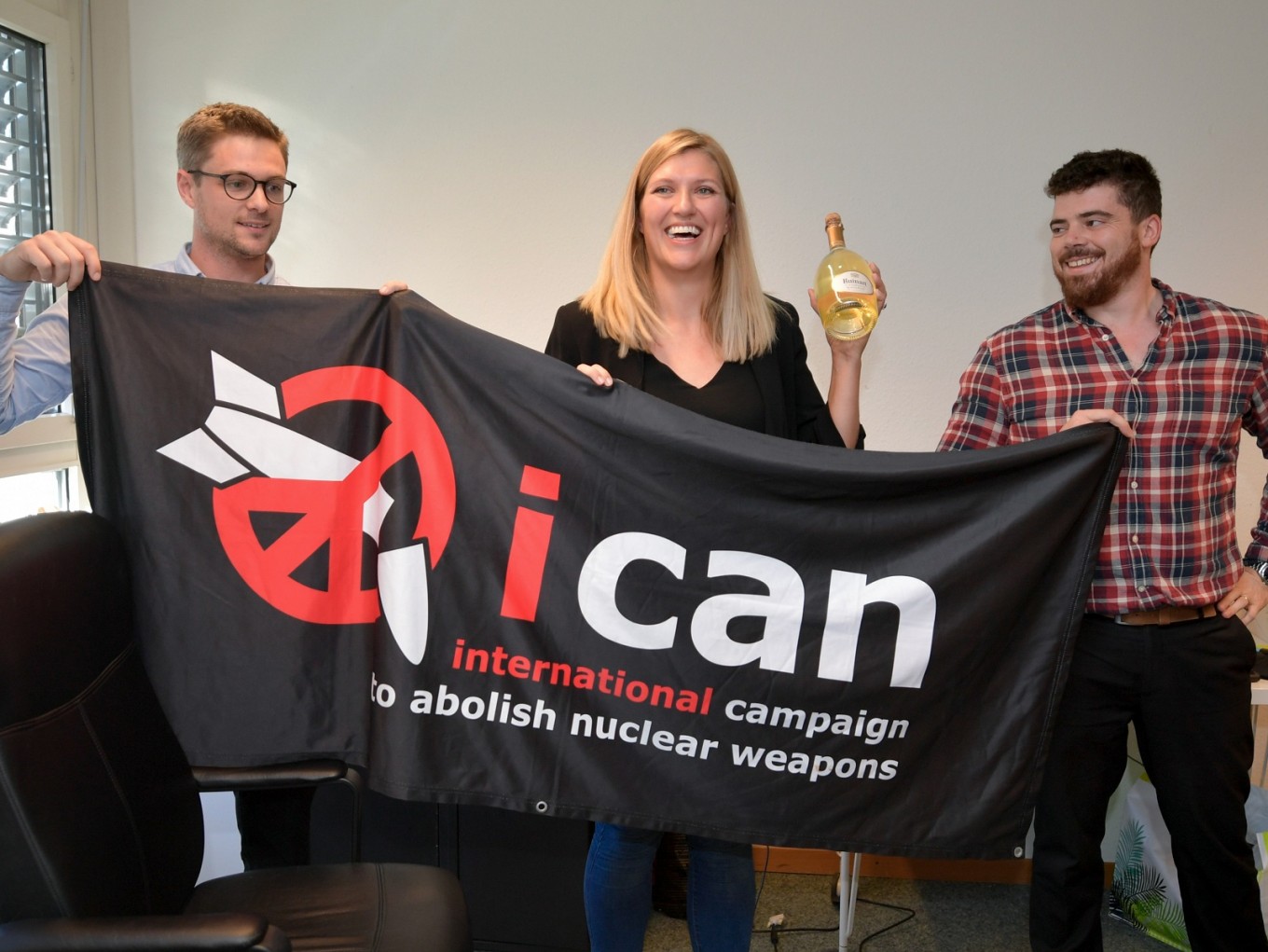
epresentatives of governments, international organizations and civil-society groups gathered for the first time in Vienna June 21-23 for the first meeting of states party to the Treaty on the Prohibition of Nuclear Weapons (TPNW), following its entry into force in January last year.
Signed in 2017, the treaty has received 86 signatories and 65 ratifications within the last five years, despite the COVID-19 pandemic situation since 2020, with more expected to join on board, including Indonesia. Jakarta has signed the treaty and is about to ratify it.
The Vienna meeting adopted a historical yet ambitious declaration with its action plan, where state parties commit to implement the obligations enshrined in this nuclear-weapon-ban treaty, ranging from providing assistance to victims of nuclear weapon use and testing, to universalizing the treaty.
The treaty arguably becomes the first legally binding instrument that comprehensively prohibits the use, threat of use, development, testing, production, manufacturing, acquisition, possession or stockpiling of nuclear weapons. This treaty also helps mitigate the catastrophic humanitarian consequences of using and testing nuclear weapons, by requiring states parties to assist victims of nuclear testing. The treaty warrants strong hope for finally providing a legal framework to completely delegitimize nuclear weapons.
The TPNW is an interesting instrument from a legal point of view. It is welcomed by the majority of states, but not by nuclear states. With rays of hope after the first meeting of state parties, and challenges from nuclear states, the question now is how prospective is this treaty in the future?
The followings are some personal provoking thoughts.
First, the nine nuclear states and NATO members, particularly the five Security Council permanent members (P5), maintain their opposition to the treaty. From the beginning, they argued, and now continue to argue, that TPNW is not compatible with the Treaty on the Non-Proliferation of Nuclear Weapons (NPT). The former prohibits nuclear weapons while the latter only prohibits their proliferation.
They attempt to say the two treaties mutually negate each other, thus it is most unlikely that a state can be a party to both treaties without ignoring one for the sake of the other. But this is not unusual for international law treaties. TPNW has solved the problem by providing a standard clause in Article 18 on “relationships between other agreements”, i.e. that the implementation of the treaty shall not prejudice obligations of states’ parties under existing treaties to which they are party, provided that those obligations are consistent with the treaty.
Second, TPNW could finally answer the inconclusive opinion of the International Court of Justice in its advisory opinion on legality of nuclear weapons in 1996, which had indicated that there was no such international rule prohibiting the use of nuclear weapons. TPNW, with its significant number of parties, might reverse the 1996 ICJ advisory opinion.
Third, aside from the non-compatibility issue of TPNW vs NPT mentioned above, the nuclear states are quite worried about if the prohibition norm under the TPNW is developing and becoming a customary-international law.
According to the international-law textbook, once it acquires customary-rule status, it will bind nuclear states regardless of whether they are parties or not to TPNW. To prevent it, they take a “persistent objection” measure by orchestrally stating that “they do not accept any claim that the treaty contributes to the development of customary international law”.
This is an international legal measure aimed at aborting the embryonic prohibition norm of the treaty from becoming customary rule. The measure will be likely unsuccessful considering that the main condition required for attaining customary status has been arguably met, i.e. state practices as well as opinio juris (an opinion of law or necessity).
It manifests in a significant number of signatories to the TPNW and their commitments to a nuclear weapon-free world. The measure will however enable them to enjoy persistent-objector rule, by which they will not be bound by the customary rule to which they have persistently objected.
But a curious question arises: What would happen if such rule of nuclear prohibition is developed into jus cogens rules, or accepted and recognized by the international community of states as a whole from which no derogation is permitted and which can be modified only by a subsequent norm of general international law having the same character?
Since jus cogens rules valid erga omnes (valid for all), then could nuclear states hide behind their persistent objection to prohibition of nuclear weapons as jus cogens? In other words, must acceptance of all countries be required for the norm of prohibition of nuclear weapon to be categorized as jus cogens?
This would be an interesting though delicate issue and has been raised in scholarly debates. The discussion will be relevant to the future of the TPNW in term of its potential universalization by virtue of customary international law.
This controversial issue of jus cogens has been addressed by the United Nations International Law Commission (ILC). In its 2022 report, the ILC concluded that the persistent objector rule does not apply to jus cogens and, further, acceptance and recognition by all states is not required. Consequently, the nuclear-weapons states should not necessarily be parties to the TPNW, for the norm of prohibiting nuclear weapons acquiring its jus cogens character.
Nevertheless, whether or not the TPNW prohibition norm has substantively been recognized as jus cogens is a question subject to further interesting legal debate. In case of doubt, ICJ is authorized to determine its jus cogens status when it is duly requested.
The TPNW therefore has a promising future.
***
Damos Dumoli Agusman and Indra Rosandry are respectively head and member of Indonesian delegation to the first meeting of state parties to the Treaty on the Prohibition of Nuclear Weapons in Vienna.