TheJakartaPost
Please Update your browser
Your browser is out of date, and may not be compatible with our website. A list of the most popular web browsers can be found below.
Just click on the icons to get to the download page.


Popular Reads
Top Results
No results found. Please check your search term and try again
Can't find what you're looking for?
View all search results
Popular Reads
Top Results
No results found. Please check your search term and try again
Can't find what you're looking for?
View all search resultsFerdy murder case: Supra-power and 'turn back cops'
Indeed, actors or agents raised in a corrupt system stand a great chance of gaining supra-power to co-opt the system.
Change text size
Gift Premium Articles
to Anyone
Share the best of The Jakarta Post with friends, family, or colleagues. As a subscriber, you can gift 3 to 5 articles each month that anyone can read—no subscription needed!
T
he theme of corrupt police has been portrayed in the feature films of a variety of countries. Hollywood produced The Departed, starring Leonardo DiCaprio and Matt Damon (2006), and Bollywood made the famous film Zanjeer starring Amitabh Bachchan (1973). More recently, the Korean drama Taxi Driver went viral in 2021, based on a true story about a victim who was wrongly arrested by the police.
In Indonesia, it seems it remains a taboo to bring real stories related to corrupt state institutions onto the big screen, even though they relate to our daily lives. But in the last two months, we have been watching a reality show about such bad cops.
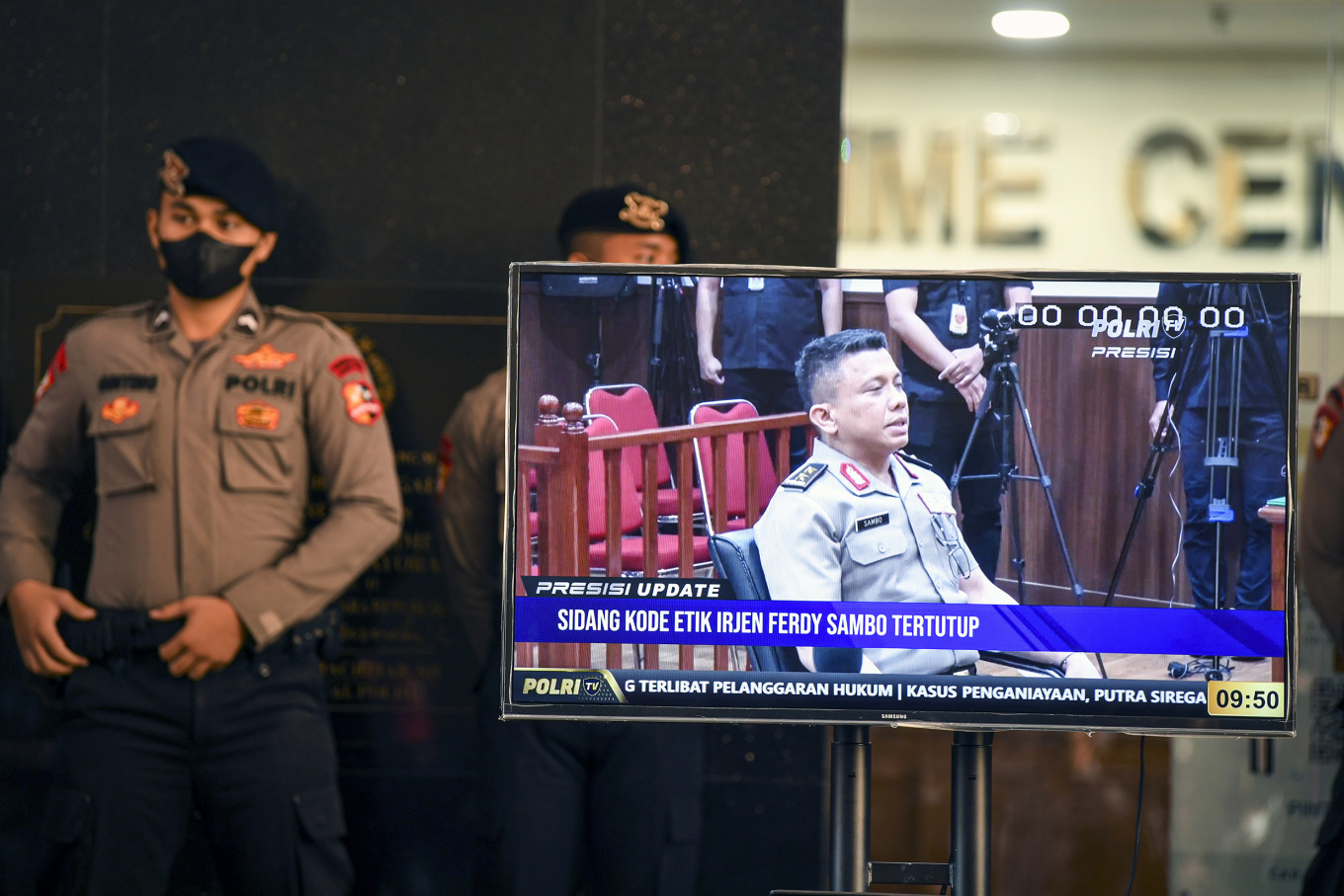
Former National Police Internal Affairs Division head Insp. Gen. Ferdy Sambo, along with his wife and aides, play the main and supporting characters in a drama-thriller genre film, a murder story with romance spices.
The first episode, which featured a shootout between two of Ferdy's aides, managed to dupe the audience into thinking about the supposedly accidental death of an aide named Brigadier Nopriansyah Yosua Hutabarat. But in the next episode, the audience finally found out that Yosua was executed by his commanding superior and other aides.
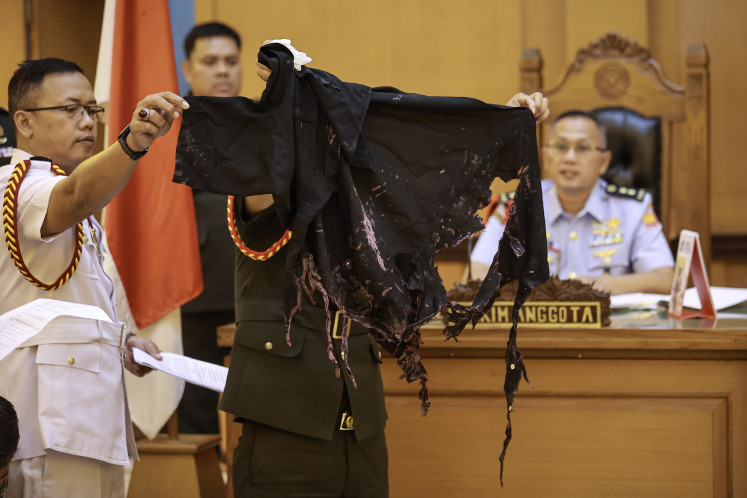
The reconstruction of the murder case on Wednesday was very much awaited like a premiere by the Indonesian audience, although the 78 scenes performed did not clarify the real motive behind the premeditated murder.
What we have seen from the reenactment of the murder case is like the “plot hole” in horror movies, in which there are often missing scenes that keep the audience curious until the end of the play.
The drama-thriller of the Ferdy case reenactment is an example of Anthony Giddens’ structuration theory, with the object of the story being the police institution.
Ferdy's ability to organize police officers from across various divisions to support his scenarios makes him the central-antagonist character.
The structuration theory emphasizes the importance of actors/agents (Giddens, 1984). Actors are not only machines that are controlled by the structure, but also have a great impetus from their self-motivation.
Thus, the actors have the ability to influence or even determine the structure for themselves. The “police headquarters inside headquarters" phenomenon coined by Coordinating Political, Legal and Security Affairs Minister Mahfud MD may fit Giddens' explanation.
Ferdy headed the now defunct Merah Putih special task force, which enjoyed extraordinary privileges compared to other sub-systems within the National Police, when the murder occurred. The task force was a result of agents/actors in the production and reproduction process of the system, where agents not only interpret the behavior of other actors but also adapt themselves to certain situations and rationalize and give reasons for their behavior as well.
The ability of a police officer, as well as other officials in the bureaucracy, to go beyond the limits of authority in their structural position means they hold a supra-power. In the practice of bureaucracy in contemporary Indonesia, the supra-power is also demonstrated by some prominent high-ranking officials.
Indeed, actors or agents raised in a corrupt system stand a great chance of gaining supra-power to co-opt the system. It is like keeping a cub in a cowshed.
Giddens also explains that agents/actors or humans are produced and continuously reproduced every day in space and time (Giddens, 1984). The reproduction process can be seen from the behavior of police officers in their daily activities, ranging from accepting or demanding ticket bribes on the road to fabricating criminal cases. All has become public knowledge and is internalized into a social system. This behavior is also perceived by the public as having spread across all structures within the police organizational system.
This negative public perception based on knowledge about the police may have been internalized in society, not only in Indonesia but also in many countries where law enforcement and civil society remain weak.
In space and time, the structural forces within the system are then affirmed and exercised in practices that strengthen the system. For example, a young police officer who in the Police Academy is taught about the values of community service may experience confusion if he or she was admitted thanks to bribe money. Then, in the course of their career, they might imitate the bad behavior of their seniors and superiors.
The Ferdy drama-thriller is still waiting for the next episode. Various unsolved mysteries await the audience. Perhaps the mystery of the missing scenes will not be revealed in court when all the suspects stand trial.
Or perhaps the story only stops with the change of actors in the system, as in the succession of the godfather in the mafia organization. Actors can change but the system and structure do not.
If that is the case, then this murder-drama story deserves the title Turn Back Cops. It will only leave great sorrow to the families of both the victims and perpetrators, unless an overhaul of the police institution is initiated.
***
The writer is executive director of the Indonesia Future Studies (INFUS) and the author of Greed in the Midst of a Pandemic.