TheJakartaPost
Please Update your browser
Your browser is out of date, and may not be compatible with our website. A list of the most popular web browsers can be found below.
Just click on the icons to get to the download page.


Popular Reads
Top Results
No results found. Please check your search term and try again
Can't find what you're looking for?
View all search results
Popular Reads
Top Results
No results found. Please check your search term and try again
Can't find what you're looking for?
View all search resultsStructural murder: Transphobia in Indonesia remains a threat to transgender people's lives
Change text size
Gift Premium Articles
to Anyone
Share the best of The Jakarta Post with friends, family, or colleagues. As a subscriber, you can gift 3 to 5 articles each month that anyone can read—no subscription needed!
T
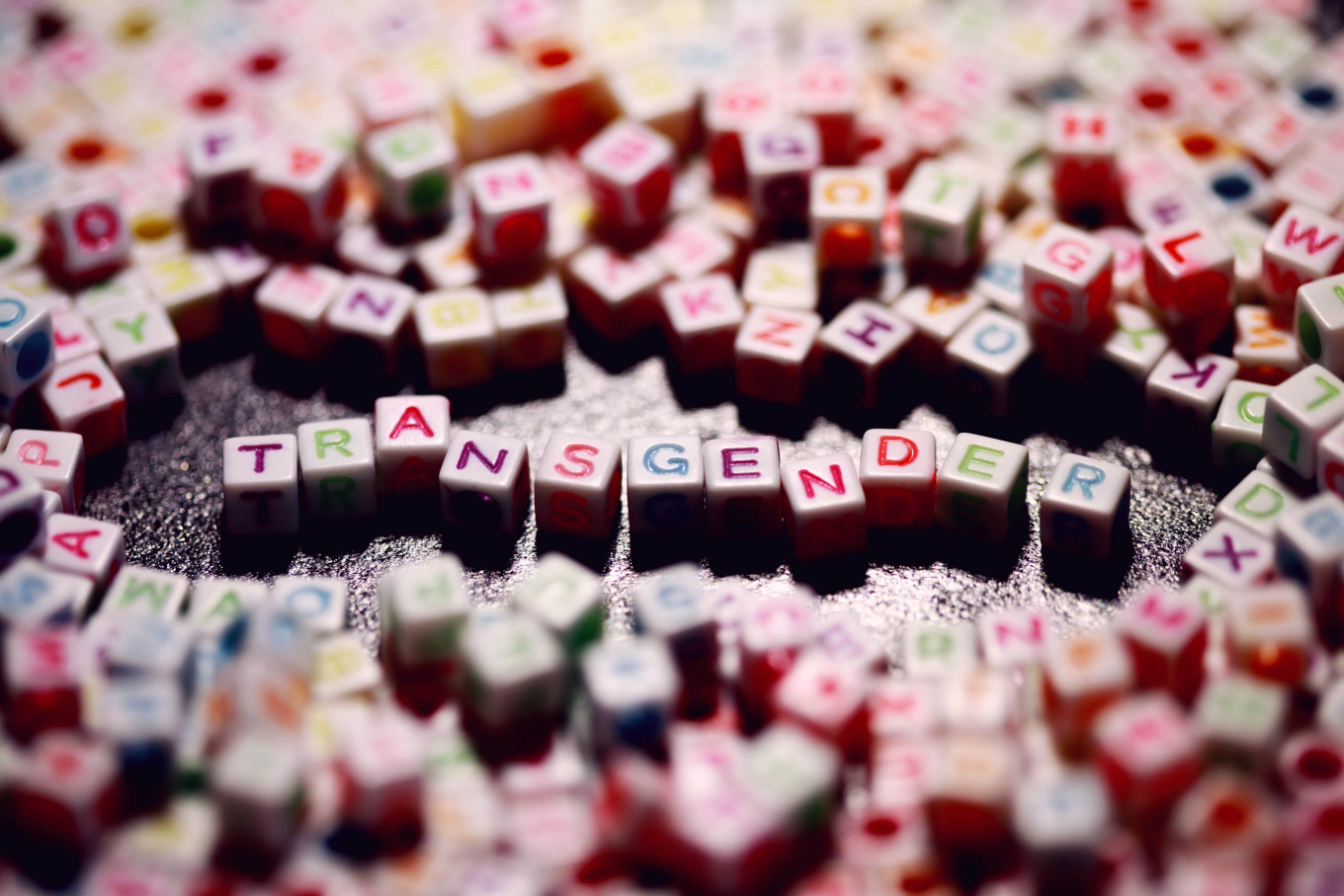
he death of a Peruvian transgender tourist in Bali would indicate that transgender individuals' lives here are still imperiled due to the government's treatment of the community.
Weeks have passed since Rodrigo Ventosilla, a Peruvian tourist who came to Bali with his husband for a holiday, died in detention where he was being held for allegedly bringing medical marijuana into the country. His death, officials said, was due to a "failure of bodily functions." But the lack of transparency surrounding his death has led his family, friends and the LGBTQ communities in both Peru and Indonesia, to believe that there was police mistreatment or even abuse during his detention, primarily caused by "racial discrimination and transphobia."
Ventosilla was a transman, as is his husband. When the news of his death broke online, his family's accusation of transphobia as a factor in his death prompted support and counter claims, the latter insisting that his bringing marijuana into Indonesia—with the country's zero-tolerance policy—led to his being detained in the first place.
But for transgender individuals in Indonesia, the case hit close to home. Communities from Jaringan Transgender Indonesia to Arus Pelangi have demanded answers about Ventosilla's death because, regardless of the crosscutting issues at hand, they know that the ingrained transphobia in the country often causes the death of trans people.
"It's not just the Peruvian case," Kanzha Vinaa, 29-year-old transwoman activist, told The Jakarta Post on Aug. 31. She said that transgender people had long been victims of the government's "political commodity."
"What the government [says or does] impacts on the grassroots communities directly, because when the narrative rejects, attacks or opposes LGBTQ, people's transphobia will intensify without them knowing it is happening."
Past and present violence
Many blatant transphobic attacks have been reported in the news over the years, from villagers kicking transgender individuals out of their homes to brutal murder, such as of 42-year-old transwoman Mira who was burned to death in 2020 in Cilincing, Jakarta, following a baseless accusation of theft.
Vinaa's struggle with her gender identity, involving violent abuse from family and friends, has been recounted in a graphic manner on the website of Sanggar Swara, a youth trans community that she currently chairs. Asked about the tragedy again, she declined to repeat the story.
"Transphobia comes from one's ignorance, which gets stronger and leads to hate," she said. She brought up the recent case of a university student who identified as nonbinary and was expelled from their class.
"From that case, [it's apparent how] the university lecturers struggled to respond, ending up with 'What spectrum of gender is this?'"
Vinaa saw it as the worrying part of the country's sexual education, where even educational institutions fail to grasp an understanding of gender.
"This [understanding] is rarely included in our education system, formal workspaces or even the government sector," she said. "So people will make any efforts to correct this 'gender deviation,' like with gender-correction efforts, for example. They will end up being bullied in school or unable to go to work."
Yogyakarta-based artist Tamarra also felt a similar struggle. Faced with transphobia rooted in the community level, Tamarra—who prefers to be referred to by name—finds it difficult to protect the community from the public order agency (Satpol PP).
"You've got to play cat and mouse with Satpol PP these days because they never wear their uniforms, so it's getting harder for us to differentiate them from civilians, and it makes it easier for them to catch us," Tamarra told the Post on Sept. 2.
Coming from Tasikmalaya, West Java, Tamarra has seen the dangers that fellow transgender people in Indonesia face on small and big scales, such as the 2018 incident in Aceh where transwomen workers in a salon were beaten, had their heads shaved and detained in an operation to eradicate "society's disease."
"We don't hate lesbian, gay, bisexual and transgender people. But what we hate is their behavior," said Aceh's governor in 2018, Irwandi Yusuf, to justify the operation.
Tamarra said that transgender people living in Java are still luckier than those in Sumatra and other islands. This is why the busker-turned-artist has compromised in many situations, like acting masculine toward roommates.
"In Yogya, you wouldn't find dorms for waria [Indonesian for transwoman]. There's no way I would look for a men's dorm and say that I'm trans; I'd be beaten to death there," said Tamarra, who had previously been expelled by residents of Mantrijeron, Yogyakarta, in 2016.
"In Indonesia, almost every waria in the community or living alone must have experienced that sort of abuse because it is structured in nature; it comes from the government, not just from the people."
Systemic hate
Tamarra referred to a scary time of heightened hate toward LGBTQ people in 2016 following numerous hate speeches from government officials about the community.
"It was crazy; banners filled with insults and threats toward [trans people] were everywhere. I even went out at 3 a.m. every day and circled Yogya to take down those big banners," Tamarra recalled.
The pinnacle was the raiding of Pondok Pesantren Waria Al-Fatah (Al-Fatah Islamic Boarding House for Transwomen) by the Yogyakarta Indonesian Jihad Front (FJI) at that time. It was this event that 61-year-old transwoman activist Rully Mallay remembered as an example of when the government's lack of acknowledgment of the trans community could lead to a dangerous transphobic attack.
"Our downside as trans people was that the state was late in providing identity. Only recently has the state been able to facilitate [identity cards] for us because we continue to press for the need for vaccines, health insurance, etc.," she told the Post on Sept. 3.
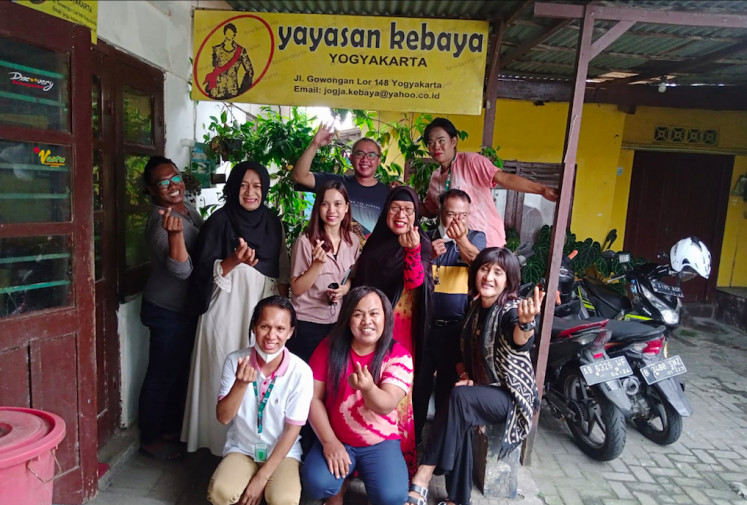
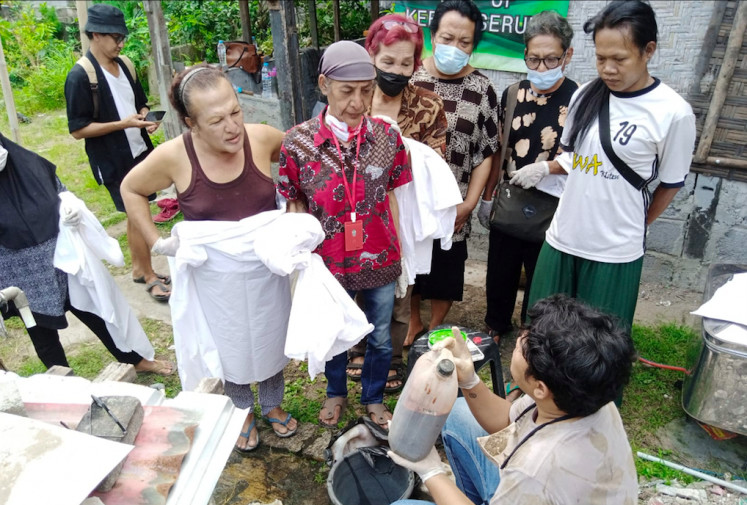
Rully, is a coordinator at Yogya's Waria Crisis Center and a respected volunteer in trans communities like Kebaya Yogyakarta. She saw how not being recognized by the law had a deadly impact on transgender people during the first year of the pandemic, in which up to 11 transwomen died.
"In Yogya, we've been actively pushing for identity [for trans people] since 2013 because identity is a vulnerability factor; not having an identity card means you're not considered a citizen. So if something like this happens, the police can easily throw up their hands and say 'You deserve to be punished,' 'You're a deviant,' etc.," she said.
Albeit with no sign of the state recognizing the trans identity any time soon, Yogyakarta has lately helped provide administrative access for marginal groups who most need ID numbers for vaccination and the unconditional cash transfer (BLT).
But with another election just around the corner, both Tamarra and Bunda (Mother) Rully feel that LGBTQ issues are now stirring again.
"These days, the political situation feels similar to that 2016 incident, from the infamous [Deddy Corbuzier] podcast to the comments made by government officials, even those who wanted to put an LGBTQ clause into the KUHP [Criminal Code] bill," Rully said. She also saw how those who expressed their gender identity at the recent, short-lived Citayam Fashion Week were dealt with by state officials.
"The root of the problem, I think, is that government officials, who are supposed to uphold the rule of law, are still [biased] against the queer community. They do not recognize us, as there is no state legislation that gives recognition to our existence," she said. "Being a trans woman is not an option, but a given."
But she still sees a ray of hope from other people as awareness is now spreading, especially on social media. When she put up a donation page for helpless trans people who were self-isolating, the Waria Crisis Center received over Rp 146 million ( US$ 9,708) within six days, which helped over 60 transwomen in the vicinity who lived in their dorms, 100 female sex workers, and even 100 elderly who are not trans.
"The role of young people in this regard as the millennial generation who understand technology is powerful, [they] participate in voicing, continuing and promoting this issue through young influencers who help [our movement] improve," she smiled.