TheJakartaPost
Please Update your browser
Your browser is out of date, and may not be compatible with our website. A list of the most popular web browsers can be found below.
Just click on the icons to get to the download page.


Popular Reads
Top Results
No results found. Please check your search term and try again
Can't find what you're looking for?
View all search results
Popular Reads
Top Results
No results found. Please check your search term and try again
Can't find what you're looking for?
View all search resultsJakarta’s irresistible pull
Is the Jakarta government truly prepared to manage the consequences?
Change text size
Gift Premium Articles
to Anyone
Share the best of The Jakarta Post with friends, family, or colleagues. As a subscriber, you can gift 3 to 5 articles each month that anyone can read—no subscription needed!
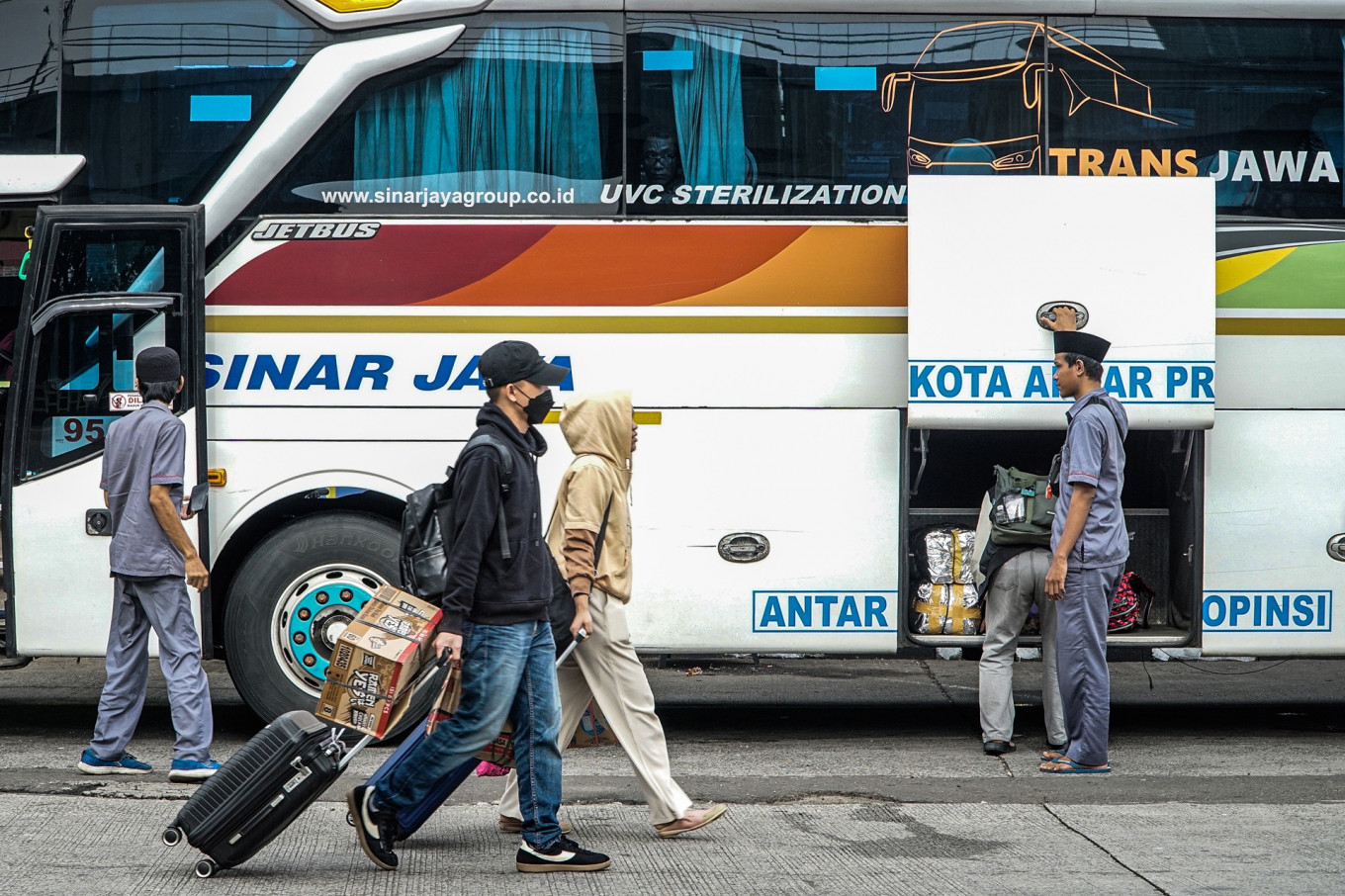 Passengers disembark from an intercity bus on March 24 at the Kampung Rambutan bus terminal in Jakarta amid the post-Idul Fitri 'balik' (return) travel surge. (Antara/Salma Talita)
A
s is tradition after the Idul Fitri holidays, Jakarta is welcoming a new wave of dreamseekers. The city’s magnet effect is backed by hard numbers: it generates over 16 percent of the national gross domestic product and sees 70 percent of the country’s wealth circulate through its streets. Capital city or not, Jakarta remains the undisputed center of Indonesian business and finance.
Governor Pramono Anung has reaffirmed that Jakarta remains open to all, pledging that his administration will move away from the restrictive migrant raids seen in the past. While urbanization is an inevitable force that continues to reshape the city’s landscape and test its carrying capacity, the critical question remains: Is the Jakarta government truly prepared to manage the consequences?
The city authorities have projected a decline in migrant arrivals to up to 12,000 this year from around 15,000 in the previous year. The downward trend has been detected over the past few years, in line with the increasing cost of living in Jakarta and a rise in the allocation of village funds.
The shift in the job market, which now requires specific skills such as foreign language proficiency and digital technology mastery, has also narrowed the employment opportunities that force job seekers to reconsider their plan to migrate to Jakarta.
Experts, however, doubt the descending curve of migration to Jakarta will reach a nadir anytime soon. Jakarta’s monthly regional minimum wage, which is set at Rp 5.7 million (US$337) this year, has remained among the highest in the country and will continue so, luring people from other regions to try their luck in the city.
Significant cuts in regional transfers and village funds to plug the budgets for President Prabowo Subianto’s signature programs like the free nutritious meal program and Red and White rural cooperatives (KDMP) program will also reduce the capability of regions to create jobs. Many will find a move to Jakarta a solution.

The latest data from Statistics Indonesia (BPS) found three key industries dominate Jakarta’s labor market: wholesale and retail trade (23.22 percent), accommodation and food services (13.29 percent) and transportation and storage (11.92 percent).