TheJakartaPost
Please Update your browser
Your browser is out of date, and may not be compatible with our website. A list of the most popular web browsers can be found below.
Just click on the icons to get to the download page.


Popular Reads
Top Results
No results found. Please check your search term and try again
Can't find what you're looking for?
View all search results
Popular Reads
Top Results
No results found. Please check your search term and try again
Can't find what you're looking for?
View all search resultsSafeguarding the integrity of Indonesia’s electoral system
Indonesia’s political parties have been left with a free hand to raise as much money as they can from whomever they wish, with little fear of sanctions and with no requirement to ever publicly disclose those funds.
Change text size
Gift Premium Articles
to Anyone
Share the best of The Jakarta Post with friends, family, or colleagues. As a subscriber, you can gift 3 to 5 articles each month that anyone can read—no subscription needed!
T
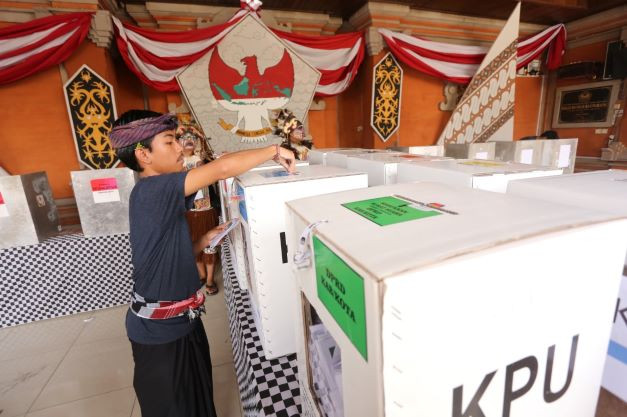
his week has seen a great deal of attention paid to the integrity of Indonesia’s electoral process, as allegations of intimidation and manipulation have surfaced surrounding the verification of political parties.
Some lawyers representing newly established political parties and employees of regional offices of the General Elections Commission (KPU) have accused the central KPU office of meddling in the process and have threatened to take legal action. The lawyer for the regional officials, Ibnu Syamsu Hidayat, gave the KPU a week to respond to the accusations and stop any attempts to manipulate the results of the “factual verification” process through the intimidation of regional KPU employees. (The Jakarta Post, Dec. 14, 2022).
These allegations are concerning and, if borne out, would do significant damage to the public’s trust in the integrity of the electoral process. These allegations are worth examining more closely in a fully transparent and fair manner but must be conducted with the presumption of innocence until proven guilty.
As part of the examination of these allegations, careful attention must be paid to a number of areas, including whether an abuse of power occurred; whether the alleged manipulation of the process adversely affected voter choice in the upcoming election; why the allegations only surfaced now rather than when they occurred; the potential motivation of the complainants; and whether the allegations ultimately affected the outcome of the verification process – an approach borrowed from investigations into instances electoral fraud, such as efforts to stuff the ballot box or manipulate vote tallies.
The allegations offer us all an important reminder that the integrity of the electoral process requires our collective and constant supervision and should not be taken as a given. At the same time, it is worth understanding that while the current allegations represent a relatively novel area of vulnerability, there are several systemic threats to the integrity of the country’s elections that are well-known and deserve immediate action.
Political party finance is one such area. While laudable efforts have been put forward to increase transparency and accountability regarding the public subsidies political parties receive (banpol) from the state budget, banpol constitute a fractional portion of political parties’ overall operating expenses. The funds political parties raise from private donors remain shielded from the public view, allowing dark money to be channeled via various parties into Indonesia’s electoral system.
While the Political Party Law stipulates clear limits on donations to parties, the law fails to require integrated, holistic, routine disclosures that would provide the public insights into the figures driving Indonesia’s political system. The law also fails to appoint a responsible government agency to enforce the limits stated in the law.
Indonesia’s political parties have, therefore, been left with a free hand to raise as much money as they can from whomever they wish, with little fear of sanctions and with no requirement to ever publicly disclose those funds.
Campaign finance is another known area of significant shortcomings. With parties able to collect unlimited amounts of unaccountable dark money, they are then able to channel that money into the campaigns of their candidates without having ever to account for its source. Campaign finance reports themselves are widely acknowledged to often represent only a fraction of the money that was actually raised and spent on a campaign, and although the reports are universally subjected to compliance audits, such audit mechanisms are ill-suited to examining the veracity of reported data and are simply a desktop exercise to ensure reported receipts and expenditures match up with supporting documentation.
Forensic audits can and should be employed in a more systematic way to focus on whether campaign finance reports are an accurate and genuine reflection of the financial flows involved in a given campaign.
The lack of transparency in political finance (comprising both political party finance and campaign finance) furthermore leaves the people at a significant disadvantage in conducting oversight in the post-election process, as lucrative contracts are awarded and valuable licenses are issued. This bad practice is far from new – in fact, it has been well-documented in research, including a study conducted by the Corruption Eradication Commission (KPK) and Indonesian Institute of Sciences (LIPI) which stated that one of the main problems of political corruption in Indonesia was the absence of transparency and accountability of political party finance. (LIPI and KPK, Integrity System of Political Parties, 2018).
In short, all political parties have been managing their finances like a “family company” and have zero genuine interest in disclosing the source of their finances.
Therefore, the creation of a robust, structured, searchable and openly accessible political finance database would mark a significant step forward in Indonesia’s anti-corruption agenda. In previous elections, the KPU has published campaign finance reports on its website for the public to access and download. This is an encouraging step, but the data remains confined to individual reports, and those reports are not reliably available as prior election data is taken down to make room for new data from more recent elections.
The KPU can and should continue to push forward by storing this data in an openly accessible, searchable database that allows the public to explore financial relationships both during the campaign and well into the future as a key component of an enhanced tool in preventing and managing conflicts of interest.
Indonesia’s decline on the Democratic Index and Corruption Perception Index in the last three years must be taken as a red flag that we cannot leave our hopes to the mercy of the oligarchs and politicians, who time and time again have proven their lack of commitment to advancing the quality of Indonesian democracy and the serious fight against corruption. Therefore, our collective efforts are required to create and sustain an electoral democracy based on the fundamental principles of openness, transparency and accountability for all. Finally, I would like to remind myself and my fellow Indonesians that democracy is fragile and requires constant vigilance from responsible citizens if we do not want to repeat the past mistakes.
***
The writer is executive director of the Partnership for Governance Reform (Kemitraan), senior lecturer at Hasanuddin University and a former deputy chief of the Corruption Eradication Commission (KPK) 2015-2019.