TheJakartaPost
Please Update your browser
Your browser is out of date, and may not be compatible with our website. A list of the most popular web browsers can be found below.
Just click on the icons to get to the download page.


Popular Reads
Top Results
No results found. Please check your search term and try again
Can't find what you're looking for?
View all search results
Popular Reads
Top Results
No results found. Please check your search term and try again
Can't find what you're looking for?
View all search resultsCan we sustain a tax-free economy?
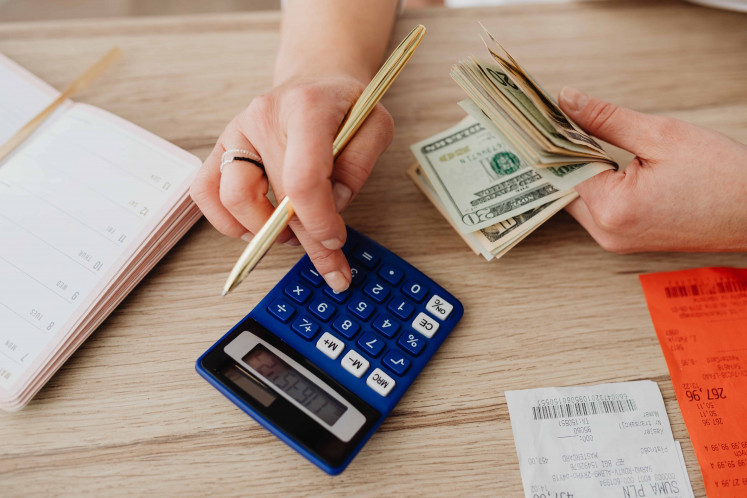
Tax collection remains the most straightforward way to support the budget structure needed to finance the development of human resources, infrastructure and welfare.
Change text size
Gift Premium Articles
to Anyone
Share the best of The Jakarta Post with friends, family, or colleagues. As a subscriber, you can gift 3 to 5 articles each month that anyone can read—no subscription needed!
T
axation has appeared in almost every narrative throughout the history of our civilization since it was first recorded in Ancient Egypt over five millennia ago. Appearing in various forms and names, it generally has one fundamental goal: to fund public budgets needed to support the overall functioning of the economy.
However, voluntary taxation certainly is not an effortless thing to establish, even to the point of still being a debated issue regarding its reliability. In 2020 alone, Indonesia's tax ratio, which accounted for 10.1 percent of gross domestic product (GDP), was the third lowest in the Asia-Pacific region, far below the regional average of 19.1 percent.
Nevertheless, the national economy appeared to continue to grow strongly by 5.3 percent in 2022, exceeding the average growth rate of other developing countries by 4.4 percent, as reported by the International Monetary Fund. This seemingly uncorrelated relationship between the two prominent factors should raise an important question: how necessary is taxation in our economy?
Promoting development means making taxation a prioritized fiscal policy. This is not without reason. To this day, tax collection remains the most straightforward way to support the budget structure needed to finance the development of human resources, infrastructure and welfare, as also stated by the World Bank.
In the 2023 state budget, tax revenue is still the largest source of state revenue, accounting for 82.1 percent of the total receipts, up from 77.5 percent in the previous year. This situation not only applies in Indonesia, but also in almost all other countries. In Singapore, tax revenue is a fundamental contributor accounting for 90.7 percent of total revenue, higher than the 74.7 percent in Thailand and 75 percent in Malaysia.
Without taxation, we would have to find a better alternative to replace the loss of state revenue, which is expected to amount to Rp 2.02 quadrillion (US$134.7 billion) in 2023. If debt financing is chosen, the budget deficit value will sharply increase by 337.8 percent, making this option the last resort. Alternatively, the government might pursue privatization by giving the private sector greater opportunities to manage the public sector.
However, this approach could create a greater financial burden on the public than paying taxes.
Tax haven jurisdictions, despite what their names might imply, are not entirely tax-free. Several tax havens such as the United Arab Emirates, Monaco and Qatar do not impose taxes on personal income, but still collect other types of taxes such as corporate income tax and sales tax. Furthermore, Switzerland, which is often recognized as a tax haven pioneer, still levies taxes on personal income and a range of other types of taxes, albeit at relatively low rates.
In truth, no country is ever truly tax-free as indicated in the Organisation for Economic Co-operation and Development's Global Revenue Statistics Database. Taxation remains the most practical way to fund public budgets, as stated in a 2001 article published by the IMF. However, some countries do apply low tax rates and special tax regimes, making them appear as tax havens to attract foreign investment.
Moreover, inequality is still a serious issue in our economy, where 46.6 percent of wealth is concentrated only in the top 1 percent of the population, as found by the global investment bank Credit Suisse. The imposition of progressive taxes, such as graduated personal income tax and tax on the sales of luxury goods sales, allows the government to transfer that wealth by collecting higher taxes from the top strata of society to support the whole well-being of the society, especially for 26.36 million people below the poverty line who still struggle to access the resources needed to achieve a decent standard of living.
Tax funds have enabled every child to access quality education and health facilities without being limited by the socio-economic background of the household in which they were born and raised. This is truly important in creating opportunities for every family to improve their standard of living in the coming times, as supported in a 2022 working paper published by the IMF. In the 2021 state budget, the tax revenues collected were allocated to social protection, education and health at 13.4 percent, 9.3 percent and 3.6 percent, respectively.
Eliminating taxation would mean eliminating all those opportunities, thus pushing lower-income people into a more marginalized condition. This would only benefit corporations and high-income households that are no longer subject to taxation, thereby further widening the gap. Therefore, taxation in essence is the key to how we can solve the problem of poverty and inequality.
We tend to perceive taxation as a burden that forces us to receive less and pay more than what we should. In reality, taxation is what enables us to have the strong economy that we have today. Not a single country is capable of sustaining an economy that is completely free from taxation interventions, unless we have better policy alternatives to fund such a large economy that requires a tremendously sized budget.
Therefore, the best way forward in the meantime is not to eliminate taxation from the economy, but to use tax funds more wisely and accountably so that everyone in society can achieve the same decent standard of living in our growing economy.
***
The writer is an operator of organizational performance and risk and managing partner at the Directorate General of Taxes. The views expressed are his own.