Can't find what you're looking for?
View all search resultsCan't find what you're looking for?

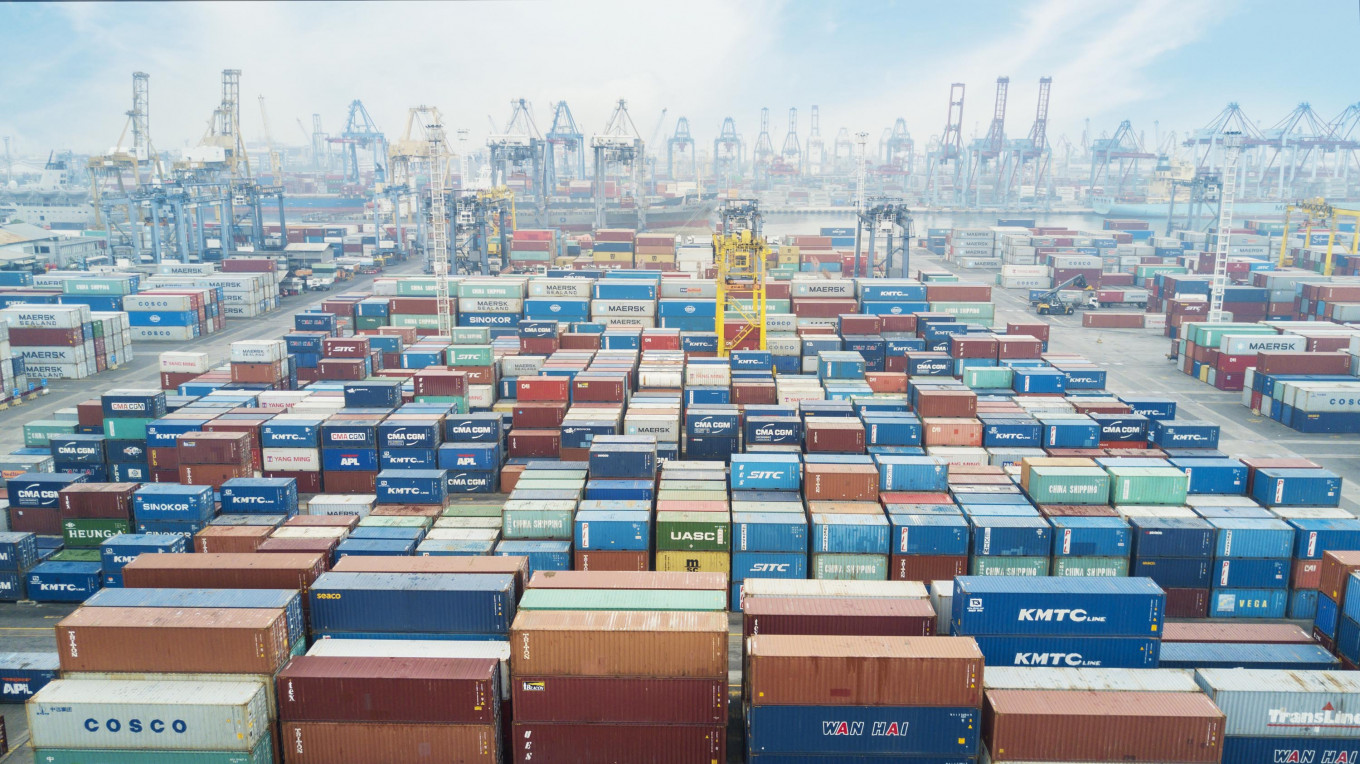
View all search resultsThe Indonesian Logistics and Forwarders Association (ILFA) says the World Bank's 2023 Logistics Performance Index does not adequately describe the overall state of logistics in the Indonesia, and the government notes massive investment in the sector.
usiness representatives and the government insist that logistics in Indonesia are improving, notwithstanding a comparative ranking that has the country falling back 15 places.
Indonesian Logistics and Forwarders Association (ILFA) chairman Yukki Nugrahawan Hanafi said the recently released World Bank’s Logistics Performance Index (LPI) 2023 was “not comprehensive” in describing the domestic industry.
The report was “about perceptions,” Yukki emphasized, adding: “What the World Bank measures is confined to one or two commodities and the [selection of assessed] ports is also limited,” Yukki told The Jakarta Post on Thursday.
He claimed there was a disparity between the measured data, macroeconomic conditions and the unique challenges posed by the archipelagic nature of our country.
“If we look at the work done by stakeholders like the government, businesses and associations, [we believe] our score could be so much better,” he continued, while pointing out that the association had not been consulted by the World Bank for this year’s report despite regular invitations in the past.
According to the World Bank’s website, the LPI serves as a benchmarking tool to help countries identify challenges and opportunities in trade logistics, and what they can do to improve their performance.
The 2023 index, which was published in late April, is based on a worldwide survey of international logistics operators on the ground across 139 countries, as well as information on maritime shipping and container tracking, postal services and air freight that was collected and made available to the World Bank by several data partners.
According to the report, Indonesia dropped 15 places to 61st of 139 countries for the 2023 report, down from rank 46 of 160 in 2018. With a score of 3 out of 5 based on six main indicators, Indonesia trails behind other emerging economies in Southeast Asia.
A poorly performing logistic industry generally drives up costs for industry and households, reflecting inefficiencies in the transportation and warehousing sector.
When compared with the 2018 report, Indonesia scored lower in international shipments, logistics quality and competence, tracking and tracing, as well as timeliness. There was improvement only in the scores for customs and infrastructure.
Despite the lower rank, Yukki expressed confidence, highlighting that inflation was under control and investment was doing well compared with the region. “Our country’s current domestic economic situation is much improved,” he added.
The Office of the Coordinating Economic Minister pointed to the country’s increasing score for port dwell times in the same World Bank report. The score increased to 3.2.
“This figure has increased quite significantly, and in the ASEAN region, it is only below that of Singapore, which has a score of 3.0," said the office’s spokeswoman, Alia Karenina told the Post on Wednesday.
Investing in the system
The government insists that the LPI ranking will not affect the investment climate in Indonesia.
According to the Investment Coordinating Board (BKPM), the transportation, warehousing and telecommunication sector attracted Rp 36.1 trillion in direct investment in the first quarter of 2023, second only to the basic metals industry, which brought in Rp 46.7 trillion.
Alia hailed the government’s National Logistic Ecosystem (NLE) as the result of a “transparent and integrated” action plan to improve logistics.
“The NLE synchronizes the flow of goods and international documents from the arrival of the means of transportation until the goods arrive at the warehouse, including the licensing and settlement of shipping documents,” she explained.
Andry Satrio Nugroho, who heads the Industry, Trade and Investment Center at the Institute for Development of Economics and Finance (INDEF), told the Post that a logistics ecosystem was “exactly what the country needs” to integrate policies not only across ministries but also across nations.
“[The system] is pretty nice, at least there’s coordination that is integrative, collaborative and has a joint standard operating procedure [SOP],” he said, adding that electronic customs procedures could accelerate clearance and documentation, thus increasing trade frequency.
“Now exporters and importers have an integrative system for clearance as one of the keys to increasing the trade frequency and decreasing logistics costs,” he concluded.
The government has vowed to reduce logistics costs from the current 23.5 percent of gross domestic product (GDP) to 17 percent in 2024, with higher port efficiency seen as crucial.
The NLE now includes 14 ports and is to be expanded to 32 ports and six airports.
More than 15 ministries and more than 50 logistics platforms have been integrated through the Indonesia National Single Window (INSW) licensing system into the NLE under the management of the Finance Ministry's National Single Window Institution (LNSW).
Share your experiences, suggestions, and any issues you've encountered on The Jakarta Post. We're here to listen.
Thank you for sharing your thoughts. We appreciate your feedback.
Quickly share this news with your network—keep everyone informed with just a single click!
Share the best of The Jakarta Post with friends, family, or colleagues. As a subscriber, you can gift 3 to 5 articles each month that anyone can read—no subscription needed!
Get the best experience—faster access, exclusive features, and a seamless way to stay updated.