The Jakarta Post
Please Update your browser
Your browser is out of date, and may not be compatible with our website. A list of the most popular web browsers can be found below.
Just click on the icons to get to the download page.


Popular Reads
Top Results
No results found. Please check your search term and try again
Can't find what you're looking for?
View all search results
Popular Reads
Top Results
No results found. Please check your search term and try again
Can't find what you're looking for?
View all search resultsaids

Academia 9 months ago
PREMIUM
Funding gap looms, will progress against AIDS, TB, malaria suffer?
However, with global funding pledges falling short of the target required to sustain health programming, how can countries, including Indonesia, win their goal to end AIDS, tuberculosis and malaria as global health threats?
Academia 1 year ago
PREMIUM
Integrating health services to mitigate the shift in global aid
The US withdrawal from global health aid highlights the vulnerability of global health funding to geopolitical shifts, and serves as a wake-up call for Indonesia to build a self-reliant healthcare model that is capable of delivering integrated services, such as for TB, in anticipation of future uncertainties.
Society 2 years ago
PREMIUM
UNAIDS calls for urgent efforts in Asia-Pacific to end AIDS by 2030
A new global AIDS report by UNAIDS suggests that Asia-Pacific governments must invest urgently in prevention programs and community-led initiatives for the region, among those with the highest prevalence in the world, can attain its 2030 AIDS prevention goal.
Society 3 years ago
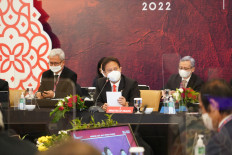
Indonesia contributes $15.5 million in fight against tuberculosis, malaria, HIV/AIDS
Health Minister Budi Gunadi Sadikin said in a statement that money contributed to the effort came from the state budget as well as funding by the private sector. The move was for the first for Indonesia to become a contributor to the initiative.

Lifestyle 5 years ago
PREMIUM
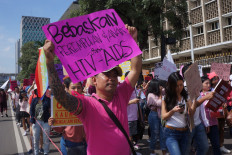
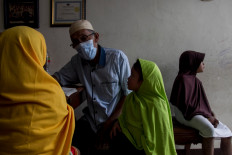
'Mami' Vera dedicates her life to caring for people with HIV/AIDS
Liliek Sulistiowati has cared for people living with HIV/AIDS for 30 years at her Abdi Asih Foundation in Surabaya, East Java, but its finances are in dire straits amid the prolonged pandemic and is threatened with eviction.
Health 5 years ago
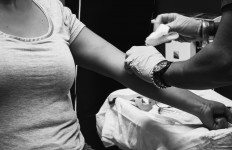
For Indonesians with HIV/AIDS, COVID-19 vaccination mixed bag
Fifteen million people have received the COVID-19 vaccine in Indonesia, but amid fears of stigma, personal information leaks and side effects, only a handful of people living with HIV/AIDS have joined that group. Some have shared their vaccination experiences with The Jakarta Post.
Editor's Picks
Popular
- Much ado about asset forfeiture
- Mass poisonings cast doubt on free meals reforms
- New data rules could unlock cross-border data flows
- Children are no longer the priority, were they ever?
- Rescuers searching for 140 people from passenger ship in Java Sea
- Three more volcanoes erupt following Sinabung, Anak Krakatau
- BRICS nations call for 'maximum restraint' in Middle East war
- Ministry ready to repatriate five orangutan babies found in India
- Indonesia, China eye cooperation to boost 3 million homes program
- SOE dividend grab tests Danantara’s mandate


