The Jakarta Post
Please Update your browser
Your browser is out of date, and may not be compatible with our website. A list of the most popular web browsers can be found below.
Just click on the icons to get to the download page.


Popular Reads
Top Results
No results found. Please check your search term and try again
Can't find what you're looking for?
View all search results
Popular Reads
Top Results
No results found. Please check your search term and try again
Can't find what you're looking for?
View all search resultsindustry-4-0
Opinion 6 years ago
PREMIUM
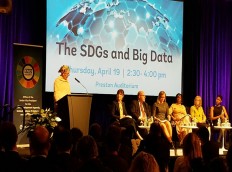
Single source of truth for Indonesia’s government data
Since digitalization is one of the government’s focuses, we may expect an exponential growth in the amount of data that the government collects and generates. Rather than gold, this data will be simply dust if not managed properly.

Opinion 6 years ago
PREMIUM
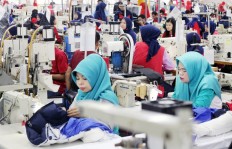
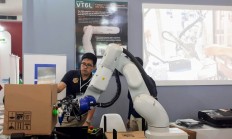
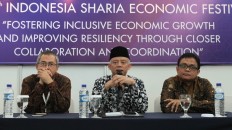
Islamic economic revolution 4.0
The emergence of technology breakthroughs will unequivocally reshape the operation and business models of industries in the Islamic economy. However, the adoption of technological innovation in the industries will lead to efficiency, productivity and market penetration. The integration of technological innovation into the operation and business models of the Islamic economy is driving the Islamic economic revolution 4.0.


Opinion 6 years ago
PREMIUM
Supply chain in Industrial Revolution 4.0
An industrial revolution has started to take place in many industries, one of them being in the supply chain. Looking at supply chain processes from manufacturing to delivery, many processes have extensively changed to become more sophisticated in ensuring effectiveness and eliminating redundant processes.
Opinion 6 years ago
PREMIUM
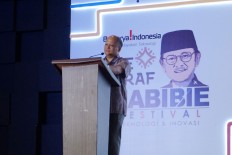
Envisioning Habibie 4.0: Egalitarian approach to digital economy
Indeed, Ilham A. Habibie is pursuing a more egalitarian approach to the digital economy by bringing digital empowerment to the bottom rung of society. In doing so, he may indeed bring his father’s modus operandi into the digital age.

Opinion 6 years ago
Insight: Frontier technologies pathway for prosperity
The current wave of technological change is unique in terms of the breadth of its scope and the pace of change. However, will the digital age benefit the world’s poorest people? With 3 billion people predicted to be offline still in 2023 and with many more failing to reap the internet’s full potential, the time to address digital exclusion is now.
Editor's Picks
Popular
- Recentralization concerns in fiscal, education heighten
- Twenty years on, BRICS faces a defining choice
- Indonesia calls for more representative UN amid changing world order
- Court decision tightens House oversight on free meals funding
- Safeguarding Indonesia's AI future
- Indian arrested for smuggling gold bars to Thailand via N. Sumatra airport
- Agrarian reform bill gets mixed reaction
- Singapore’s BDx launches 640MW data center project in West Java
- ASEAN warms to BRICS without sacrificing centrality
- Japanese automakers raise concern over local content rules


