TheJakartaPost
Please Update your browser
Your browser is out of date, and may not be compatible with our website. A list of the most popular web browsers can be found below.
Just click on the icons to get to the download page.


Popular Reads
No popular reads data found
Top Results
No results found. Please check your search term and try again
Can't find what you're looking for?
View all search results
Popular Reads
No popular reads data found
Top Results
No results found. Please check your search term and try again
Can't find what you're looking for?
View all search resultsKCIC
Archipelago 3 years ago
PREMIUM
Accident at high-speed train project won't affect safety of future service: Chinese envoy
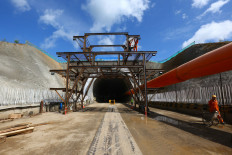
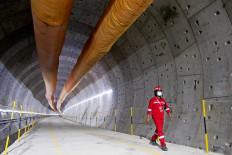
The Chinese ambassador to Indonesia has given an assurance that the recent deadly accident at the construction project of the Jakarta-Bandung high-speed railway (KCJB) is not a reflection of the safety of the future train service.
Opinion 3 years ago
PREMIUM
Analysis: KCIC requests concession extension due to low demand, competition
The Jakarta-Bandung high-speed railway (HSR) service is expected to see lower demand than initially projected. At its inception, the Jakarta-Bandung HSR was estimated to transport 60,000 passengers per day, but a new study conducted after the emergence of the COVID-19 pandemic has cut the estimate by half. This means that the new railway services needs around 80 years to break even and start making a profit.
Archipelago 3 years ago
PREMIUM
Two foreign workers killed in accident at high-speed railway project
Already beset by a ballooning budget and missed deadlines, the Jakarta-Bandung high-speed railway project (KCJB) suffers another roadblock as a work train involved with the project careened off the railway, killed two foreign technical workers and injured several others on Sunday evening.
Regulations 3 years ago
PREMIUM
As Xi visit draws near, delays haunt Jakarta-Bandung rail project
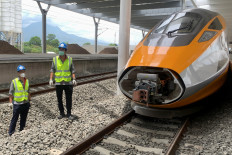
Years behind schedule, the high-speed railway link to connect Jakarta with Bandung is set for a trial this month in preparation for commercial operations planned to commence in June of next year. However, experts have not ruled out further delays.

Business 4 years ago
PREMIUM
KCIC appoints new chief to speed up delayed Jakarta-Bandung railway project
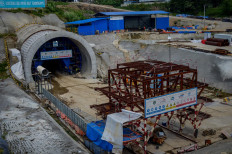
KCIC is banking on its new president director, Dwiyana Slamet Riyadi, considered somewhat of a "Renaissance man" in railway services, to speed up the problem-addled Jakarta-Bandung high-speed railway project toward a 2022 completion date.