The Jakarta Post
Please Update your browser
Your browser is out of date, and may not be compatible with our website. A list of the most popular web browsers can be found below.
Just click on the icons to get to the download page.


Popular Reads
Top Results
No results found. Please check your search term and try again
Can't find what you're looking for?
View all search results
Popular Reads
Top Results
No results found. Please check your search term and try again
Can't find what you're looking for?
View all search resultskalimantan

Asia & Pacific 3 days ago
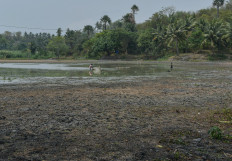
Prabowo accepts assistance from Malaysia to contain wildfires
Malaysia has offered three helicopters, an aircraft and 52 personnel to help put out the wildfires, Prabowo said in a statement after meeting Deputy Prime Minister Ahmad Zahid Hamidi at his house on the outskirts of Jakarta.
Archipelago 1 week ago
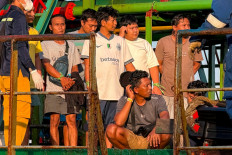
Rescuers searching for 129 people still missing after Java sea accident
The Virgo Transport 8 ship carrying 243 people went missing in bad weather early on Sunday, the rescue agency said. Authorities have rescued 108 people from the ship, which was travelling from Surabaya in East Java to Banjarmasin in South Kalimantan.

Society 1 week ago
PREMIUM
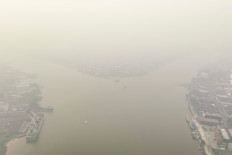
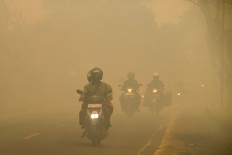
Wildfires cause respiratory infections to double in Indonesia
Fires have been blazing across vast stretches of forest and peatland throughout the country, causing hazardous emissions to surge, particularly in the hardest-hit provinces on the islands of Sumatra and Kalimantan.
Asia & Pacific 1 week ago
PREMIUM
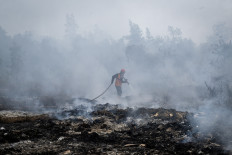
Indonesian wildfire emissions surge to world's highest
Fire emissions from Indonesia from September 1 to September 7 reached 19.7 million metric tons, overtaking Russia this week and making up more than a third of the global total, according to Fire Emissions Watch, a portal developed by the European Union's Copernicus climate monitoring service.

Editor's Picks
Popular
- Not the Ministry of Magic
- PISA gains belie Indonesia’s persistent education crisis
- Safeguarding Indonesia's AI future
- Suahasil seen to prioritize fiscal discipline, continuity
- Hundreds of flights cancelled as Typhoon Dujuan nears Japan
- Twenty years on, BRICS faces a defining choice
- Recentralization concerns in fiscal, education heighten
- Indonesia doing 'everything' but struggling to curb fires
- Indonesia prepares for new era of naval power
- Prabowo’s latest swipe at experts draws backlash


