TheJakartaPost
Please Update your browser
Your browser is out of date, and may not be compatible with our website. A list of the most popular web browsers can be found below.
Just click on the icons to get to the download page.


Popular Reads
No popular reads data found
Top Results
No results found. Please check your search term and try again
Can't find what you're looking for?
View all search results
Popular Reads
No popular reads data found
Top Results
No results found. Please check your search term and try again
Can't find what you're looking for?
View all search resultsPapuan-students
National 6 years ago
PREMIUM
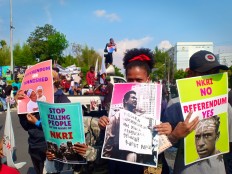
Over 100 detained across Papua for allegedly raising Morning Star flag
Among the first to be arrested was youth activist Pilipus Robaha, who was apprehended at his residence on Nov. 26 for having allegedly published a letter on social media urging the public to join the commemoration of Dec. 1, which some Papuans claim to be the birth of the West Papua nation in 1961, in Trikora Square in Abepura district, Jayapura. However, Pilipus was released the following day because of a lack of evidence.
National 6 years ago
PREMIUM
Papuan students demand referendum while dozens arrested on Sunday
Papuan students rallied in Yogyakarta on Sunday to commemorate what many claim was the Dec. 1 birth of West Papua, while dozens of others, accused of being linked to a pro-independence movement, were arrested in Papua arrested before they could do the same.
Opinion 6 years ago
PREMIUM
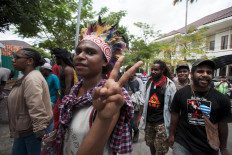
Weaving tapestry of hope for Papua
Human rights is not an easy topic of discussion, especially when the issue of past injustice continues to linger in collective memory in Papua. Yet, this is the very issue Indonesia has been trying to deal with constructively since the start of the Reform Era in the late 1990s.
National 6 years ago
PREMIUM
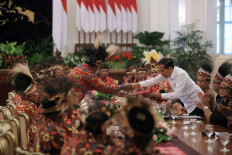
Jokowi's meeting with Papuan delegation 'misses the point'
“If the President really wants to help, he’d better finish Jakarta’s responsibilities by creating three human rights institutions in Papua, namely a human rights commission, a human rights court and a commission for freedom and reconciliation,” Usman said.
National 6 years ago
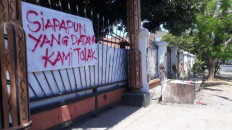
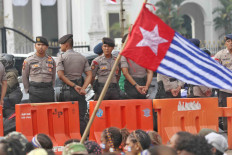
Unidentified individuals toss sacks of snakes into Papuan student dormitory: Students
A group of unidentified individuals tossed two sacks of snakes into the front yard of a Papuan student dormitory on Jl. Kalasan in Surabaya, East Java in the early hours of Monday, according to the Papuan Students Alliance (AMP).
World 6 years ago
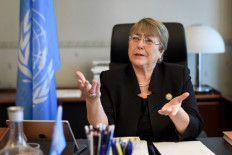
UN human rights chief calls for dialogue with Papuans
After weeks of silence, the United Nations' high commissioner for human rights released a statement calling on Indonesian authorities to foster dialogue with the people of Papua and West Papua after weeks of violent protests and riots in the developing region.
Opinion 6 years ago
PREMIUM
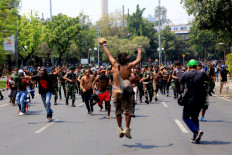
Insight: Youth at forefront of Papuan protests: Don't ignore them
The demonstrations expressed students’ disappointment on how the authorities handle racial abuse, while their political aspirations can expect to continuously meet strong resistance from the central government.
Opinion 6 years ago
PREMIUM
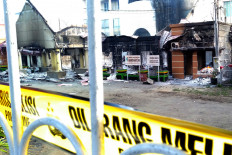
Internet blackout in Papua, cure or curse?
Indeed social media played a part in flooding the the internet with information related to incidents inside and outside Papua. But the government’s restriction policy has hardly helped calm Papua; rather it has increased the possibility of human rights violations occuring there.