TheJakartaPost
Please Update your browser
Your browser is out of date, and may not be compatible with our website. A list of the most popular web browsers can be found below.
Just click on the icons to get to the download page.


Popular Reads
No popular reads data found
Top Results
No results found. Please check your search term and try again
Can't find what you're looking for?
View all search results
Popular Reads
No popular reads data found
Top Results
No results found. Please check your search term and try again
Can't find what you're looking for?
View all search resultsQRIS
Jakarta 2 years ago
PREMIUM
Dozens of fraudulent QRIS donation codes found at Jakarta mosques
A Jakarta man has been accused of replacing mosques’ charitable Quick Response Indonesia Standard (QRIS) codes, which can be scanned with a smartphone to make cashless payments, with ones connected to his own newly created bank account, called “Mosque Restoration”.

Economy 3 years ago
PREMIUM
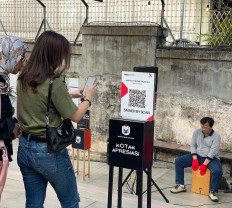
Three payment evolutions as Indonesia goes cashless
Indonesia’s financial services industry is experiencing accelerated digitization. Bank Indonesia (BI) and entities such as the Indonesian Payment System Association (ASPI) are behind major developments in the non-cash payments sector, aimed at driving financial inclusion at large.

Economy 3 years ago
PREMIUM
Indonesia’s thriving payments sector to drive an interconnected ASEAN consumer class
Indonesia is among the Southeast Asian markets that witnessed strong shifts toward non-cash payments, with an overall 30 percent growth in transaction volume from 2016 to 2021. This is expected to increase by more than five times by 2031.

Business 5 years ago
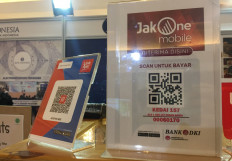
Bank Indonesia aims to double QRIS usage among small businesses, boost cashless payment
BI Governor Perry Warjiyo said on Monday that the central bank aimed to expand the use of QRIS to around 12 million micro, small and medium enterprises (MSMEs) this year from 5.8 million last year. The move is expected to support the recovery of the coronavirus-battered economy.

Business 5 years ago
Payment platforms should help SMEs go digital: McKinsey
“In helping SMEs to digitalize, payment services can offer value-added services such as loyalty programs, digital marketing and payroll processing,” Reet Chaudhuri, a senior expert at McKinsey said during a press briefing on Oct. 2.