The Jakarta Post
Please Update your browser
Your browser is out of date, and may not be compatible with our website. A list of the most popular web browsers can be found below.
Just click on the icons to get to the download page.


Popular Reads
Top Results
No results found. Please check your search term and try again
Can't find what you're looking for?
View all search results
Popular Reads
Top Results
No results found. Please check your search term and try again
Can't find what you're looking for?
View all search resultsclimate-crisis

Society 8 months ago
PREMIUM
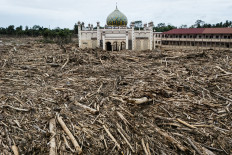
Yearender: Climate extremes expose Indonesia’s disaster vulnerabilities
Weak disaster preparedness and mitigation efforts as well as environmental degradation mainly caused by business activities have exposed Indonesia to hazards of extreme climate events, including tropical cyclones that are not usually forming in areas close to the equator.

Society 9 months ago
PREMIUM
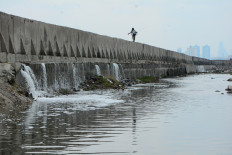
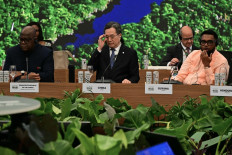
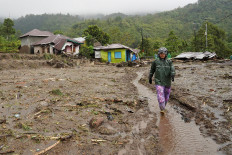
Cyclone havoc signals heightened climate crisis, environmental destruction
Tropical Cyclone Senyar, which formed over the Malacca Strait, reached Sumatra’s mainland on Wednesday, unleashing extreme rainfall and strong winds that triggered severe flash floods and landslides across Aceh, North Sumatra and West Sumatra.
Economy 9 months ago
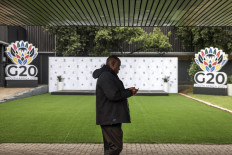
G20 summit opens in South Africa without Trump
Despite not attending the summit, US President Donald Trump's presence loomed large at the event, the first summit of the group of major economies to be held in Africa, after producing a surprise unilateral plan to end the war in Ukraine largely in line with Russia's goals.
Americas 9 months ago
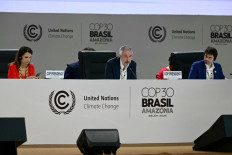
UN climate summit pushes into overtime as nations clash over fossil fuels
After nearly two weeks of negotiations in the Amazonian city of Belem, a new draft agreement unveiled by COP30 host Brazil made no mention of "fossil fuels" or the word "roadmap" that President Luiz Inácio Lula da Silva had himself publicly supported.
Americas 9 months ago
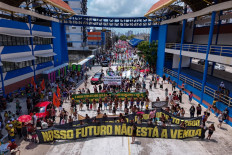
Massive march in Brazil marks first big UN climate protest in years
It was the first major protest outside the annual climate talks since COP26 four years ago in Glasgow, as the last three gatherings were held in locations with little tolerance for demonstrations, namely Egypt, Dubai and Azerbaijan.
Americas 9 months ago
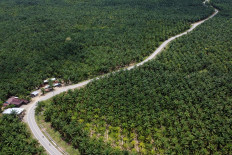
Brazil seeks biofuel boom, but critics query climate impact
Biofuels now powering about a quarter of the transport sector in Brazil last year, with an estimated 762,000 jobs in related activities, according to a recent report by the International Renewable Energy Agency (IRENA)
Editor's Picks
Popular
- Much ado about asset forfeiture
- Mass poisonings cast doubt on free meals reforms
- New data rules could unlock cross-border data flows
- Children are no longer the priority, were they ever?
- Three more volcanoes erupt following Sinabung, Anak Krakatau
- Indonesia, Hong Kong to host new 14-team FIFA ASEAN Cup
- Haze drives surge in respiratory illnesses in Indonesia
- Trump says he would be OK with China building cars in US
- Assessing the merit of the strategic commodities bill
- Modi, Putin seek stronger ties as Russia calls for BRICS to counter West


