The Jakarta Post
Please Update your browser
Your browser is out of date, and may not be compatible with our website. A list of the most popular web browsers can be found below.
Just click on the icons to get to the download page.


Popular Reads
Top Results
No results found. Please check your search term and try again
Can't find what you're looking for?
View all search results
Popular Reads
Top Results
No results found. Please check your search term and try again
Can't find what you're looking for?
View all search resultsexchange-rate
Economy 1 year ago
PREMIUM
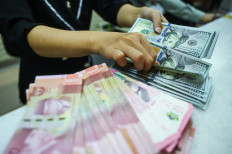
RI spends $4.6b of forex reserves to pay debt, stabilize rupiah
Indonesia shaved US$4.6 billion off its foreign exchange (forex) reserves in April as the government serviced foreign debts and the central bank intervened in the market to stabilize the rupiah’s exchange rate amid the tariff turmoil.
Economy 1 year ago
PREMIUM
Sapping rupiah raises inflation risk as imports cost more
While the government has tried to curb growing worries over the depreciating rupiah, Apindo and economists have pointed to pass-on costs and "double inflationary pressures" as potential scenarios that should be anticipated.

Economy 1 year ago
PREMIUM
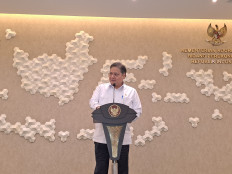
Airlangga downplays rupiah's brief plunge to multiyear low
The Coordinating Economic Minister downplayed Tuesday's temporary plunge to a record low in a doorstep interview on Wednesday, saying that currency fluctuation was “normal” and pointing to external factors as the cause, without elaborating.

Economy 1 year ago
PREMIUM
Rupiah drops to multiyear low ahead of Trump's tariffs, domestic uncertainty
The national currency temporary hit its lowest rate since the 1998 Asian Financial before inching back up to Rp 16,580 per dollar on Tuesday evening, the depreciating trend caused by investors jittery about the incoming US tariffs and geopolitical uncertainty, as well as domestic pressures.


Markets 2 years ago
PREMIUM
Market indifferent about cabinet changes as global factors dominate
The market has shown little to no reaction to the appointment of three new deputy ministers under President Joko “Jokowi” Widodo, two of which have close ties with president-elect Prabowo Subianto, as global circumstances play a more commanding role for traders.


Academia 2 years ago
PREMIUM
Assessing Indonesian fiscal risks amid the Iran-Israel conflict
The government and BI need to prepare a carefully considered contingency plan to prevent a rupiah free fall in the event that escalation in the Iran-Israel conflict disrupts the global oil market and trade routes.
Editor's Picks
Popular
- Popular discontent is justified. Authoritarianism is not the answer
- Sugarcane farmers query House over sugar imports
- Recentralization concerns in fiscal, education heighten
- Govt under pressure as 3 million home drive hits cracks
- Safeguarding Indonesia's AI future
- The agrarian reform law and investment prospects of palm oil
- Peatland agency revival tests commitment to curb unchecked conversion
- External pressure, fiscal risks weigh on rupiah
- Tokyo suffers longest streak of rainy days on record
- Inside the education system moulding Afghanistan's next generation


