TheJakartaPost
Please Update your browser
Your browser is out of date, and may not be compatible with our website. A list of the most popular web browsers can be found below.
Just click on the icons to get to the download page.


Popular Reads
No popular reads data found
Top Results
No results found. Please check your search term and try again
Can't find what you're looking for?
View all search results
Popular Reads
No popular reads data found
Top Results
No results found. Please check your search term and try again
Can't find what you're looking for?
View all search resultsfinancial-technology

Opinion 6 years ago
PREMIUM
Brace yourselves, cross-border e-wallet is coming
Two popular companies from China, Alipay and WeChat Pay, have entered the market in Indonesia. Last year these two fintech firms went viral when national media reported that they could be used by Chinese tourists in Bali. This could have meant lost income for Indonesia as the transactions between tourists and merchants did not involve Indonesian institutions. To prevent loss, the government issued several regulations to anticipate the cross-border payment risks.


Business 6 years ago
PREMIUM
Money laundering, data breaches emerge as dark side of fintech
Coordinating Economic Minister Darmin Nasution said that while fintech could make financial services accessible to more people compared to conventional financial institutions, there were three threats related to the mushrooming of fintech services.
Opinion 6 years ago
PREMIUM
How inclusive is financial inclusion in Indonesia?
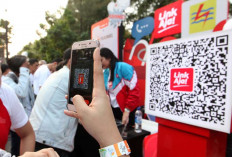
The clamor of fintech lending in recent years should not distract us from the various government outreach financial inclusion programs that help more Indonesians gain access to not just loans but also saving, insurance and payment services.
Opinion 6 years ago
PREMIUM
Wanted: High quality lenders and borrowers
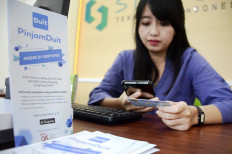
Right now, there are 113 fintech lending companies registered with the OJK, seven of which have obtained licenses. This does not include hundreds of illegal players. Given the iron law in business: When many players enter, many will go out, who will stay in business?

Opinion 6 years ago
PREMIUM
Financial technology for not-so-high-tech people
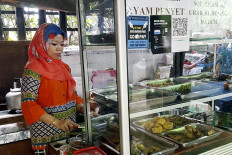
Contrary to the common assumption that FinTech benefits are only enjoyed by those who are technologically literate and connected to the internet, research conducted by the Indonesian Institute of Sciences (LIPI) found that those who are marginalized in regard to technological access and capability can better adopt digital payment methods.

Science & Tech 6 years ago
Engineer today, entrepreneur tomorrow: How fintech is leveling the entrepreneurial playing field
Many of the founders of today’s top unicorns weren’t computer science majors or holding distinguished MBAs–Evan Spiegel of Snapchat studied product design, while mobile trading app Robinhood’s Vladimir Tenev and Baiju Bhatt studied mathematics and physics.

Opinion 7 years ago
PREMIUM
Holistic effort for P2P fintech: Stop the abuse
The past several years have seen the rise of online-based P2P lending firms in Indonesia. These firms, often called “fintech (financial technology) P2P”, serve a very important niche market: bringing financial services to portions of the population previously considered unbankable.