The Jakarta Post
Please Update your browser
Your browser is out of date, and may not be compatible with our website. A list of the most popular web browsers can be found below.
Just click on the icons to get to the download page.


Popular Reads
Top Results
No results found. Please check your search term and try again
Can't find what you're looking for?
View all search results
Popular Reads
Top Results
No results found. Please check your search term and try again
Can't find what you're looking for?
View all search resultshealth-protection

Opinion 7 years ago
PREMIUM
Ban the promotion, not the production
Last month during a United Nations high-level meeting on non-communicable diseases (NCDs) in New York, world leaders agreed to strengthen global and national responses to treat, prevent and control the diseases, including through regulating promotion of unhealthy products.
Opinion 10 years ago
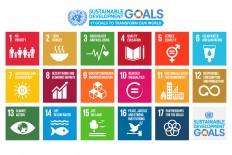
Focusing on Indonesia's SDG priorities
Third, poverty alleviation is still a major concern. Low-income people cannot only depend on social safety net programs to emerge from poverty, but must have decent jobs. There will be no sustainable poverty alleviation without decent jobs through which the poor can earn a living. Sustainable livelihoods through micro credit and basic infrastructure programs with cash-for-work schemes need to be further developed.

National 10 years ago
House, IDI to find solutions to primary health care program
The House of Representatives and the Indonesian Doctors Association (IDI) will meet to discuss opposing views regarding a primary health care physicians (DLP) program that has been proposed by the House, legislators have said.

National 10 years ago
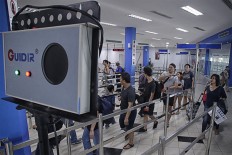
Govt monitors major ports to prevent spread of Zika
The government will monitor travelers from Singapore arriving at four major points-of-entry in Indonesia, namely Jakarta, Batam, Bali and Medan, following confirmation on Thursday that an Indonesian woman was being treated in Singapore for the disease.

National 10 years ago
COMMENTARY: Foreign boost might get Indonesian healthcare airborne
The condition of the country’s healthcare system couldn’t be more ironic. While it is dubbed as one of the potentially biggest markets in the world, Indonesia seems incapable of giving patients more than the most basic of care.
National 10 years ago
People told to take extra caution to limit spread of Zika virus
As the rainy season approaches, the government is working to raise public awareness to anticipate potential outbreaks of the Zika virus in the country, following confirmation on Thursday that an Indonesian woman is being treated in Singapore for the disease.

Opinion 10 years ago
Health care and well-being in 71-year Indonesia
At the national level, challenges revolving around human development are more complex than ever. Indonesia is the fourth-most populated country in the world, with roughly 254 million people and more than 17,000 islands. It is clear that distribution of goods and services is almost impossible to be done equally. Even after 71 years of independence, challenges in provision of health care remain mostly unchanged.
Opinion 10 years ago
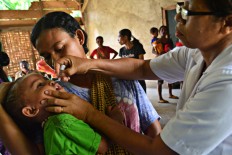
Supporting education and health for children
Often I find that children, regardless of their financial status, have a significant amount of tooth decay or caries. The Health Ministry reported an increasing prevalence of tooth caries from 2007 to 2013. Furthermore, most children are afraid to see a doctor or a dentist. Maybe the image of a doctor, or especially a dentist, is that of a person who carries a weapon, in this case, a tooth drill.
Opinion 10 years ago
Promoting proper self-medication
In both years since the JKN was introduced, BPJS Kesehatan has suffered a deficit, reaching Rp 3.3 trillion (US$246.26 million) in 2014 and Rp 6 trillion in 2016. The government has offered state investment to BPJS Kesehatan of Rp 6.8 trillion. Given the problems the BPJS has faced in implementing the program, it is proper now that the government promote the notion of self-help medication, in an attempt to reduce the burden on the JKN.
Editor's Picks
Popular
- Much ado about asset forfeiture
- Suahasil seen to prioritize fiscal discipline, continuity
- Not the Ministry of Magic
- Mass poisonings cast doubt on free meals reforms
- The benefit of the doubt has expired
- Children are no longer the priority, were they ever?
- Purbaya ousted after clash with Prabowo's ex-army colleague, sources say
- Whoosh takeover in limbo after Purbaya ousted as finance minister
- Indonesia seeks fifth UNSC term, pledges Global South voice
- Malaysia talks to rival airlines as it monitors AirAsia's financial health


