TheJakartaPost
Please Update your browser
Your browser is out of date, and may not be compatible with our website. A list of the most popular web browsers can be found below.
Just click on the icons to get to the download page.


Popular Reads
No popular reads data found
Top Results
No results found. Please check your search term and try again
Can't find what you're looking for?
View all search results
Popular Reads
No popular reads data found
Top Results
No results found. Please check your search term and try again
Can't find what you're looking for?
View all search resultsideology

Politics 5 years ago
Specter of communism polarizes PDI-P infighting: Sources
Fear of the return of communism has polarized infighting within the Indonesian Democratic Party of Struggle (PDI-P), sources have said, following widespread criticism of the ruling party for its proposed Pancasila ideology guidelines (HIP) bill.

Editorial 6 years ago
Redefining Pancasila
For one thing, the controversy surrounding the Pancasila Ideology Guidelines (HIP) bill shows yet again the tendency of our politicians to devise national policies without public consultation. But more than that, the bill is a grim reminder of the authoritarian past, when the state dictated what was right or wrong.
Politics 6 years ago
PREMIUM
Communist phobia sinks Pancasila bill at House
Muslim organizations, including Nahdlatul Ulama (NU) and Muhammadiyah, along with the Indonesian Ulema Council (MUI) have led the campaign to stop the House from deliberating the HIP bill, which they fear could lead to the reemergence of communism in the country.
Politics 6 years ago
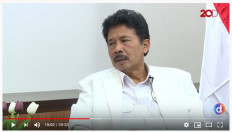
Chief Pancasila campaigner wants to replace ‘assalamu 'alaikum’ as national greeting
Agency for Pancasila Ideology Education (BPIP) head Yudian Wahyudi has drawn public controversy after saying that “assalamu ‘alaikum” could be replaced by “salam Pancasila” as a national greeting during an exclusive interview with detik.com.
National 6 years ago
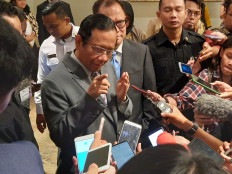
Indonesia to reinstate guidelines on Pancasila course: Minister Mahfud
Coordinating Political, Legal and Security Affairs Minister Mahfud MD has said that Indonesia is heading toward reinstating guidelines on a Pancasila course in educational institutions, a practice that occurred during the New Order regime.
Politics 6 years ago
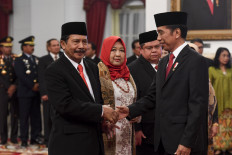
‘Pancasila’s biggest enemy is religion’: Indonesia’s ideology chief’s comment sparks outcry
“Minority groups want to oppose Pancasila and appear as the majority. This is dangerous. If we’re being honest, Pancasila’s biggest enemy is religion, not tribalism,” Yudian said as quoted by detik.com on Wednesday.
Opinion 6 years ago
PREMIUM
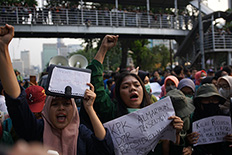
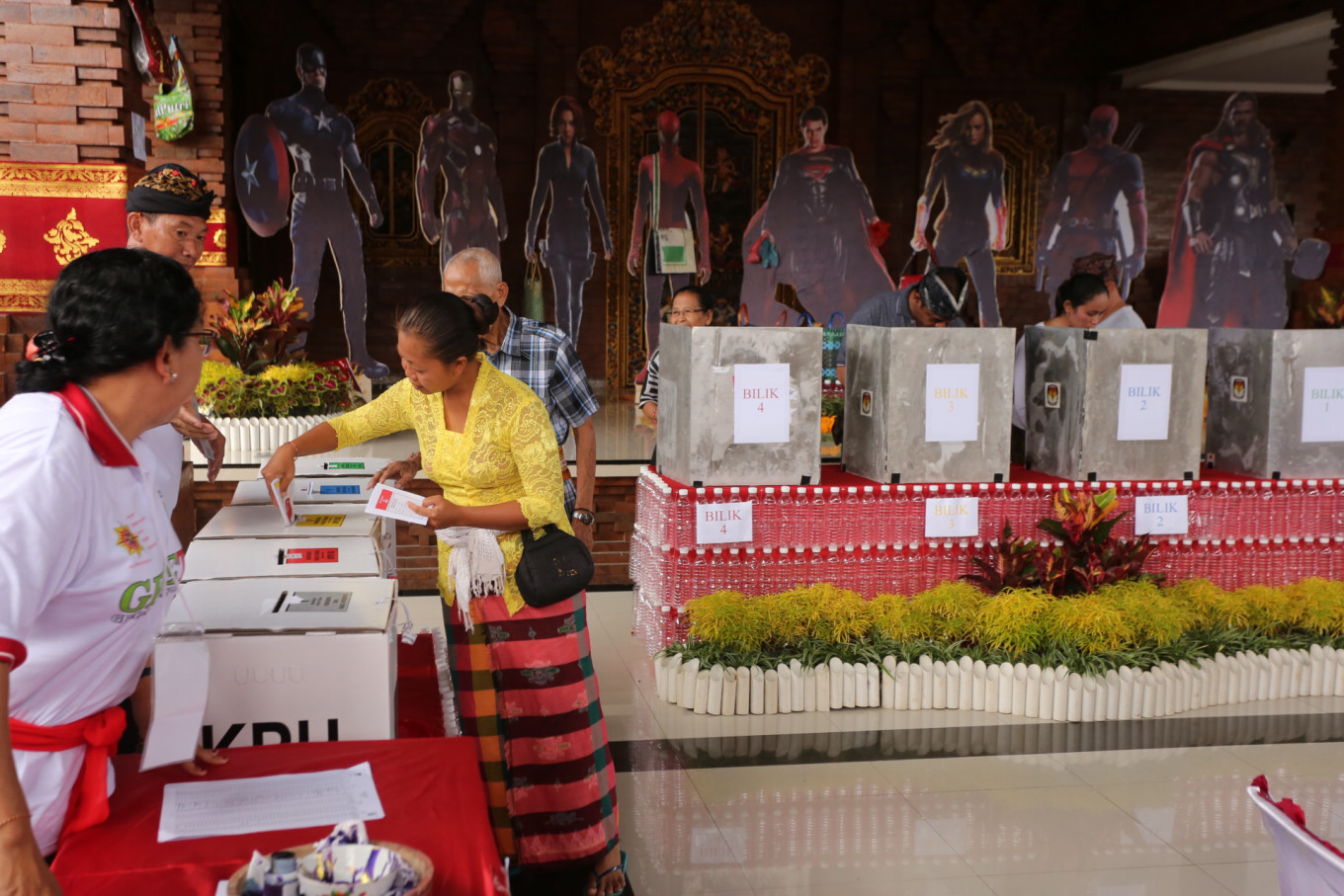
The rise, crumbling of reformist populism in Indonesia (Part 1 of 2)
Populism is often associated with nationalist mass mobilization against liberal internationalism. However, while this may be one outcome of populism, it does not equal populism. There is increasing scholarly agreement with Cas Mudde that the essence of populism is a thin ideology of “common people” and its “general will”, in contrast to established elites and their special interests.
Opinion 6 years ago
PREMIUM
How postcolonial is postcolonial Indonesia?
While the notions of postcolonialism vary and should be understood as attempts to resonate hybrid freedom, we should criticize the continuity of the “inferiority complex” derived from the European colonial legacy in the Indonesian postcolonial scene.
Editorial 6 years ago
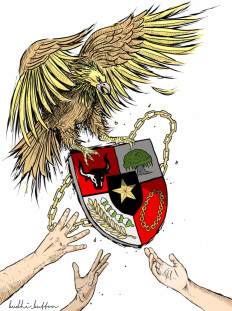
Freedom and its enemy
As the country celebrates its 74 years of independence on Saturday, Indonesians must ask a difficult question: Whether they are to continue on the path of moderation or risk losing some of their freedom. It may require the courage of our forefathers who chose between merdeka (freedom) or mati (death) to answer this question.