The Jakarta Post
Please Update your browser
Your browser is out of date, and may not be compatible with our website. A list of the most popular web browsers can be found below.
Just click on the icons to get to the download page.


Popular Reads
Top Results
No results found. Please check your search term and try again
Can't find what you're looking for?
View all search results
Popular Reads
Top Results
No results found. Please check your search term and try again
Can't find what you're looking for?
View all search resultsincome-inequality
Opinion 9 years ago
PREMIUM
Rp 172 trillion fund for Indonesian development
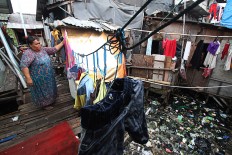
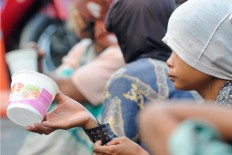
Let’s assume that 150 richest tycoons in Indonesia could voluntarily donate 10 percent of their wealth to jointly surmount the various problems encountered by the nation, particularly in education, health, UMKMs and natural-disaster mitigation.


National 9 years ago
Jokowi's Java-centric development widening wealth gap: INDEF
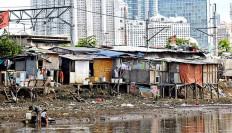
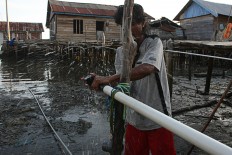
The administration of President Joko "Jokowi" Widodo and Vice President Jusuf Kalla has statistically managed to reduce the country’s poverty rate since entering office, but at the same time it has created a greater depth of poverty, an economist has said.
Business 10 years ago
Agrarian reform new way to tackle inequality, Jokowi says
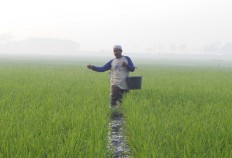
Agrarian reform will be a new way to tackle poverty and economic inequality, especially in the villages, President Joko "Jokowi" Widodo says, pointing to the fact that many poor people in villages have little or no land.
Business 10 years ago
Indonesia's inequality narrows to 0.39 in March
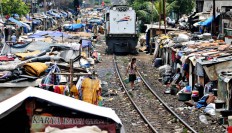
Economic inequality in Indonesia has slightly narrowed as the contribution of income earners in the middle-income segment increased amid the government's effort to boost labor-intensive infrastructure projects, the Central Statistics Agency’s (BPS) latest report indicates.
Opinion 10 years ago
Behind the rise of income inequality in Indonesia
Income inequality in Indonesia is now worse than in Thailand, Vietnam, Cambodia and Laos, although it is better than in the Philippines and China. According to a recent World Bank report, only 20 percent of Indonesians benefitted from the growing economic wealth during the last decade, while 80 percent — or about 205 million people — were left behind. According to the World Bank, Indonesia has one of the highest wealth concentrations in the world. The richest 10 percent of Indonesians own an estimated 77 percent of the country’s wealth. Half of the country’s assets are owned by the richest 1 percent.

Editor's Picks
Popular
- Much ado about asset forfeiture
- The benefit of the doubt has expired
- Mass poisonings cast doubt on free meals reforms
- New data rules could unlock cross-border data flows
- Children are no longer the priority, were they ever?
- Prabowo sacks Purbaya, turns to familiar hand at Finance Ministry
- Prabowo replaces Finance Minister Purbaya with his deputy
- Six killed, 129 missing after ferry capsizes off Java
- Indonesia, China eye cooperation to boost 3 million homes program
- SOE dividend grab tests Danantara’s mandate


