The Jakarta Post
Please Update your browser
Your browser is out of date, and may not be compatible with our website. A list of the most popular web browsers can be found below.
Just click on the icons to get to the download page.


Popular Reads
Top Results
No results found. Please check your search term and try again
Can't find what you're looking for?
View all search results
Popular Reads
Top Results
No results found. Please check your search term and try again
Can't find what you're looking for?
View all search resultskamisan
Politics 4 months ago
PREMIUM
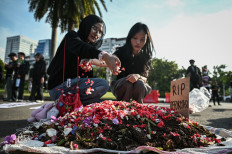
Prabowo's rare address raises political concerns
President Prabowo Subianto’s unprecedented speech before lawmakers underscored mounting pressure on his administration to restore market confidence amid growing concerns over economic instability and signs of democratic backsliding reminiscent of the late New Order era.
Politics 9 months ago
PREMIUM
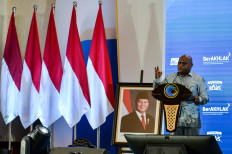
Minister’s UN human rights ambition rings hollow for activists
Chairing the United Nations Human Rights Council would help Indonesia to initiate new international conventions linking human rights with issues such as corruption, the environment and electoral rights, said Human Rights Minister Natalius Pigai.
Politics 1 year ago
PREMIUM
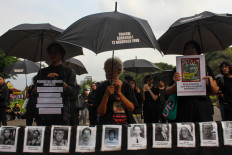
Activists refuse to forget as reform era fades
As Indonesia’s reform era appears to be nearing its end under President Prabowo Subianto, signaled by the resurgence of authoritarian traits such as a growing military presence in civilian affairs, pro-democracy activists continue their efforts to pass on the memory of the nation’s dark past to younger generations.
Academia 2 years ago
PREMIUM
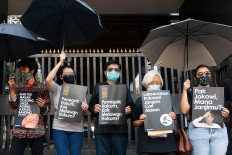
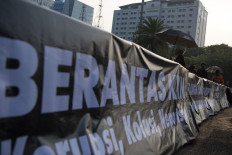
A lesson of empowerment from the 17th anniversary of Kamisan
The Kamisan event showcases the best of activism in present-day Indonesia: There, people continue to stand with grit and resilience week after week as they see denial upon denial hammered against their demand for justice.
Society 3 years ago
PREMIUM
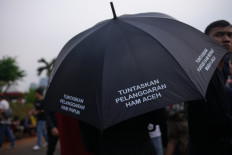
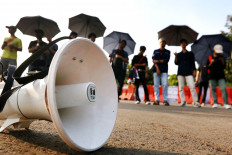
‘Kamisan’ protesters demand judicial resolution of past abuses
People gathered in front of the State Palace for the 16th year of the Kamisan (Thursday) silent protest, demanding the government resolve past atrocities through the judicial process and not merely through nonjudicial settlements.
National 5 years ago
PREMIUM
‘The time is now’ for Jokowi to address human rights abuses, activists say
For more than one decade since Jan. 18, 2007, Maria Catarina Sumarsih and a crowd of people have stood across the Presidential Palace every Thursday with umbrellas in hand, demanding the government to bring closure to past human rights abuses.
National 5 years ago
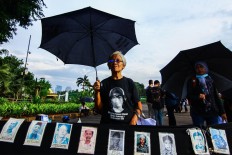
Twenty-two years on, families of Semanggi victims grasping at straws in search for justice
Twenty-two years since the 1998 student movement was staged by university students against former Indonesian strongman Soeharto, families of the fallen victims of the Semanggi tragedies are still doing everything they can to search for justice, even as their faith in the government dwindles.
Editorial 6 years ago
Lest we forget
The uncertainty surrounding the investigation into the arsenic poisoning of human rights defender Munir Said Thalib 16 years ago today exemplifies the government’s denial to take responsibility and ensure justice is served. At least two governments have now failed not only Munir’s family but also the nation, because impunity has been preserved for perpetrators of human rights.
Editor's Picks
Popular
- Recentralization concerns in fiscal, education heighten
- Twenty years on, BRICS faces a defining choice
- Indonesia calls for more representative UN amid changing world order
- Court decision tightens House oversight on free meals funding
- Safeguarding Indonesia's AI future
- Indian arrested for smuggling gold bars to Thailand via N. Sumatra airport
- Agrarian reform bill gets mixed reaction
- Singapore’s BDx launches 640MW data center project in West Java
- ASEAN warms to BRICS without sacrificing centrality
- Japanese automakers raise concern over local content rules


