The Jakarta Post
Please Update your browser
Your browser is out of date, and may not be compatible with our website. A list of the most popular web browsers can be found below.
Just click on the icons to get to the download page.


Popular Reads
Top Results
No results found. Please check your search term and try again
Can't find what you're looking for?
View all search results
Popular Reads
Top Results
No results found. Please check your search term and try again
Can't find what you're looking for?
View all search resultslabor-rights


Opinion 6 years ago
Women manufacturing workers hit hardest
Comprising the bulk of workers without a permanent status, women workers are most vulnerable to layoffs and are more likely to be exposed to economic injustice because they depend on daily wages, which in turn depend on production volume. As production tanks, it is these women who are hit hardest.
National 6 years ago
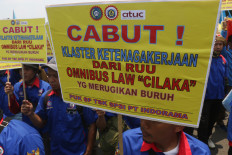
Desperate workers to hold mass rallies against job creation bill despite pandemic
Desperation and a sense of betrayal have fueled workers’ anger about the insistent, continued deliberation of the omnibus bill on job creation. Now they may be bold enough to risk catching COVID-19 as they plan to stage massive rallies in front of executive and legislative offices nationwide on April 30.


National 6 years ago
PREMIUM
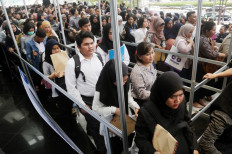
Omnibus bill's tripartite forum upsets labor unions
Joining the other six unions that have abandoned discussions with representatives from the government and business, the National Workers Union (SPN) has decided to withdraw from the forum. The forum was initiated by the Office of the Economic Coordinating Minister to facilitate dialogue between the parties before passing the bill. The proposed bill contains articles about manpower and employment rights in Indonesia that are slated to be revised.
Business 6 years ago
Guide to omnibus bill on job creation: 1,028 pages in 10 minutes
The omnibus bill on job creation would amend 73 laws and consists of 15 chapters and 174 articles. The government and businesspeople consider Indonesia to be over-regulated with a total of 43,511 central government regulations as well as ministerial-, agency- and regional-level rules.

Business 6 years ago
Key points of labor reform in omnibus bill on job creation: What we know so far
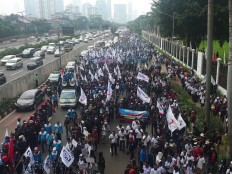
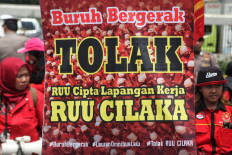
Some of the key highlights of the bill, a draft of which has been obtained by The Jakarta Post, cover issues related to foreign workers, wages, work hours, redundancy and social security. A one-off extra payment as a “token of appreciation” for workers, which the government calls a “sweetener”, is also introduced in the bill.
Editor's Picks
Popular
- Mass poisonings cast doubt on free meals reforms
- New data rules could unlock cross-border data flows
- Malaysia must not breathe Indonesia’s governance failure
- Volcanic eruptions take toll on economy
- Search intensifies for journalists, crew as Anak Krakatau ashfall eases
- Mitigation budget under scrutiny as Indonesia grapples with disasters
- Indonesian wildfire emissions surge to world's highest
- Anak Krakatau doesn't need an earthquake to kill
- Student suffers memory loss, seizures after free meal food poisoning
- Search resumes for missing journalists on Anak Krakatau mission


