The Jakarta Post
Please Update your browser
Your browser is out of date, and may not be compatible with our website. A list of the most popular web browsers can be found below.
Just click on the icons to get to the download page.


Popular Reads
Top Results
No results found. Please check your search term and try again
Can't find what you're looking for?
View all search results
Popular Reads
Top Results
No results found. Please check your search term and try again
Can't find what you're looking for?
View all search resultsland-use
National 6 years ago
PREMIUM
Climate change, environmental degradation may hamper Indonesia’s GDP growth
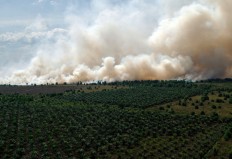
In Indonesia, an economy heavily reliant on natural resources, climate change and natural resource degradation are likely to halve potential GDP growth, from 7 percent to 3.5 percent, by 2050, according to a recent study.

Opinion 7 years ago
Secrecy still shrouds land use maps
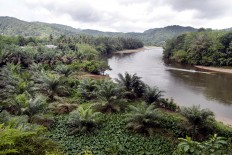
The General Elections Commission (KPU) has done good service by ensuring that the environment was a focus in its most recent presidential debate. Public attention has swung onto a critical question: who controls our land and forests, and are they acting responsibly?

Opinion 7 years ago
Our future: Sustainable food systems everywhere
On the eve of the presidential debate on energy, infrastructure and environment, our thoughts turn to Indonesia’s future on these vital and related issues. What forms of energy will our country use in the future: solar or coal? Will our roads and ports be climate-smart and resilient? Will we protect and restore our cherished natural environment, the only one we have?
Business 7 years ago
Oil palms need one-ninth of land used by other vegetable oil crops
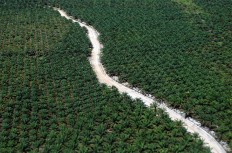
A palm oil task force of the International Union for Conservation of Nature (IUCN) has released the results of a study showing that palm oil production is the most efficient in terms of land use compared with other vegetable oils, which need nine times more land to produce the same amount of oil.
Editor's Picks
Popular
- PISA gains belie Indonesia’s persistent education crisis
- Not the Ministry of Magic
- Suahasil seen to prioritize fiscal discipline, continuity
- The benefit of the doubt has expired
- Ed Sheeran struggles against Gaza tide
- Osama the gamer: A list of Bin Laden’s video games from his hard drive
- Another company flees Batam, abandons 1,025 workers
- Indonesian Navy welcomes former Italian warship as its first aircraft carrier
- Is Indonesia returning to fiscal orthodoxy?
- Saudi civil defense sends all-clear after alerts issued for capital Riyadh


