The Jakarta Post
Please Update your browser
Your browser is out of date, and may not be compatible with our website. A list of the most popular web browsers can be found below.
Just click on the icons to get to the download page.


Popular Reads
Top Results
No results found. Please check your search term and try again
Can't find what you're looking for?
View all search results
Popular Reads
Top Results
No results found. Please check your search term and try again
Can't find what you're looking for?
View all search resultsmosquito

Society 4 months ago
PREMIUM
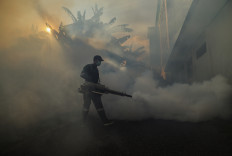
Watching climate patterns may help bolster dengue response
Observing patterns of atmospheric conditions may help health authorities in better preparing mitigation and prevention efforts against the mosquito-borne disease, a recent study suggests, with the insect expected to flourish more in a warming world.
Society 4 months ago
PREMIUM
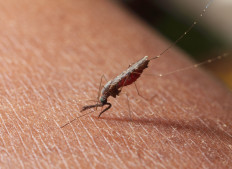
Malaria hits record high in Indonesia as elimination challenges persist
Geographical conditions of malaria hotspots, climate-induced extreme weather, people migrations and limited funding are among obstacles to health authorities’ effort to achieve national target of disease elimination by 2030.
Archipelago 6 months ago
PREMIUM
Malaria outbreak in Rokan Hilir persists two years on
In 2024, cases rose to 2,449, prompting the local administration to declare a malaria emergency in October to speed up mitigation efforts. Since then, authorities have extended the emergency status 20 times as cases continue to climb.
Society 10 months ago
PREMIUM
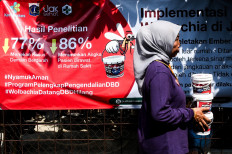
Govt mulls over expanding Wolbachia-based dengue control
One of the main challenges hindering the expansion of the program to spread Wolbachia-infected mosquitos in dozens of other cities in Indonesia is limited funding, with the government aiming to work with international partners to overcome the hindrance.
Archipelago 1 year ago
PREMIUM
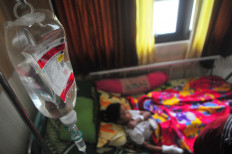
Regions seeing spikes in dengue fever during seasonal transition
The ongoing transition from the dry to the rainy season has triggered a spike in cases of dengue fever across the archipelago, prompting both local and national authorities to urge communities to maintain vigilance by applying the "3M Plus" strategy and curb the disease's spread.
Archipelago 1 year ago
PREMIUM
Papua primary target in battle to eradicate malaria nationwide
The six provinces in the country’s easternmost region account for 90 percent of the national caseload, whereas nearly 80 percent of all regencies and cities across the country have been declared malaria-free.
Society 2 years ago
PREMIUM
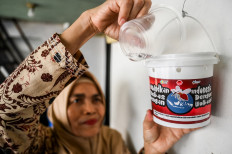
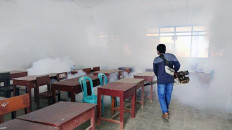
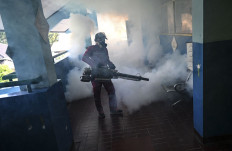
Ministry urges public to remain calm as dengue cases, deaths soar
The Health Ministry has recorded at least 43,200 dengue cases and 404 deaths nationwide as of March 23, almost triple the same period last year. Experts are blaming El Niño as an important figure that leads to the dengue cases and deaths soaring this year.
Editor's Picks
Popular
- Not the Ministry of Magic
- PISA gains belie Indonesia’s persistent education crisis
- Suahasil seen to prioritize fiscal discipline, continuity
- Hundreds of flights cancelled as Typhoon Dujuan nears Japan
- Recentralization concerns in fiscal, education heighten
- Indonesia prepares for new era of naval power
- Prabowo’s latest swipe at experts draws backlash
- Osama the gamer: A list of Bin Laden’s video games from his hard drive
- Indigenous Kalimantan people sue govt over wildfire negligence
- The benefit of the doubt has expired


