TheJakartaPost
Please Update your browser
Your browser is out of date, and may not be compatible with our website. A list of the most popular web browsers can be found below.
Just click on the icons to get to the download page.


Popular Reads
No popular reads data found
Top Results
No results found. Please check your search term and try again
Can't find what you're looking for?
View all search results
Popular Reads
No popular reads data found
Top Results
No results found. Please check your search term and try again
Can't find what you're looking for?
View all search resultsnet-zero-emission

Asia & Pacific 1 year ago
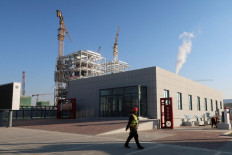
China plans new carbon emission controls as it aims for 2030 peak
Beijing's energy policies have so far focused on "energy and carbon intensity", referring to energy and emissions involved in producing a unit of economic output, effectively tying its targets to overall economic growth.
Academia 1 year ago
PREMIUM
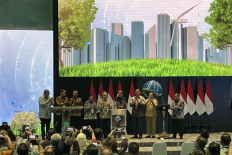
Green is the new gold: Unlocking Indonesia's prosperity through climate finance
By the estimates of Finance Minister Sri Mulyani Indrawati in 2023, Indonesia needs at least Rp 4 quadrillion (US$250 billion) to meet its Nationally Determined Contribution (NDC) and achieve its greenhouse gas emission reduction targets by 2030.

Asia & Pacific 1 year ago
PREMIUM
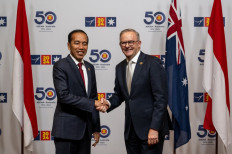
More open Indonesia-Australia trade needed for climate progress, experts say
Experts have encouraged Indonesia and Australia to alter their trade policies to promote the more open exchange of goods and services to help scale up climate action, as both countries continue to be among the world’s largest carbon emitters.
Academia 2 years ago
PREMIUM
Embracing a just energy transition: ASEAN's path to a sustainable future
ASEAN countries urgently need to take a collaborative approach in developing a cohesive strategy that incorporates social safety nets to build a pathway toward an equitable and inclusive energy transition for the whole region, which will in turn propel the bloc onto the global stage as a in sustainable development leader.