The Jakarta Post
Please Update your browser
Your browser is out of date, and may not be compatible with our website. A list of the most popular web browsers can be found below.
Just click on the icons to get to the download page.


Popular Reads
Top Results
No results found. Please check your search term and try again
Can't find what you're looking for?
View all search results
Popular Reads
Top Results
No results found. Please check your search term and try again
Can't find what you're looking for?
View all search resultsreligious-issue

Society 2 years ago
PREMIUM
Ahmadiyah mosque closure in Garut raises religious freedom alarm
Authorities in West Java's Garut regency have again forcibly closed a building used by the Ahmadiyah minority community as a place of worship, citing public threats to do so, amid recent reports highlighting the worsening condition of religious freedom in Indonesia.


National 5 years ago
Democratic, Islamic values aligned in Indonesia, webinar hears
Democratic and Islamic values are intrinsically aligned in Muslim-majority Indonesia, experts and activists have said, amid growing concerns about a rise in religious conservatism that seeks to undermine the country’s democratic institutions.
National 6 years ago
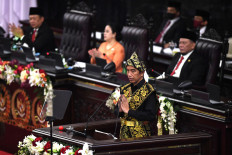
'No one should be self-righteous': Jokowi emphasizes democracy, tolerance in annual address
“Democracy guarantees freedom, but it is only for freedom that respects other people’s rights. No one should be self-righteous and blame others. No one should think of themselves as the most religious,” President Jokowi has said.


Opinion 6 years ago
Education and Islamic authority
Around 90 percent of Indonesia’s 260 million citizens are Muslim. Most of them support the idea that Islam should have a public rather than private presence in everyday life, and for that reason, Islamic authority is not just an abstract for Indonesians; it has practical effects. But just what kind of role should Islamic authority play in public life?
Opinion 6 years ago
PREMIUM
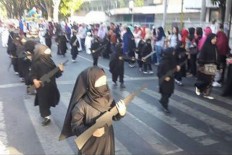
Kindergarten contest behind promotion of intolerance
Although preschool education has not always aimed to instill religious discipline, this research finds a strong tendency that preschool institutions are being relied on as a place to instill religious teachings or worship and also as a means to exercise moral control.
Editor's Picks
Popular
- New islands appear after Anak Krakatau volcano erupts
- The agrarian reform law and investment prospects of palm oil
- Philippines arrests 244 foreign workers in online scam crackdown
- A ministry restored
- Dutch royal house benefitted from colonial policies, study shows
- Myanmar migrants returned to war-torn nation from Malaysia
- Reshuffle shores up coalition support for 2029
- Land rights controversy hurts palm oil investment
- Prabowo resurrects advisory board
- Bringing the military back in


