The Jakarta Post
Please Update your browser
Your browser is out of date, and may not be compatible with our website. A list of the most popular web browsers can be found below.
Just click on the icons to get to the download page.


Popular Reads
Top Results
No results found. Please check your search term and try again
Can't find what you're looking for?
View all search results
Popular Reads
Top Results
No results found. Please check your search term and try again
Can't find what you're looking for?
View all search resultsrupiah

Editorial 2 months ago
PREMIUM
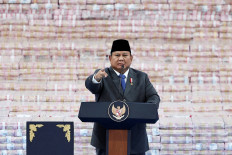
Protest works
In the 20 months that he has been in power, the President has not only had to deal with street protests early in his administration, he has also had to face relentless demonstrations that ebbed and flowed depending on how well the public responded to his policies.

Academia 3 months ago
PREMIUM
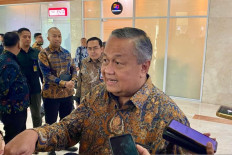
The 5Es of economic growth and its impact on exchange rates
As geopolitical crises bring the global economy to its knees, tinkering with interest rates won't save failing currencies—only a structural overhaul of a nation’s foundational "5Es," starting with energy self-sufficiency, can weather the storm.


Society 3 months ago
PREMIUM
Rupiah slide drives up drug costs, burdening chronically ill patients
Tulus Abadi, chairman of the Indonesian Consumers Foundation (FKBI), said soaring medicine and vitamin prices were an unavoidable consequence of the rupiah’s depreciation, noting that between 85 and 90 percent of the raw materials used by Indonesia’s pharmaceutical industry are imported.

Economy 3 months ago
PREMIUM
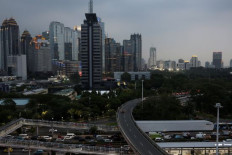
Banks expected to see lower profits amid weakening rupiah, rate hikes
Due to elevated funding costs, sustained NIM pressure and higher provisions, Samuel Sekuritas has lowered its 2026 earnings growth forecast for banks from 4.6 percent in its previous report to 1.8 percent.

Editor's Picks
Popular
- Much ado about asset forfeiture
- Not the Ministry of Magic
- PISA gains belie Indonesia’s persistent education crisis
- Suahasil seen to prioritize fiscal discipline, continuity
- Mass poisonings cast doubt on free meals reforms
- The benefit of the doubt has expired
- Children are no longer the priority, were they ever?
- Purbaya ousted after clash with Prabowo's ex-army colleague, sources say
- Whoosh takeover in limbo after Purbaya ousted as finance minister
- Indonesia seeks fifth UNSC term, pledges Global South voice


