The Jakarta Post
Please Update your browser
Your browser is out of date, and may not be compatible with our website. A list of the most popular web browsers can be found below.
Just click on the icons to get to the download page.


Popular Reads
Top Results
No results found. Please check your search term and try again
Can't find what you're looking for?
View all search results
Popular Reads
Top Results
No results found. Please check your search term and try again
Can't find what you're looking for?
View all search resultssexual-violence-bill

Editorial 6 years ago
Don’t let them fight alone
For three years, dozens of women, activists and survivors of sexual violence have fought relentlessly to make Indonesia a safer place. They have campaigned and lobbied lawmakers to pass the bill on the elimination of sexual violence. In late September, they received devastating news: the lawmakers serving between 2014 and 2019 would not pass the bill. However, there is a glimmer of hope from the new members of the House of Representatives.
National 7 years ago
PREMIUM
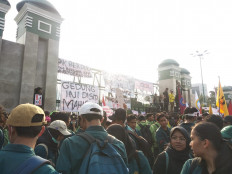
Students stage protest, demand House hold off on passing Criminal Code bill
The House of Representatives saw renewed and larger protests against the controversial Criminal Code bill on Thursday as hundreds of university students assembled in front of the legislative building to demand lawmakers halt the passing of the bill for its potential to curtail democracy.

Opinion 7 years ago
How a populist morality movement is blocking a law against sexual violence in Indonesia: analysis
For what reason could lawmakers in Indonesia oppose a bill protecting their own daughters, mothers, sisters and cousins from rape and murder? To understand such reasons, we need to look into what I call Indonesia’s populist morality movement.


National 7 years ago
PREMIUM
Knocking on the House's door: Victims, activists send flowers for the sexual violence bill
“Since the day you started discussing the sexual violence elimination bill, 10,000 more Indonesians have fallen victim to sexual violence. Protect our women and children. Pass the bill now!” one message reads.

Editorial 7 years ago
A more draconian law?
The statements of lawmakers and Law and Human Rights Ministry officials suggest that finally passing the amended Criminal Code after five decades of deliberation would be their signature legacy. But what kind of legacy will it be if they pass a bill perceived to be more draconian than the current century-old Criminal Code?
Opinion 7 years ago
PREMIUM
Clemency, amnesty: Piecemeal solutions
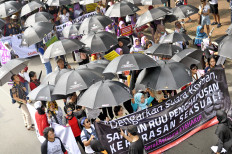
The sexual violence bill (RUU PKS) has been criticized for being proadultery. That’s what Maimon Herawati, Farah Qoonita and Zahra Maulidinah, three conservative Muslim women who set up petitions against the RUU PKS, claim. They assert that the bill makes it possible for sexual behaviors forbidden by religion (Islam) — casual sex, lesbians, gays, bisexual and transgender sex, etc., to be accommodated.

Opinion 7 years ago
Choose candidates who support sexual violence eradication bill
Less than two weeks ahead of the general election, online discussion groups have been abuzz with heated, ugly debates about nonvoters. In the end, the debates are essentially about the presidential race, while the legislative election has been so far untouched by these political commentators.
Editor's Picks
Popular
- Popular discontent is justified. Authoritarianism is not the answer
- Recentralization concerns in fiscal, education heighten
- Govt under pressure as 3 million home drive hits cracks
- Safeguarding Indonesia's AI future
- Batam residents protest data centers amid water crisis
- Canals full, roads submerged as Bangkok declares flood disaster
- Japan schoolboy, 11, wins gold while empty seats blight Asian Games
- Jakarta international airport extends closure after Anak Krakatau eruption
- Indonesians still have low awareness against pneumonia: Survey
- Indonesian wildfires threaten critically-endangered orangutan: IUCN


