The Jakarta Post
Please Update your browser
Your browser is out of date, and may not be compatible with our website. A list of the most popular web browsers can be found below.
Just click on the icons to get to the download page.


Popular Reads
Top Results
No results found. Please check your search term and try again
Can't find what you're looking for?
View all search results
Popular Reads
Top Results
No results found. Please check your search term and try again
Can't find what you're looking for?
View all search resultsstate-budget
Academia 4 weeks ago
PREMIUM
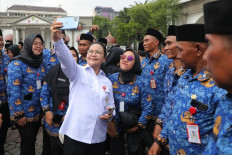
The costs of ‘execution first, planning later’
It is true that a hefty share of public spending went into FGDs, seminars and workshops that produced little. But his own government now suffers the opposite failure of executing before it plans, then improvising the plan as the execution collapses. Yet the damage is already done, heavily.
Society 1 month ago
PREMIUM
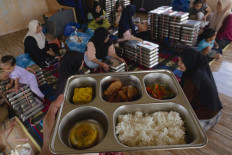
Court ruling shift focus back to schools, teacher welfare
The Constitutional Court's ruling on the removal of the free nutritious meal program from the education budget should pave the way for long-overdue investment in teacher welfare, school repair and equal access to education, teachers and education experts have said.
Politics 1 month ago
PREMIUM
Court ruling on free meals funding gets cautious welcome
Several plaintiffs and education observers critiqued the Constitutional Court for not ordering the government to immediately revise the 2026 and 2027 state budget, which is still in deliberation, to exclude allocations for the free meals program from the education budget.
Politics 1 month ago
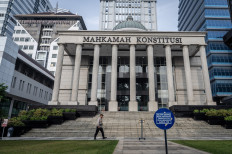
BREAKING: Court orders free meals financing removed from education budget
The court held that the program does not qualify as an educational expense, and that using education budget funds violates the Constitution, which mandates that at least 20 percent of the national budget be allocated to education.
Archipelago 1 month ago
PREMIUM
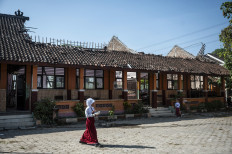
Government repairs Central Java school after striking image
The government has begun renovating a severely damaged elementary school in Grobogan, Central Java, six months after its deteriorating condition emerged and only days after a photograph of its crumbling classrooms went viral, reigniting criticism over the country’s education spending priorities.
Academia 1 month ago
PREMIUM
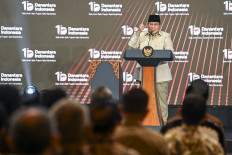
Why Indonesia needs an accountable developmental state
To unlock its economic potential on the road to 2045, Indonesia must move beyond simply chasing finance to closing its core development capital formation gap. Building an accountable, state-led architecture, not just a larger bureaucracy, is the true master key to turning strategic priorities into productive national wealth.
Editor's Picks
Popular
- Malaysia must not breathe Indonesia’s governance failure
- Mass poisonings cast doubt on free meals reforms
- New data rules could unlock cross-border data flows
- The state's new muscle
- Jakarta airport and others reopen after volcanic ash crisis
- Anak Krakatau eruption halts flights, schools, fishing
- Soekarno-Hatta airport extends closure after Anak Krakatau eruption
- Barelang Police, Japanese diplomat hold meeting on Batam security
- Travelers scramble as Anak Krakatau ash exposes gaps in contingency plans
- Jakarta international airport extends closure after Anak Krakatau eruption


